


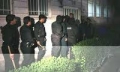
Die Iranische Sicherheitskräfte verhaften acht Ahwazische Bürger
كانون1/ديسمبر 17, 2012Iranische Sicherheitskräfte verhafteten am 11.11.2012 mit Gewalt und ohne Erlaubnis der Behörde acht ahwazische Bürger (arabische Ethnie im Iran) aus dem Dorf Kaab in der Nähe der Stadt Sussa und verschleppten sie zum Gefängnis des Geheimdienstes.
Die Ahwaz Human Rights Organisation berichtet, iranische Sicherheitskräfte seien mit maskiertem Gesicht und schwer bewaffnet ohne Erlaubnis der Justizbehörden eingedrungen und verwendeten barbarische Foltermethoden (Elektroschock u.a.) um die Häftlinge zu falschen Geständnissen zu zwingen.
Der A.H.R.O zu Folge wurden die Gefangenen zu einem der Gerichte der Stadt Ahwaz verschleppt. Dabei hätten sie keinen Anspruch auf einen Anwalt gehabt.
Die A.H.R.O beurteilt die barbarische Inhaftierung und Gewalt gegen die Häftlinge in Ahwaz.Wir appellieren an alle Menschenrechtorganisationen, sich für die Befreiung der Gefangenen einzusetzen.
Im Folgenden die Namen Gefangenen:
-Ali Chishat (46) Jahr alt, verheiratet (Der ist Vater vom Hossein nummer 2 und Salahaldin nummer 3).
-Hossein Chishat,(28) Jahr alt ,verheiratet
- Salahaldin Chishat,(22) Jahr alt , ledig
Sayed Yassin Mousawi (34) Jahre alt,verheiratet,hat einem Kind
-Habib Sylaweh,Ledig
-Solyman Chayan (32)Jahre alt, verheiratet ,hat einem Kind
-Mohamad Chayan (30)Jhre alt, verheiratet,hat zwei Kinder
-Karim Chayan (34) Jahre alt.
Alahwaz Human Rights Organisation
Iran: Activists Fleeing Assault on Civil Society
كانون1/ديسمبر 15, 2012Beirut) – The space in Iran for civil society has been shrinking since the crackdown following the disputed presidential election in 2009, Human Rights Watch said in a report released today. Three-and-a-half years after government forces brutally suppressed largely peaceful anti-government demonstrations, hundreds of activists have sought temporary refuge and an uncertain future in neighboring Turkey and Iraqi Kurdistan in the face of harassment and detention at home.
The 60-page report, “Why they Left: Stories of Iranian Activists in Exile,” documents the experiences of dozens of rights defenders, journalists, bloggers, and lawyers whom security and intelligence forces targeted because they spoke out against the government. Some who took part in anti-government protests after the 2009 election had never been politically active before, but suddenly found themselves in the crosshairs of security and intelligence forces.
“The post-2009 crackdown has profoundly affected civil society in Iran,” said Joe Stork, deputy Middle East director at Human Rights Watch. “The images of police beating protesters mercilessly may have faded from television and computer screens, but many Iranian activists continue to make the painful choice to abandon homes and families.”
No truly independent rights organizations can openly operate in Iran’s current political climate. Many prominent human rights defenders and journalists are in prison or exile, and other activists face constant harassment and arbitrary arrest.
Since 2009, there has been a noticeable increase in the number of civil society activists who have applied for asylum and resettlement to third countries. According to statistics compiled by the United Nations High Commissioner for Refugees (UNHCR), Iranians filed 11,537 new asylum applications to 44 countries in 2009; 15,185 in 2010; and 18,128 in 2011.
The largestnumber of new asylum applications was lodged in neighboring Turkey, where there was a 72 percent increase in the number of Iranian asylum seekers between 2009 and 2011. Due to its proximity to Iran, Iraqi Kurdistan is also a significant recipient of Iranian asylum seekers, especially those from the Kurdish minority. The testimony of these activists, many of whom remain politically active as refugees in Turkey and Iraqi Kurdistan,shed light on the unprecedented pressures on civil society in Iran that began during the first term of President Mahmoud Ahmadinejad in 2005, Human Rights Watch said.
Many Iranian refugees and asylum seekers interviewed by Human Rights Watch described difficult conditions and long processing times for their asylum applications during their stay in Turkey and Iraqi Kurdistan. The main concerns of those in Turkey included restrictions on their freedom of movement, burdensome residency fees, their inability to acquire work permits, and lack of access to health services. Refugees and asylum seekers in Iraqi Kurdistan also expressed concern about restrictions on their movements, threats, harassment, and arbitrary regulations imposed on them by Kurdish Regional Government authorities, often because of their continued political activities.
The Turkish government has so far refused the request of Dr. Ahmed Shaheed, the UN special rapporteur on the situation of human rights in Iran, to visit the country in his official capacity to meet with and interview these asylum seekers and refugees. Dr. Shaheed’s position was established under a UN Human Rights Council resolution in March 2011.
Human Rights Watch called on Ankara to immediately allow Shaheed access to the country so he can carry out his UN mandate. Human Rights Watch also called on the Turkish government to create conditions that will allow registered refugees and asylum seekers to live and work comfortably while they await resettlement to a third country.
Human Rights Watch urged the Kurdish Regional Government to protect the safety and welfare of Iranian refugees and refrain from threats or harassment against those who continue to pursue nonviolent political or rights activities during their time as refugees in Iraqi Kurdistan.
“The countries in the region need to protect the refugees from Iran and treat them with compassion and dignity,” Stork said. “Countries outside the region should offer generous resettlement opportunities for Iranian refugees who urgently need to leave the region and have no other options for durable asylum, and speedily process their claims.”
Please see selected cases below.
Selected cases from the report
Abbas Khorsandi, a blogger and political activist, founded the Iran Democratic Party, a small unregistered political party with a handful of members who publish articles on the internet. The group operated openly until Intelligence Ministry agents arrested Khorsandi in January 2005 and accused him of forming an illegal party. Khorsandi told Human Rights Watch that after three months in prison he was released and ordered to dissolve the party. He refused and continued his activities with the group underground.
On September 9, 2007, intelligence agents arrested Khorsandi in Firuzkuh, a small town 140 kilometers east of Tehran. Authorities held him at Evin prison for approximately three months, without access to his lawyer or family members. He told Human Rights Watch that authorities transferred him to section 209 of Evin prison, which is under the control of the Intelligence Ministry, soon after his arrest. He said he faced two rounds of interrogations, including severe physical and psychological abuse amounting to torture. He was eventually forced to sign confessions regarding his activities as the secretary-general of the Iran Democratic Party. Based on these confessions, authorities charged him with “acting against the national security” and “forming an illegal organization.”
He was tried in Branch 15 of Tehran’s Revolutionary Court and sentenced to eight years in prison on March 17, 2008. Branch 36 of the Tehran Revolutionary Court confirmed the sentence on appeal on July 12, 2008. In prison he suffered from several serious health ailments including heart disease, internal bleeding, and diabetes, and was denied proper medical care. He told Human Rights Watch that on May 18, 2009, he received a 10-day medical leave but stayed out of prison until late August 2009, when the Judiciary ordered him to return. In October 2009, Khorsandi was transferred to a hospital, where his doctors told him that if he returned to prison his life would be in serious jeopardy.
Khorsandi eventually decided to flee Iran while on medical leave. He entered Iraqi Kurdistan on February 17, 2010. His wife and two children joined him there in January 2012. He now lives in Germany with his family.
Rebin Rahmani, a Kurdish rights activist, told Human Rights Watch that security forces arrested him on November 19, 2006, in Kermanshah, the capital of the western Iranian province of the same name. He had been researching the prevalence of drug addiction and HIV infections in Kermanshah province. Rahmani spent two months in detention facilities run by the Intelligence Ministry, and was interrogated by intelligence agents in both Kermanshah and Sanandaj, the main city in the adjacent Iranian province of Kurdistan. He told Human Rights Watch that during his time in both facilities, he was subjected to several rounds of interrogation accompanied by physical and psychological torture.
In January 2007, a revolutionary court sentenced Rahmani to five years in prison on charges of “acting against national security” and “propaganda against the state.” The sentence was handed down after a 15-minute trial during which Rahmani had no access to a lawyer. In March 2007 his sentence was reduced to two years on appeal.
Rahmani told Human Rights Watch that during his interrogations after sentencing he was again subjected to physical and mental abuse amounting to torture, and kept in solitary confinement for long periods in an attempt to force him to falsely confess to links to armed Kurdish separatist groups. Interrogators also threatened to arrest his family members, and eventually arrested his brother in June 2008, in part he said to put pressure on Rahmani.
Upon his release in the latter part of 2008, Rahmani learned that he had been dismissed from the university and could not continue his education. He told Human Rights Watch that he decided to join the local rights group, Human Rights Activists in Iran (HRA), but used a pseudonym to avoid being rearrested. Rahmani interviewed victims and their families and prepared reports for the group; most focused on rights violations by the government in Iran’s Kurdish regions. He also was in charge of Kurdish-language content on the group’s website.
During the crackdown in March 2010 against rights groups including the HRA in Tehran and other major cities, Rahmani escaped arrest because he was not identified as an active member. But in May 2010, after he took part in a rally against the execution of several Kurdish political prisoners, local authorities put Rahmani under surveillance. In December 2010, security forces raided his house shortly after he attended a gathering outside Sanandaj prison to protest the imminent execution of the Kurdish activist Habibollah Latifi.
Because of the harassments of him and his family, Rahmani felt forced to escape to Iraqi Kurdistan and registered with the UNHCR office in Erbil on March 6, 2011.He is living in France.
Shahram Bolouri, 27, participated in protests following the disputed 2009 presidential election. He told Human Rights Watch that he documented violence against peaceful protesters by security forces. He disseminated photographs and videos of the post-election violence and provided witness accounts to various media outlets. Prior to his 2009 election activities, Bolouri was a member of the Kurdish Society, a nongovernmental group in Tehran, and cooperated with other civil society organizations.
On June 23, 2009, security and intelligence agents raided his home in Tehran and arrested him. They held him in Evin prison for almost eight months, including 45 days in solitary confinement. Bolouri told Human Rights Watch that authorities kept him in wards 209 and 240, controlled by the Intelligence Ministry, before transferring him to the general ward. Bolouri said interrogators and prison guards subjected him to severe psychological as well as physical ill-treatment and torture:
My solitary cell [in Ward 240] measured 2.5 by 1 meter. It had a toilet and no windows. Prison guards would often come in and order me to stand, sit, and perform odd tasks just because they could. One of them once said to me, “You look like an athlete. Select your sport. Stand up and sit down for me. One hundred times, and make sure you count!” He made me do this several times even though I had a busted leg. I was sweating profusely but they didn’t let me shower. After two weeks the same guy opened the door to my cell and said, “Why does it smell like shit in here?” He ordered me to go take a shower and wash my clothes.
On February 16, 2010, more than six months after he was detained, authorities released Bolouri on an unusually high US$200,000 bail after preventing his family from posting the amount for weeks. Bolouri said that the financial and psychological pressure authorities put on his family was sometimes worse than what he endured in prison. Human Rights Watch has documented numerous other instances in which authorities required families to post unusually high bail as part of a systematic strategy to harass detainees and their families.
In October 2010, a revolutionary court in Tehran sentenced Bolouri to four years in prison on charges of “assembly and collusion against the regime by participating in protests and communicating with foreign broadcasts and disseminating news.” Bolouri appealed, but in June 2011, the Judiciary issued another ruling increasing his sentence to four years and six months. Bolouri decided to leave Iran after increasing pressures and harassment against him and his family following the appeals court ruling. He lodged a refugee claim with the UNHCR field office in Iraq on July 15, 2011, and is now seeking refugee status and resettlement in a third country.
Mohammad Oliyaeifard, a defense lawyer, left Iran in January 2012. He is one of at least 42 lawyers who have faced government persecution since 2009. Several lawyers are serving prison sentences on politically motivated charges, while others like the Nobel Peace Laureate Shirin Ebadi have effectively been forced into exile.
Olyaeifard served a prison sentence for speaking out against the execution of one of his clients during interviews with international media. Branch 26 of Tehran’s Revolutionary Court convicted and sentenced him to one year in prison in February 2010 for “propaganda against the Islamic Republic by conducting an interview with Voice of America’s foreign service.”
Olyaeifard served his sentence in Ward 350 of Evin prison from March 2010 until April 2011. His client, Behnoud Shojaee, had been hanged for a murder he allegedly committed when he was 17 years old.
Olyaeifard told Human Rights Watch that during the past few years authorities have intensified their pressure against defense lawyers by relying on various provisions of the Islamic Penal Code to silence them and prevent them from effectively representing their clients. In addition to propaganda against the state, authorities have increasingly brought charges against prominent defense lawyers such as “publication of lies in an attempt to create public anxiety” and defamation, and banned lawyers from practicing in addition to imprisonment.
منظمة هيومن رايتس ووتش:إيران ـ فرار النشطاء من العدوان على المجتمع المدني وتيار لا ينقطع من طالبي اللجوء في الخارج
كانون1/ديسمبر 15, 2012(بيروت) ـ قالت هيومن رايتس ووتش في تقرير لها أصدرته اليوم إن المساحة المتروكة للمجتمع المدني في إيران آخذة في الانكماش منذ الحملة القمعية التي أعقبت الانتخابات الرئاسية المتنازع عليها في 2009. بعد ثلاث سنوات ونصف من قمع القوات الحكومية العنيف لتظاهرات مناهضة للحكومة وسلمية إلى حد بعيد، سعى مئات من النشطاء إلى لجوء مؤقت وإلى مستقبل غير مضمون في تركيا وكردستان العراق المجاورتين، فراراً من التضييق والاحتجاز داخل وطنهم.
يوثق التقرير الصادر في 60 صفحة، بعنوان "لماذا غادروا: حكايات النشطاء الإيرانيين في المنفى"، يوثق تجارب عشرات المدافعين عن حقوق الإنسان، والصحفيين، والمدونين، والمحامين الذين استهدفتهم قوات الأمن والاستخبارات لأنهم رفعوا أصواتهم بانتقاد الحكومة. بعض ممن اشتركوا في التظاهر ضد الحكومة عقب انتخابات 2009 لم يكونوا قد مارسوا أي نشاط سياسي من قبل، لكنهم وجدوا أنفسهم فجأة هدفاً لقوات الأمن والاستخبارات.
قال جو ستورك، نائب المدير التنفيذي لقسم الشرق الأوسط وشمال أفريقيا في هيومن رايتس ووتش: "كان للحملة القمعية التي أعقبت عام 2009 أثر عميق على المجتمع المدني في إيران. وربما تكون صور رجال الشرطة وهم يضربون المتظاهرين دون رحمة قد اختفت من شاشات التلفاز والحاسب، إلا أن الكثير من النشطاء الإيرانيين ما زالوا يقومون بالاختيار المؤلم، بترك بيوتهم وأسرهم".
لا يمكن لمنظمة حقوقية مستقلة حق الاستقلال أن تعمل علناً في المناخ السياسي الإيراني الراهن، فعديد من الصحفيين والمدافعين البارزين عن حقوق الإنسان في السجون أو في المنفى، ويواجه بقية النشطاء التضييق والاعتقال التعسفي.
منذ 2009 حدثت زيادة ملحوظة في عدد نشطاء المجتمع المدني المتقدمين بطلبات اللجوء السياسي وإعادة التوطين في دول ثالثة. وحسب إحصائيات أعدتها مفوضية الأمم المتحدة العليا لشؤون اللاجئين، تقدم الإيرانيون بـ11,537 طلباً جديداً للجوء السياسي إلى 44 دولة في 2009، و15,185 طلباً في 2010، و18,128 طلباً في 2011.
تم التقدم بأكبر عدد من طلبات اللجوء السياسي الجديدة إلى تركيا المجاورة، حيث حدثت زيادة قدرها 72 بالمئة في عدد طالبي اللجوء الإيرانيين فيما بين 2009 و2011. وبسبب قرب كردستان العراق من إيران فإنها تمثل بدورها مقصداً لا يستهان به لطالبي اللجوء الإيرانيين، وخاصة المنتمين إلى الأقلية الكردية. وقالت هيومن رايتس ووتش إن شهادات هؤلاء النشطاء، الذين يُبقي الكثيرون منهم على نشاطهم السياسي كلاجئين في تركيا وكردستان العراق، تلقي الضوء على الضغوط غير المسبوقة الواقعة على المجتمع المدني في إيران، والتي بدأت أثناء الولاية الأولى للرئيس أحمدي نجاد في 2005.
وصف الكثير من اللاجئين وطالبي اللجوء الإيرانيين الذين أجرت معهم هيومن رايتس ووتش مقابلات، وصفوا صعوبة الظروف وطول فترات التعامل مع طلبات اللجوء أثناء إقامتهم في تركيا وكردستان العراق. كانت الشكاوى الرئيسية للموجودين في تركيا تشمل تقييد حريتهم في التحرك، ورسوم الإقامة الباهظة، وعجزهم عن الحصول على تصاريح للعمل، وعدم إتاحة الخدمات الصحية. كما أبدى اللاجئون وطالبو اللجوء في كردستان العراق القلق من تقييد حريتهم في التحرك، والتهديد والتضييق والقواعد التعسفية المفروضة عليهم من طرف حكومة كردستان العراق الإقليمية، بسبب استمرار نشاطهم السياسي في أغلب الأحيان.
ترفض الحكومة التركية حتى الآن طلب الدكتور أحمد شهيد، المقرر الخاص للأمم المتحدة حول وضع حقوق الإنسان في إيران، زيارة البلاد بصفته الرسمية لمقابلة اللاجئين وطالبي اللجوء هؤلاء. تم استحداث منصب الدكتور شهيد بموجب قرار من مجلس الأمم المتحدة لحقوق الإنسان في مارس/آذار 2011. ودعت هيومن رايتس ووتش أنقرة إلى السماح الفوري لـ شهيد بدخول البلاد حتى يتسنى له تنفيذ تكليفات الأمم المتحدة، كما دعت هيومن رايتس ووتش الحكومة التركية إلى تهيئة الظروف التي تسمح للاجئين المسجلين وطالبي اللجوء بالإقامة والعمل دون تضييق في انتظار إعادة توطينهم في بلد ثالث.
ودعت هيومن رايتس ووتش حكومة كردستان الإقليمية إلى حماية أمن وسلامة اللاجئين الإيرانيين، والامتناع عن ممارسة التهديد أو التضييق ضد من يواصلون القيام بأنشطة سياسية أو حقوقية دون اللجوء إلى العنف خلال إقامتهم كلاجئين في كردستان العراق.
قال جو ستورك: "ثمة حاجة إلى قيام دول المنطقة بحماية اللاجئين القادمين من إيران ومعاملتهم بتعاطف واحترام. وعلى الدول من خارج المنطقة أن توفر فرصاً كريمة لإعادة توطين اللاجئين الإيرانيين المضطرين لمغادرة المنطقة بشكل عاجل، ولا يجدون خياراً آخر للجوء السياسي المستديم، والتعامل مع طلباتهم باستعجال".
يرجى الاطلاع على الحالات المنتقاة المعروضة أدناه.
حالات مختارة من التقرير
أسسعباس خورسندي، هو مدون وناشط سياسي، أسس الحزب الديمقراطي الإيراني، وهو حزب صغير غير مسجل يضم مجموعة صغيرة من الأعضاء الذين ينشرون المقالات على الإنترنت. كانت المجموعة تعمل بشكل علني حتى قام عملاء وزارة الاستخبارات باعتقال خورسندي في يناير/كانون الثاني 2005 واتهامه بإنشاء حزب غير مشروع. قال خورسندي لـ هيومن رايتس ووتش إنه خرج من السجن بعد ثلاثة أشهر، وأُمر بحل الحزب. لكنه رفض وواصل نشاطه مع المجموعة بشكل سري.
في 9 سبتمبر،أيلول 2007، قام عملاء الاستخبارات باعتقال خورسندي في فيروزكوه، وهي بلدة صغيرة تقع على مسافة 140 كيلومتراً شرقي طهران، احتجزته السلطات بسجن إيفين لما يقرب من ثلاثة أشهر، دون تواصل مع محاميه أو أفراد أسرته. قال خورسندي لـ هيومن رايتس ووتش إن السلطات نقلته إلى القطاع 209 من سجن إيفين، الخاضع لسيطرة وزارة الاستخبارات، بعد اعتقاله بقليل. وقال إنه واجه جولتين من الاستجوابات، تشملان الانتهاك البدني والنفسي الشديد الذي يرقى إلى التعذيب. تم إرغام خورسندي في النهاية على توقيع اعترافات تتعلق بنشاطه كأمين عام للحزب الديمقراطي الإيراني. وبناءً على هذه الاعترافات اتهمته السلطات بـ"العمل ضد الأمن القومي" و"إنشاء منظمة غير قانونية".
حوكم خورسندي في الفرع 15 من محكمة طهران الثورية يوم 17 مارس/آذار 2008، وحكم عليه بالسجن لمدة 8 سنوات. أيد الفرع 36 من محكمة طهران الثورية هذا الحكم في الاستئناف بتاريخ 12 يوليو/تموز 2008. عانى خورسندي في السجن من عدة اعتلالات صحية خطيرة بما فيها مرض القلب، والنزيف الداخلي، والسكري، وحرم من الرعاية الصحية السليمة. قال خورسندي لـ هيومن رايتس ووتش إنه في 18 مايو/أيار 2009 تلقى إذناً بالخروج الطبي لمدة 10 أيام لكنه بقي خارج السجن حتى أواخر أغسطس/آب 2009، حين أمره القضاء بالعودة. في أكتوبر/تشرين الأول 2009، نقل خورسندي إلى مستشفى، حيث قال له الأطباء إن حياته ستتعرض لخطر جدي إذا عاد إلى السجن.
قرر خورسندي في النهاية الفرار من إيران أثناء إذن الخروج الطبي. فدخل كردستان العراق في 17 فبراير/شباط 2010. لحقت به زوجته وطفلاه في يناير/كانون الثاني 2012، وهو يعيش الآن في ألمانيا مع أسرته.
ربين رحماني، وهو ناشط حقوقي كردي، قال لـ هيومن رايتس ووتش إن قوات الأمن اعتقلته في 19 نوفمبر/تشرين الثاني 2006 في كرمانشاه، عاصمة المحافظة الإيرانية الغربية التي تحمل نفس الاسم. كان رحماني يبحث في انتشار إدمان المخدرات وعدوى فيروس نقص المناعة [الإيدز] في محافظة كرمانشاه. قضى رحماني شهرين في مقرات احتجاز تديرها وزارة الاستخبارات، واستجوبه عملاء الاستخبارات في كل من كرمانشاه وسنندج، المدينة الرئيسية بمحافظة كردستان المجاورة. قال رحماني لـ هيومن رايتس ووتش إنه تعرض أثناء وجوده في المقرين إلى عدة جولات من الاستجواب المصحوب بالتعذيب البدني والنفسي.
في يناير/كانون الثاني 2007، حكمت محكمة ثورية على رحماني بالسجن لمدة 5 سنوات بتهمتي "العمل ضد الأمن القومي" و"الدعاية ضد الدولة". تم النطق بالحكم بعد محاكمة دامت 15 دقيقة لم يتواصل رحماني في أثنائها مع محام. في مارس/آذار 2007 تم تخفيف الحكم عليه إلى سنتين في الاستئناف.
قال رحماني لـ هيومن رايتس ووتش إنه تعرض مرة أخرى، أثناء استجوابه وبعد الحكم عليه، للانتهاك البدني والنفسي الذي يرقى إلى التعذيب، وتم احتجازه انفرادياً لمدد طويلة في محاولة لإرغامه على الاعتراف الكاذب بالارتباط بجماعات كردية انفصالية مسلحة. كما هدده المحققون باعتقال أفراد أسرته، وفي النهاية اعتقلوا أخاه في يونيو/حزيران 2008، ضمن جهودهم للضغط على رحماني كما قال.
عقب الإفراج عن رحماني في أواخر 2008، نما إلى علمه أنه طرد من الجامعة ولم يعد بوسعه مواصلة تعليمه. قال رحماني لـ هيومن رايتس ووتش إنه قرر الالتحاق بالمنظمة الحقوقية المحلية، نشطاء حقوق الإنسان في إيران، لكنه استخدم اسماً مستعاراً لتجنب التعرض للاعتقال. كان رحماني يجري المقابلات مع الضحايا وعائلاتهم ويعد التقارير للمنظمة؛ وكان معظمها يركز على انتهاكات حقوق الإنسان من قبل الحكومة في المناطق الكردية بإيران. وكان مسؤولاً أيضاً عن المحتوى المنشور باللغة الكردية على موقع المنظمة الإلكتروني.
في أثناء حملة مارس/آذار 2010 القمعية ضد المجموعات الحقوقية بما فيها "نشطاء حقوق الإنسان"، في طهران وغيرها من المدن الكبرى، نجا رحماني من الاعتقال بسبب عدم تحديد هويته كعضو نشط. لكن في مايو/أيار 2010، بعد مشاركة رحماني في مسيرة ضد إعدام عدد من السجناء السياسيين الأكراد، وضعته السلطات المحلية تحت المراقبة. في ديسمبر/كانون الأول 2010، داهمت قوات الأمن منزل رحماني بعد أن حضر تجمعاً أمام سجن سنندج للاحتجاج على الإعدام الوشيك للناشط الكردي حبيب الله لطيفي.
شعر رحماني، بسبب المضايقات التي تعرض لها هو وأسرته، بالاضطرار للهرب إلى كردستان العراق، وسجل نفسه في مكتب مفوضية الأمم المتحدة العليا لشؤون اللاجئين في أربيل يوم 6 مارس/آذار 2011. يقيم رحماني الآن في فرنسا.
شهرام بولوري، 27 سنة، شارك في الاحتجاجات التي أعقبت انتخابات سنة 2009 المتنازع عليها. قال بولوري لـ هيومن رايتس ووتش إنه وثق العنف الذي تعرض له المتظاهرون السلميون على يد قوات الأمن، ونشر صوراً فوتوغرافية ومقاطع مصورة للعنف الذي أعقب الانتخابات، وقدم شهادات من شهود إلى منافذ إعلامية مختلفة. قبل شروع بولوري في أنشطته الانتخابية في 2009، كان عضواً في "الجمعية الكردية"، وهي منظمة غير حكومية في طهران، وتعاون مع منظمات أخرى من منظمات المجتمع المدني.
في 23 يونيو/حزيران 2009، داهم عملاء من الأمن والمخابرات منزل بولوري في طهران واعتقلوه، ثم احتجزوه في سجن إيفين لمدة 8 شهور تقريباً، منها 45 يوماً في الحبس الانفرادي. قال بولوري لـ هيومن رايتس ووتش إن السلطات احتجزته في عنبري 209 و240، اللذين تسيطر عليهما وزارة الاستخبارات، قبل نقله إلى العنبر العام. قال بولوري إن المحققين وحراس السجن عرضوه لإساءة المعاملة النفسية والبدنية الشديدة، والتعذيب:
كانت أبعاد زنزانتي الانفرادية [في العنبر 240] 2,5 متر في متر واحد. كان بها مرحاض لكنها بدون نوافذ. كان الحراس يدخلون كثيراً ويأمرونني بالوقوف أو الجلوس وأداء مهام غريبة لمجرد امتلاكهم القدرة على هذا. ذات مرة قال لي أحدهم، "يبدو أنك رياضي. اختر رياضتك المفضلة. قف واجلس من أجلي. مئة مرة، واحرص على متابعة العد!" وجعلني أقوم بهذا عدة مرات رغم إصابة إحدى ساقيّ. كنت أتصبب عرقاً لكنهم لم يسمحوا لي بالاستحمام. بعد أسبوعين فتح نفس الرجل باب زنزانتي وقال، "لماذا تنبعث من هذا المكان رائحة كريهة؟". وأمرني بالاستحمام وغسل ثيابي.في 16 فبراير/شباط 2010، بعد أكثر من 6 أشهر من احتجاز بولوري، أفرجت عنه السلطات بكفالة غير عادية في ارتفاعها، حيث بلغت 200 ألف دولار أمريكي، بعد أن منعت عائلته من سداد المبلغ لمدة أسابيع. قال بولوري إن الضغط المالي والنفسي الذي مارسته السلطات على عائلته كان في بعض الأحيان أسوأ مما تعرض له داخل السجن. وثقت هيومن رايتس ووتش العديد من الحالات الأخرى التي طلبت السلطات فيها من العائلات سداد كفالات ضخمة على غير المعتاد، كجزء من استراتيجية ممنهجة للتضييق على المحتجزين وعائلاتهم.
في أكتوبر/تشرين الأول 2010، حكمت محكمة ثورية في طهران على بولوري بالسجن لمدة 4 سنوات بتهمة "التجمع والتواطؤ ضد النظام بالمشاركة في احتجاجات والتخابر مع نشرات أجنبية ونشر الأخبار". استأنف بولوري الحكم، لكن القضاء أصدر حكماً آخر في يونيو/حزيران 2011 يرفع عقوبته إلى 4 سنوات ونصف. قرر بولوري مغادرة إيران بعد تزايد المضايقات له ولعائلته في أعقاب حكم محكمة الاستئناف. تقدم بولوري بطلب اللجوء إلى المكتب الميداني لمفوضية الأمم المتحدة العليا لشؤون اللاجئين في العراق بتاريخ 15 يوليو/تموز 2011، وهو الآن يطالب بوضع اللاجئ السياسي وإعادة التوطين في بلد ثالث.
محمد عليائي فرد، وهو محامي دفاع، غادر إيران في يناير/كانون الثاني 2012، وهو واحد من 42 محامياً على الأقل واجهوا اضطهاد الحكومة منذ 2009. يقضي عدد من المحامين أحكاماً بالسجن بتهم ذات دوافع سياسية، بينما تم فعلياً إجبار آخرين، مثل شيرين عبادي الفائزة بجائزة نوبل للسلام، إلى العيش في المنفى.
قضى عليائي فرد حكماً بالسجن لأنه رفع صوته بانتقاد إعدام أحد موكليه في سياق مقابلات مع وسائل الإعلام الدولية. أدان الفرع 26 من محكمة طهران الثورية عليائي فرد وحكم عليه بالسجن لمدة سنة في فبراير/شباط 2010 بتهمة "الدعاية ضد الجمهورية الإسلامية بإجراء مقابلة مع الخدمة الدولية لإذاعة ’صوت أمريكا‘".
قضى عليائي فرد عقوبته في العنبر 350 بسجن إيفين من مارس/آذار 2010 وحتى أبريل/نيسان 2011. كان موكله بهنود شجاعي قد أعدم شنقاً لجريمة قتل يزعم أنه ارتكبها في سن السابعة عشرة.
قال عليائي فرد لـ هيومن رايتس ووتش إن السلطات قد كثفت في السنوات القليلة الأخيرة ضغوطها على محاميي الدفاع، استناداً إلى نصوص مختلفة من قانون العقوبات الإسلامي، لإسكات أصواتهم ومنعهم من تمثيل موكليهم بفعالية. وعلاوة على تهمة الدعاية ضد الدولة، تزايد لجوء السلطات إلى اتهام محاميي الدفاع البارزين بتهم مثل "نشر الأكاذيب في محاولة لبث القلق العام"، والتشهير بهم، وحظر ممارسة المحامين لمهنتهم، إضافة إلى السجن.
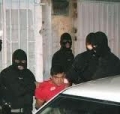
قوات الامن الايرانية تطارد المواطن ضياء بيت سعيد و تعتقل شقيقه و قرية خلف المسلم تداهم للمرة الرابعة في غضون شهر واحد
كانون1/ديسمبر 13, 2012داهمت قوات الامن الايرانية يوم الثلاثاء الموافق ل 11.12.2012 و للمرة الثانية في غضون شهر واحد بيت المواطن ضياء بيت سعيد احد شعراء الأحواز في شارع كارون الواقع في مدينة الأحواز العاصمة دون اي انذار مسبق بحثأ عنه و لكنها لم تتمكن من القاء القبض عليه و ذلك لسبب عدم تواجده في بيته خوفأ من اعتقاله بعد ماشارك المواطن ضياء في تشييع جثمان ستار صياحي الذي فارق الحياة لاسباب غامضة بعد عودته ببضعة ايام من مقر الاستخبارات الايرانية في الأحوازفي شهر نوفمبر الماضي.
و قامت تلك القوات باعتقال شقيقه علي بيت سعيد دون توجيه اى اتهام له و ذلك للضغط على شقيقه سيد ضياء لتسليم نفسه الى دائرة الاستخبارات الايرانية في الأحواز.
في السياق نفسه داهمت قوات الامن الايرانية في نفس اليوم بيوت المواطنين الأحوازيين في قرية خلف المسلم (كعب) للمرة الرابعة منذ شهر نوفمبر بعد ما اعتقلت في الثامن من نوفمبر 8 مواطنين من تلك القرية اتهمتهم وزارة الاستخبارات الايرانية في بيانين رسميين بالعلاقة مع الغرب و دولة خليجية للاخلال في امنها القومي بالاضافة الى اتهماهم بالقيام بتسعة تفجيرات استهدفت الاماكن الاقتصادية و انابيب الغاز و النفظ.
http://www.khouznews.ir/fa/news/24455/دستگیری-عوامل-تروریستی-در-خوزستان
http://www.khouznews.ir/fa/news/24695/جزئیات-دستگیری-عوامل-گروهک-وابسته-به-سرویسهای-اطلاعاتی-بیگانه-در-خوزستان
و وفقأ للمعلومات المتوفرة لدى المنظمة ان المعتقلين الثمانية نقلوا منذ تاريخ اعتقالهم الى الزنزانات الانفرادية التي تشرف عليها رجال من الاستخبارات الايرانية و مورس ضدهم ابشع انواع التعذيب الجسدي و النفسي و ذلك لاخذ الاعتراف من السجناء تحت العذيب الامر الذي ينافي القوانين الانسانية و الدولية .
و حاول اقارب المعتقلين بعد ايام من البحث على ابناءهم زيارتهم و لكن قوات الامن و رجال الاستخبارات قامت بتهديدهم و حتى سجنهم الى ساعات.
و تخشى المنظمة الأحوازية ان تصدر احكام جائرة بحق السجناء الأحوازيين خاصة و انهم يواجهون محاكم غير عادلة لايسمح فيها لهم بتوكيل محام للدفاع عن انفسهم الامر الذي ادانته المنظمات الانسانية الحكومية و غير الحكومية.
يذكر ان السلطات الايرانية قامت بتأريخ 18 يونيو 2012 باعدام اربعة مواطنين أحوازيين ثلاثة منهم اشقاء بتهمة قتل جندي ايراني في الانتفاضة السلمية للشعب الأحوازيو و التي اندلعت في شهر ابريل 2012 ،الامر الذي تم نفيه من قبل المعدومين الاربعة في تسجيل مصور لهم تم تسريبه من داخل السجن وجهوا فيه رسالة الى المجتمع الدولي و على رأسه السيد احمد شهيد المسؤول الدولي على ملف حقوق الانسان في ايران في مجلس حقوق الانسان التابع للامم المتحدة للتدخل العاجل لانقاذهم و كشف مايجري في داخل السجون الايرانية في الأحواز.
المنظمة الأحوازية لحقوق الانسان
13.12.2012
60 عاما على الاعلان العامي لحقوق الانسان و المنظمة تطالب المجتمع الدولي لانقاذ الشعب و الارض الأحوازيين
كانون1/ديسمبر 10, 2012تهنئ المنظمة الأحوازية لحقوق الانسان المجتمع الدولي و على رأسه الجمعية العامة للأمم المتحدة و كافة المنظمات الانسانية الحكومية و غير الحكومية مناسبة حلول اليوم العالمي لحقوق الانسان التي تصادف العاشر من ديسامبر لكل عام، متمنية المزيد نحو التقدم و الازدهار في تحقيق العدالة الانسانية في كافة انحاء العالم و وضع حد للجرائم الانسانية التي ترتكب بحق الشعوب المضطهدة و الافراد من قبل الانظمة الحاكمة.
و بما ان العيش بالكرامة و الحرية و التمتع بالحقوق الانسانية حق كفلته كافة القوانين الدولية و القوانين الانسانية للمجتمعات البشرية، تطالب المنظمة الأحوازية لحقوق الانسان مجلس حقوق الانسان التابع للامم المتحدة والمنظمات الانسانية العالمية ببذل جهد اكبر لتحقيق ماتطمح له الشعوب المضطهدة وذلك بالضغط على الانظمة الحاكمة لرعاية حقوق مواطنيها،الحقوق التي وقعت عليها تلك الحكومات لتطبيقها .
و اما في مايخص الشعب و الارض الأحوازيين تتوجه المنظمة الأحوازية لحقوق الانسان لكل من مجلس حقوق الانسان التابع للامم المتحدة سيما منظمة الصحة العالمية و المنظمات الانسانية العالمية الاخرى كالامنستي و هيومن رايتس ووتش بالتحرك العاجل و بالمزيد من الضغط على السلطات الايرانية للكشف عن الجرائم العنصرية و الممنهجة التي تمارسها تلك السلطات في الأحواز لاسيما التلوث البيئي المتعمد و الذي راح ضحيته المئات من المواطنين الأحوازيين.
يذكر ان في العاشر من كانون الأول/ ديسمبر من عام 1948، صادقت الجمعية العامة للأمم المتحدة على الإعلان العالمي لحقوق الإنسان كمرجعية حقوقية لحماية الإنسان من الظلم والاستبداد، كما ورد في المادة الأولى من الإعلان والتي جاء فيها: "يولد جميع الناس أحراراً ومتساوين في الكرامة والحقوق". غير أن الإعلان غير ملزم بموجب القانون الدولي.
المنظمة الأحوازية لحقوق الانسان
الجمعية العامة للامم المتحدة تدين انتهاكات حقوق الانسان في ايران و سوريا و كورية الشمالية
تشرين2/نوفمبر 29, 2012تبنت الجمعية العامة للامم المتحدة الثلاثاء الموافق ل 27 نوفمبر 2012 قرارا يدين الانتهاكات الخطيرة والمتكررة لحقوق الانسان في ايران ,و يندد القرار بممارسة التعذيب وتنفيذ عقوبة الاعدام في غياب اي ضمانات دولية معترف بها وزيادة عدد الاعدامات.
وأسف القرار لان طهران لم تتوقف عن اعدام قاصرين ، مؤكدا ان المدافعين عن حقوق الانسان في ايران وبينهم محامون وصحافيون، هم بمثابة اهداف بصورة متزايدة ومنهجية.
ويندد القرار الذي صاغته كندا و تتبنته دول اخرى وحصل على تأييد 83 صوتا مقابل معارضة 31 وامتناع 68، بالتمييز حيال النساء وافراد الاقليات العرقية او الدينية. ويطلب من الحكومة الايرانية الافراج فورا ومن دون شروط عن كل الذين اعتقلوا او احتجزوا بطريقة تعسفية لانهم مارسوا حقهم في التجمع السلمي فقط.
فيما ادان القرار الجرائم التي ترتكبها كل من سورية و كورية الشمالية .
وسيعرض القرار اللذي أصدرته اللجنة الثالثة للجمعية العامة التي يتركز عملها على حقوق الإنسان للتصويت الرسمي الشهر المقبل في جلسة موسعة للجمعية العامة .
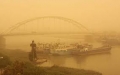
سازمان بهداشت جهانى:أحواز الوده ترين شهر جهان است
تشرين2/نوفمبر 28, 2012سازمان بهداشت جهانی درتازه ترين بررسی خود اعلام کرده است که شهرهای ايران، پاکستان، هند و مغولستان در صدر فهرست آلوده ترين شهرهای جهان قرار دارند. به گزارش خبرگزاری آسوشيتدپرس، سازمان بهداشت جهانی تصريح کرده است: شهر اهواز، مرکز استان خوزستان، با اختلاف چشمگير نسبت به ديگر شهرهای جهان در صدر آلوده ترين شهرها از نظر ذرات معلق درهوا کوچکتر از ۱۰ ميکرومتر است. سازمان بهداشت جهانی می گويد: اطلاعات و آمار اين بررسی، براساس اندازه گيری سطح ذرات معلق در هوا کوچکتر از ۱۰ ميکرومتر - به اصطلاح PM10 – که توسط يک هزار و ۱۰۰ شهر جهان جمع اوری شده و در اختیار این سازمان قرار داده شده است.
سازمان بهداشت جهانی همچنين تصريح کرده است، آلودگی هوا سالانه به مرگ زودرس يک ميليون ۳۴۰ هزار نفر در جهان منجر می شود. اين گزارش اضافه کرده است سرمايه گذاری برای کاهش آلودگی ها هوا موثرين شيوه برای مقابله با بيماری ها دراين زمينه است.
سازمان بهداشت جهانی می گويد: در اهواز ميزان ذرات معلق کمتر از ۱۰ ميکرومتر به طور متوسط سالانه ۳۷۲ ميکروگرم در هر متر مکعب بوده است. در این گزارش از صنايع سنگين و سوخت خودرو با کيفيت پایین به عنوان عوامل اصلی آلودگی نام برده شده است.
کارشناسان محيط زيست می گويند، ذارات کمتر از ۱۰ ميکرومتر بر اثر احتراق سوخت های فسيلی در خودروها، ژنراتور ها يا از تغييرات شيميايی جويی به وجود مي آيند که قابليت نفوذ به عمق ريه ها را دارند.
پس از اهواز، اولان باتور، پايتخت مغولستان با ميزان متوسط ۲۷۹ ميکروگرم ذرات معلق کمتر از ۱۰ ميکرومتر قرار دارد. سازمان بهداشت جهانی همچنين در ادامه اين فهرست آورده است که شهر سنندج، مرکز استان کردستان، با متوسط سالانه ۲۵۴ ميکروگرم سومين شهر آلوده جهان از نظر ذرات معلق کمتر از ۱۰ ميکرومتر محسوب می شود.
در اين بررسی همچنين شهرهايی چون کويته پاکستان، کنپور هند و گابورون پايتخت بوتسوانا جزو آلوده ترين شهرهای جهان اعلام شده اند. در این گزارش از برخی از شهرهای آمریکا و کانادا به عنوان پاکیزه ترین شهرها یاد شده است. سازمان بهداشت جهانی می گويد، هرچند دلايل براي آلودگی بسيار زياد می تواند متفاوت باشد، اما اغلب روند سريع صنعتی شدن، استفاده از سوخت ها با کيفيت پايين و همچنين نيروگاه های توليد برق عوامل اصلی اين آلودگی ها هستند. اين گزارش می افزايد: در مناطق شهری بزرگ مانند دهلی نو، بمبئی و کلکته در هند ، ساخت نيروگاه های جديد در محدوده شهر ممنوع است، و نيروگاه های موجود در حال تعطيلی و يا انتقال به مکان ديگری هستند.

منظمة الصحة العالمية : الأحواز اكثر المدن تلوثأ في العالم
تشرين2/نوفمبر 28, 2012اعلنت منظمة الصحة الدولية في آخر تحقيقاتها بأن مدن إيران و هند و مغولستان من أكثر المدن تلوثا في العالم . كما جاء على وكالة آسوشيتدپرس على أن صرحت منظمة الصحة العالمية بأن مدينة الأحواز العاصمة من أكثر المدن تلوثا على مستوى العالم من حيث الذرات المعلقة في الهواء التي تكون أصغر من 10 ميكرومتر .
و صرح مركز الصحة الدولية بأن هذه المعلومات جمعت على أساس الذرات المعلقة بالهوى التي تكون أصغر 10 ميكرو متر - بالاصطلاح PM10 - لأكثر من الف و مائة مدينة في العالم . و أضاف مركز الصحة العالمية بان تلوث الهوى سنويا يسبب موت مليون و 340 ألف شخص في العالم .
مركز الصحة الدولية يقول بأن الذرات المعلقة الاصغر من 10 ميكرومتر في مدينة الأحواز العاصمة سنوياأ تكون بالشكل المتوسط 372 ميكروغرام في كل متر مكعب . على أساس هذا التقرير سبب هذا التلوث الصنايع الكبيرة و الوقود المنخفضة الجودة التابعة للسيارات .
خبراء البيئة يقولون بأن الذرات المعلقة الاصغر من 10 ميكرومتر تتشكل من احتراق المحروقات في السيارات و يا على إثر التغييرات الكيمياوية التي قادرة أن تتنفذ في الرئات .
بعد مدينة الأحواز مدينة اولان باتور عاصمة منغوليا بميزان 279 ميكروغرام ذرات المعلقة الاصغر من 10 ميكرومتر الأكثر تلوثا .
مركز الصحة العالمي في هذا التقرير يذكر بأن مدينة سنندج تقع في المرتبة الثالثة بميزان 254 ميكروغرام من حيث الذرات المعلقة لاصغر من 10 ميكرومتر في التلوث .
مركز الصحة الدولية يقول بأن من الممكن أن تكون هناك أسباب متفاوتة لازدياد التلوث في الهواء ولكن الأكثر رواجا هو التصنيع السريع ، استخدام وقود منخفض الجودة و محطات انتاج الكهرباء .

يجب على إيران الكشف عن مصير السجناء من الأقلية العربية
تشرين2/نوفمبر 27, 2012(نيويورك، 21 يونيو/حزيران 2012) ـ قالت هيومن رايتس ووتش اليوم إنه يتعين على السلطات الإيرانية تقديم معلومات فورية عن مكان وأحوال سبعة رجال ينتمون إلى الأقلية العرقية العربية بالبلاد ومعروف أنهم في عهدة السلطات الإيرانية. تخشى هيومن رايتس ووتش أن تكون سلطات السجن في مدينة الأحواز الجنوبية الغربية قد أعدمت أربعة على الأقل من الرجال السبعة في الأيام الأخيرة، وقد رفضت حتى الآن تسليم الجثث إلى ذويهم. قالت هيومن ووتش إن السلطات الإيرانية عليها أن تعلق استخدام عقوبة الإعدام فوراً.
قالت مصادر مقربة من أسر الإخوة الثلاثة ـ طه حيدريان، 28 سنة، وعباس حيدريان، 25 سنة، وعبد الرحمن حيدريان، 23 سنة ـ قالت لـ هيومن رايتس ووتش إن السلطات قامت يوم 17 يونيو/حزيران بإبلاغ العائلة بإعدام الثلاثة. قامت سلطات السجن بنقل الإخوة قبل أسبوعين من العنبر العام بسجن كارون إلى جهة غير معلومة. تم اعتقال أخ آخر وأخذه بدوره إلى جهة غير معلومة حين استعلم عن مكان إخوته. لم تتلق أسر الإخوة أية معلومات منذ نقلهم، مما يثير المخاوف من إعدام الرجال الأربعة المحكوم عليهم بالإعدام في غضون أيام. الرجل الرابع الذي يُعتقد أنه أعدم هو علي نعامي شريفي.
وقال جو ستورك، نائب المدير التنفيذي لقسم الشرق الأوسط في هيومن رايتس ووتش: "على مسؤولي السجن أن يطلعوا أسر هؤلاء الرجال على مصير أقاربهم. حتى عند إدانة شخص ما بجريمة خطيرة، فإن هذا لا يعنى حرمان عائلته من المعلومات ـ كما يجب على السلطات تسليم جثث من تم إعدامهم لإتاحة الدفن اللائق".
كانت قوات الأمن قد اعتقلت الإخوة حيدريان، والشريفي، عقب احتجاجات معارضة للحكومة في عدة بلدات في أرجاء محافظة خوزستان ذات الأغلبية العربية، يوم 15 أبريل/نيسان 2011 أو ما تلاه. زعمت [السلطات] أن المحتجزين مسؤولون عن قتل رجل شرطة. أقيمت احتجاجات أبريل/نيسان 2011 لإحياء الذكرى السادسة لاحتجاجات 2005 في خوزستان، التي فتحت فيها قوات الأمن النيران لتفريق المتظاهرين في الأحواز وغيرها من المدن والبلدات، فقتلت 50 محتجاً على الأقل واحتجزت المئات. يرى المحتجون أن الحكومة الإيرانية تمارس التمييز المنهجي ضد الأقلية العربية، وخاصة في مجالات التوظيف والإسكان والحقوق المدنية والسياسية.
قالت عدة مصادر مقربة من عائلات المحتجزين داخل إيران وخارجها، قالت لـ هيومن رايتس ووتش إن مسؤولي سجن كارون بالأحواز قاموا في 9 يونيو/حزيران بنقل طه وعباس وعبد الرحمن حيدريان وثلاثة آخرين، هم منصور حيدريان وأمير معاوي وشريفي، إلى جهة غير معلومة. قالت المصادر إن السلطات قامت في نفس اليوم أيضاً باعتقال عبد الجليل حيدريان، وهو أخ آخر من الإخوة حيدريان، حين حاول معرفة المزيد من المعلومات عن قضية إخوته، ونقلته بدوره إلى جهة غير معلومة. قال أحد المصادر لـ هيومن رايتس ووتش إن محكمة ثورية حكمت على معاوي بـ15 عاماً من النفي الداخلي في تهم تتعلق بالأمن الوطني، لكنه ليس في عنبر الإعدام.
أدانت محكمة ثورية في الأحواز الإخوة حيدريان، إضافة إلى شريفي، بتهمة قتل ضابط شرطة وجرح آخر في اثناء احتجاجات 15 أبريل/نيسان 2011، حسب تصريح نشطاء من الإيرانيين العرب لـ هيومن رايتس ووتش. يُعتقد أن الادعاء اتهم الرجال بمحاربة الله والإفساد في الأرض، وهي تهم عقوبتها الإعدام. في 5 مارس/آذار قام مسؤولو وزارة الاستخبارات بإبلاغ أسر المحتجزين بأن المحكمة العليا أكدت حكم المحكمة الأدنى والعقوبة، وقالوا إن احتمال إعدام المحتجزين صار وشيكاً.
لم تتمكن هيومن رايتس ووتش من العثور على أية معلومات عامة عن مكان وموعد المحاكمة المبدئية. أنكرت السلطات على المحتجزين الحق في التواصل المنتظم مع أسرهم ومحامييهم في فترة ما قبل المحاكمة، مما أثار المخاوف من خضوع الرجال للتعذيب لإجبارهم على الاعتراف، كما قالت المصادر.
في 13 ديسمبر/كانون الأول 2011 قامت محطة "بريس تي في" الحكومية الناطقة بالإنجليزية بإذاعة وثائقي يُظهر ثلاثة رجال من العرب يعترفون أمام الكاميرا بأنهم نفذوا "أنشطة إرهابية". زعم البرنامج أن الرجال ـ هادي راشدي وهاشم شعباني وطه حيدريان ـ هم جزء من جماعة باسم "خلق عرب"، وزعم أيضاً أن تلك الجماعة مدعومة من الولايات المتحدة والمملكة المتحدة، علاوة على الإيرانيين العرب المقيمين في الخارج الذين يتظاهرون بأنهم من نشطاء حقوق الإنسان.
كان مصدر يعرف كلا من راشدي وشعباني قد أبلغ هيومن رايتس ووتش من قبل بأنهما كانا ضمن أكثر من 10 من سكان خلف أباد، البلدة الواقعةعلى بعد نحو 120 كيلومتراً جنوب شرق الأحواز، ممن اعتقلتهم السلطات واحتجزتهم منذ يناير/كانون الثاني 2011. المعلومات المتاحة عن التهم الموجهة لراشدي وشعباني قليلة، لكن المصادر تخشى تعرضهم لنفس مصير طه حيدريان والآخرين.
قالت هيومن رايتس ووتش إنه منذ مايو/أيار 2011 أعدمت السلطات 11 على الأقل من الرجال الإيرانيين العرب، وصبياً عمره 16 سنة، في سجن كارون، لارتباطهم المزعوم بجماعات ضالعة في مهاجمة قوات الأمن. قال النشطاء الحقوقيون لـ هيومن رايتس ووتش إن 6 أشخاص آخرين على الأقل تعرضوا للتعذيب حتى الموت في عهدة قوات الأمن والاستخبارات على ذمة التظاهرات المعارضة للحكومة التي اجتاحت محافظة خوزستان في أبريل/نيسان 2011 و 2012.
تعارض هيومن رايتس ووتش عقوبة الإعدام في كافة الظروف نظراً لطبيعتها القاسية، وغير الإنسانية، ولكونها عقوبة لا يمكن الرجوع عنها.
في أبريل/نيسان 2011 قامت هيومن رايتس ووتش بتوثيق استخدام الذخيرة الحية من قِبل قوات الأمن ضد المحتجين في المدن في أرجاء محافظة خوزستان، مما قتل العشرات وجرح أعداداً أكبر بكثير. لم يتم التحقيق مع أي مسؤول إيراني بشأن هؤلاء القتلى.
جددت هيومن رايتس ووتش أيضاً نداءها للسلطات الإيرانية بالسماح لوسائل الإعلام ومنظمات حقوق الإنسان الدولية المستقلة بالتحقيق في مزاعم وقوع انتهاكات جسيمة لحقوق الإنسان في محافظة خوزستان.
قال جو ستورك: "يوحي ارتفاع عدد المعتقلين والقتلى في محافظة خوزستان في السنوات الأخيرة، إضافة إلى التعتيم الإعلامي، بأن لدى الحكومة أموراً فظيعة تريد إخفاءها. تتطلب العدالة البسيطة من السلطات أن تفتح تحقيقات مستقلة وشفافة في مصير المعتقلين وفي مزاعم التعذيب".
Situation of human rights in the Islamic Republic of Iran
تشرين2/نوفمبر 26, 2012United Nations A/67/327
General Assembly Distr.: General
22 August 2012
Original: English
12-46990 (E) 011012
*1246990*
Sixty-seventh session
Item 70 (c) of the provisional agenda*
Promotion and protection of human rights: human
rights situations and reports of special rapporteurs
and representatives
Situation of human rights in the Islamic Republic of Iran
Report of the Secretary-General
Summary
The present report is submitted in accordance with General Assembly resolution 66/175, in which the Assembly requested the Secretary-General to submit a report to the Assembly at its sixty-seventh session. The report reflects the patterns and trends in the human rights situation in the Islamic Republic of Iran and provides information on progress made in the implementation of the present resolution, including recommendations to improve its implementation. In its resolution 66/175, the Assembly called upon the Government of the Islamic Republic of Iran to address the substantive concerns highlighted in the previous report of the Secretary-General
(A/66/361) and to respect fully its human rights obligations, in law and in practice, in relation to a number of specifically identified concerns.
* A/67/150.
A/67/327
2 12-46990
Contents
Page
I. Introduction . . . . . . . . . . . . . . . . . . . . . . . . . . . . . . . . . . . . . . . . . . . . . . . . . . . . . . . . . . . . . . . . . . . 3
II. Thematic issues . . . . . . . . . . . . . . . . . . . . . . . . . . . . . . . . . . . . . . . . . . . . . . . . . . . . . . . . . . . . . . . . 3
A. Torture and cruel, inhuman or degrading treatment or punishment, including flogging
and amputations . . . . . . . . . . . . . . . . . . . . . . . . . . . . . . . . . . . . . . . . . . . . . . . . . . . . . . . . . . . 3
B. Death penalty, including public executions . . . . . . . . . . . . . . . . . . . . . . . . . . . . . . . . . . . . . 5
C. Executions of juvenile offenders . . . . . . . . . . . . . . . . . . . . . . . . . . . . . . . . . . . . . . . . . . . . . . 6
D. Women’s rights . . . . . . . . . . . . . . . . . . . . . . . . . . . . . . . . . . . . . . . . . . . . . . . . . . . . . . . . . . . . 7
E. Rights of minorities . . . . . . . . . . . . . . . . . . . . . . . . . . . . . . . . . . . . . . . . . . . . . . . . . . . . . . . . 8
F. Freedom of peaceful assembly and association and freedom of opinion and expression . 10
G. Economic, social and cultural rights . . . . . . . . . . . . . . . . . . . . . . . . . . . . . . . . . . . . . . . . . . . 14
III. Cooperation with international human rights mechanisms and the Office of the United
Nations High Commissioner for Human Rights . . . . . . . . . . . . . . . . . . . . . . . . . . . . . . . . . . . . . . 16
A. Cooperation with the United Nations human rights treaty system . . . . . . . . . . . . . . . . . . . 16
B. Cooperation with special procedures. . . . . . . . . . . . . . . . . . . . . . . . . . . . . . . . . . . . . . . . . . . 17
C. Cooperation with the Office of the United Nations High Commissioner for Human
Rights . . . . . . . . . . . . . . . . . . . . . . . . . . . . . . . . . . . . . . . . . . . . . . . . . . . . . . . . . . . . . . . . . . . . 17
IV. Conclusions and recommendations . . . . . . . . . . . . . . . . . . . . . . . . . . . . . . . . . . . . . . . . . . . . . . . . 18
A/67/327
12-46990 3
I. Introduction
1. The present report is submitted pursuant to General Assembly resolution 66/175, in which the Secretary-General was requested to report to the Assembly at its sixty-seventh session on the progress made in the implementation of the resolution. It reflects the latest patterns and trends in the human rights situation in the Islamic Republic of Iran and attempts to highlight issues affecting the improvement of economic, social and cultural rights. It draws upon observations made by treaty monitoring bodies, the special procedures of the Human Rights Council, United Nations agencies and international non-governmental organizations. It also refers to information from official State media, owing to the difficulty of collecting independent data on the human rights situation in the Islamic Republic ofIran.
2. Since the last report of the Secretary-General to the Human Rights Council (A/HRC/19/82), human rights violations continued, targeting in particular journalists, human rights defenders and women’s rights activists. Concerns about torture, amputations, flogging, the increasingly frequent application of the death penalty (including in public and for political prisoners), arbitrary detention and unfair trials, continue to be raised by United Nations human rights mechanisms. Freedom of expression and assembly remained curtailed, and opposition leaders have remained confined under house arrest since February 2011. Discrimination against minority groups persisted, in some cases amounting to persecution.
3. There were, however, some positive developments including the engagement by the Islamic Republic of Iran with the Human Rights Committee, which reviewed its third periodic report under the International Covenant on Civil and Political Rights (CCPR/C/IRN/3) in October 2011, and the visit of a working-level mission of the Office of the United Nations High Commissioner for Human Rights (OHCHR) in December 2011. Also, the new Islamic Penal Code, adopted by Parliament in January 2012, omits the penalty of stoning and reduces the range of offences for which the death penalty may be applied against juveniles. Regrettably, the Government did not admit the Special Rapporteur on the situation of human rights in the Islamic Republic of Iran, nor did it follow up on its pledge to invite two special procedures mandate holders.
II. Thematic issues
A. Torture and cruel, inhuman or degrading treatment or
punishment, including flogging and amputations
4. As highlighted in the last report of the Secretary-General to the Human Rights Council, the recurrence of allegations of torture in detention facilities remains an area of grave concern to United Nations human rights mechanisms. The special procedures mandate holders of the Human Rights Council and the United Nations treaty bodies continue to express concern about reports of torture and other cruel, inhuman or degrading treatment or punishment. In their comments on the Secretary- General’s report, the authorities stated that the Constitution of the Islamic Republic of Iran forbids the use of all forms of torture for the purpose of extracting confession or acquiring information and that the Islamic Penal Code and the Code on citizen’s rights provide for acts of torture to be punished.
5. A joint study on global practices in relation to secret detention in the context of countering terrorism, conducted by a number of special procedures mandate holders (see A/HRC/19/44) identified a pattern of incommunicado detention of political prisoners in secret or unofficial detention facilities. Concerns were expressed about section 209 at Evin Prison, where political prisoners in particular are often held in prolonged, solitary and incommunicado confinement.1 In communications to the authorities, the Special Rapporteur on torture expressed concern about reports of torture and other cruel, inhuman or degrading treatment or punishment and stressed that the use of solitary and prolonged confinement increases the risk that acts of torture and other cruel, inhuman or degrading treatment or punishment will go undetected and unchallenged (see A/HRC/19/61/Add.4). The Human Rights Committee echoed similar concern about reports of the widespread use of torture and cruel, inhuman or degrading treatment in detention facilities, particularly in respect of persons accused of national securityrelatedcrimes.
6. On 28 February 2012, the Special Rapporteur on torture, the Special Rapporteur on extrajudicial, summary or arbitrary executions and the Independent Expert on minority issues expressed grave concerns about the alleged torture and subsequent death in detention of two ethnic Ahwazi Arab activists. According to the information received, Mr. Nasser Alboshokeh Derafshan, an ethnic Arab who had reportedly been arrested by security forces on 26 January, died under torture during his detention. His family was informed of his death on 30 January. Mr. Mohammad Al-Kaabi was arrested by security forces in Shush on 21 January and taken to a detention facility run by the Ministry of Intelligence, where he was allegedly tortured to death. Local authorities reportedly buried the body and warned his family to abstain from conducting public mourning services.
7. Amputation and corporal punishment, including flogging, which is considered incompatible with article 7 of the International Covenant on Civil and Political imposition of retribution punishment continue to be received. During the reporting period, at least three persons charged with acid attacks were sentenced to blinding, and their cases are pending final approval by the Chief of the Judiciary. The Iranian authorities exclude the State’s responsibility in cases of retribution and stress that sharia jurisprudence considers retribution a private right of the victim’s family and that the authority to execute the punishment is solely dependent upon the demand of
the victim’s family. There are reports of a noticeable increase in corporal punishment, particularly in public. The authorities refer to crime deterrence and an alternative to incarceration as justification. On 22 May, one person accused of abduction was publicly punished with 74 lashes in Khuzistan.
B. Death penalty, including public executions
8. In January 2012, the Parliament of the Islamic Republic of Iran passed a revised Islamic Penal Code. It is currently pending final approval by the Guardian Council and signing by the President. It reportedly omits the punishment of stoning and the details of this method of execution but retains the death penalty for crimes
relating to national security, Moharebeh (enmity against God), mofsid-fil-arz (corruption on earth), drug trafficking, rape, qisas (retribution in kind) and certain other hudud crimes. The Secretary-General, while welcoming the omission of the punishment of stoning, regrets that the revised law fails to take into account numerous calls by the international community, in particular the United Nations human rights mechanisms, to fully abolish the death penalty or to restrict its imposition to only the “most serious crimes”, as stipulated in article 6 (2) of the International Covenant on Civil and Political Rights. Furthermore, concern remains that the punishment of stoning may still be issued at a judge’s discretion, in accordance with sharia law or fatwas.
9. The Secretary-General is concerned that the death penalty continues to be applied with alarming frequency. He notes with concern the reported executions of over 600 persons in 2011, and the ensuing escalation in executions in the first half of 2012, with over 200 persons reported to have been executed since January. The
special procedures also continue to express alarm at the high number of death sentences handed down and the increased number of executions carried out, on the basis of charges that do not amount to the most serious crimes, in particular drugrelated charges. On 23 May, authorities reported the execution of 14 persons for drug-related offences in Tehran. On 28 June, the Special Rapporteurs on the situation of human rights in the Islamic Republic of Iran, on extrajudicial, summary or arbitrary executions, and on torture publicly condemned executions in the Islamic Republic of Iran and stated that at least 140 executions, including 25 in public, were
known to have been carried out since the beginning of 2012, with some sources indicating the figure to be as high as 220. In his report to the Human Rights Council, the Special Rapporteur on the situation of human rights in the Islamic Republic of Iran expressed concern about the executions of persons charged with drug-related offences and reported the executions of 600 persons in 2011, the majority for offences involving drugs (see A/HRC/19/66). Concerns were also raised regarding fair trial safeguards, including access by convicts to lawyers and to their families. The authorities attribute the increased number of executions to drug trafficking and maintain that all legal proceedings and requirements are completed in drug-related cases. The Judiciary also appears to be expanding the scope of the executions to include cases relating to financial embezzlement. On 30 July, a Judiciary spokesman was quoted as saying that 4 of the 39 persons convicted in a $2.6 billion financial fraud case had been given the death penalty; others had received jail sentences, including life imprisonment.2
10. The Special Rapporteur on extrajudicial, summary or arbitrary executions sent several communications during the reporting period, expressing concerns about the ongoing adjudication of death penalties for crimes of Moharebeh (enmity against God), mofsid-fil-arz (corruption on earth), apostasy and drug-related cases,
following trials in which the guarantees of due process of law had not been properly applied. On 15 November 2011, the Special Rapporteurs on extrajudicial, summary or arbitrary executions, on the independence of judges and lawyers and on torture, and the Independent Expert on minority issues drew the authorities’ attention to the imminent execution of Kurdish activists, Mr. Zanyar Moradi and Mr. Loghman
Moradi, both sentenced to public execution in December 2010 on charges of Moharebeh (enmity against God) and mofsid-fil-arz (corruption on earth). The sentence was apparently upheld by the Supreme Court in October 2011. It is alleged that both men were coerced into confession after being tortured for 25 days. In a letter dated 11 June 2012, the Iranian authorities confirmed the death penalty for both men and stated that the verdict was open to appeal.
11. The high incidence of executions in public remains an ongoing concern, with a spike reported in 2012. At least 40 public executions were reported by the authorities in 2011, and over 30 cases were recorded in the first half of 2012. The majority of the executions were reportedly attended by a large crowd, including minors.
C. Executions of juvenile offenders
12. There have been efforts to progressively restrict the executions of juvenile offenders. The revised Islamic Penal Code, which is yet to be approved, does not end juvenile executions but establishes new measures to limit the juvenile death penalty. It revokes capital punishment for persons under the age of 18 charged with certain crimes, such as smuggling narcotics. In cases of attempted premeditated murder, where juveniles may still face execution, the Code introduces the notion of mental maturity and the ability to reason as key elements regarding their sentencing under capital offences. Article 90 of the revised Islamic Penal Code stipulates that juveniles under 18 who commit offences under the categories of hudud and qisas will not be sentenced to death if the court decides, through forensic evidence, that the offender did not have adequate mental maturity and the ability to reason. However, the Code does not raise the age of criminal liability of children. The latest juvenile execution reported was in September 2011, when 17-year-old Alireza Molla-Soltani was publicly hanged.
13. Furthermore, under the category of discretionary penalties (tazir), the Code abolishes corporal punishment and introduces alternative penalties that include community service, thereby minimizing the incidence of depriving children of their liberty; takes age and the severity of the offence into account in the determination of the punishment; and authorizes judges to assess progress in the rehabilitation of child offenders and eventually, discontinue punishment, especially in the case of deprivation of liberty. Moreover, the revised Code of Criminal Procedures, which has yet to be adopted, contains provisions that protect the rights of children. The revised Code of Criminal Procedures also provides for the establishment of juvenile courts that would hear all crimes committed by children and individuals under 18.
14. During its visit to Tehran in December 2011, the authorities informed an OHCHR delegation that the number of juvenile executions had dropped dramatically and that offences committed by persons under the age of 18 were tried in children’s courts, where efforts were being made to apply lenient punishments.
The authorities also pointed out that, even in cases of qisas (retribution), regarded under Iranian law as the private right of the victim’s family, and which cannot be
overruled by the judiciary, extensive efforts were being made by the Conciliation Commission of the judiciary to encourage the families of the victim and the perpetrator to reach a diyah (blood money) settlement. They also informed the delegation that the Government’s policy was to encourage next of kin to forfeit the right to qisas and that, each year, specific funds were earmarked by the Ministry of Justice to assist persons sentenced to pay the diyah settlement.
D. Women’s rights
15. In addition to achievements in women’s education and health, measures to improve women’s participation in decision-making and women’s political participation have been reported. There are currently four women cabinet ministers and a number of vice-ministers, and one of the organizational posts in each ministry is allocated to an adviser on women’s and family affairs.3 The number of women members of Islamic Councils in rural and provincial areas increased by 8.44 per cent in the third-term elections. The number of women in management positions in the Ministry of Education is reported to have increased from 45 in 2005 to 482 in 2011. In the past academic year, 390,306 girls were admitted to higher education, an increase of 192.96 per cent in three decades. Against this backdrop, the number of women representatives in Parliament remains low.4 Women face restrictions in their appointment to certain decision-making positions. No woman can serve as President of the country and no woman has ever been appointed to the Council of Guardians or the Expediency Council.5 Women may act as advisory judges, but cannot preside over a court.
16. The 2011 national census indicated that women’s overall economic participation rate is 12.6 per cent, a decrease of 3 per cent compared with 2005.
Women constitute only 13 per cent of the paid workforce. This is coupled with the prevalence of discriminatory job advertisements, which call for only men or only women applicants. Such requirements would seem discriminatory and could be based on stereotyped assumptions regarding which jobs are considered suitable for women.
17. The authorities have been working towards comprehensive gender segregation in universities and other institutions of higher education. In September 2011, the Minister of Science, Research and Technology revealed a comprehensive gender segregation plan based on a decision of the Supreme Council of the Cultural
Revolution. The plan has received support from religious clerics, who have been pressing for total gender segregation in public places. Since September 2011, several universities have received authorization to implement gender segregation. Authorities have also been encouraging women students to study in their home cities and require those wishing to study elsewhere to produce authorizations from their father or husband. Women’s access to higher education is further curtailed by the quota system in universities. The Guidelines for University Entrance Exams (2011-2012) prescribe a quota for admission of men and women to certain public engineering universities for the current academic year. Based on those restrictions, it was estimated that fewer than 32 per cent of the admitted students were women. The percentage was 45 per cent for 2007-2008. These measures constrain women’s ability to exercise their free and equal access to higher education. 18. According to various reliable reports, women activists continue to face intimidation and detention. A group of Iranian women activists, fearful of reprisal from the authorities, decided not to attend the fifty-sixth session of the Commission on the Status of Women in New York (February-March 2012).6 A number of activists had been arrested and charged with national security-related charges for their participation in the Commission’s fifty-fifth session in 2011, including Maryam Bahrman, an Iranian women’s rights activist and member of the “One Million Signatures Campaign”, who was arrested on 11 May 2011 and charged with national security offences. She is currently awaiting a court hearing. Another women’s rights activist, Faranak Farid, also arrested in September 2011, is facing similar charges. The authorities argue that women activists associated with the “One Million Signatures Campaign” are engaged in illegal activities because they failed to gain legal permission as required by the law on “Activities of Political Parties, Societies, Political and Professional Associations and Islamic and Recognized Minority Religious Associations”.
19. The Family Protection Bill introduced in the Majlis (Parliament) in 2007 is pending final approval. Certain controversial provisions in the Bill on taxing dowries, the marriage of an Iranian woman to a non-Iranian man and the practice of temporary marriages, which have a significant socioeconomic impact on women’s
lives, were nominally improved. Concern remains that the Bill still hinders women’s advancement. For instance, it makes registration of temporary marriages obligatory only in cases where pregnancy is involved; the parties have specifically requested registration; or registration is a condition of the marriage. The lack of obligation to´register temporary marriage would be a major setback for the promotion of gender equality and would undermine women’s marital rights.
E. Rights of minorities
20. The international community continues to express concerns about the very serious discrimination against ethnic and religious minorities in law and in practice, in particular the Baha’i community. The Special Rapporteur on the situation of human rights in the Islamic Republic of Iran expressed alarm about the systemic and systematic persecution of members of the Baha’i community, including severe socioeconomic pressure and arrests and detention. He also deplored the Government’s tolerance of an intensive defamation campaign aimed at inciting discrimination and hate against Baha’is. He noted that 474 Baha’is had been arrested since 2004, 97 of whom were currently imprisoned (see A/HRC/19/66).
The authorities note that while Baha’ism is not recognized as an official religion, its followers enjoy equal social, civil and citizens’ rights. The Government states that they are free to travel overseas, enjoy banking rights and have equal access to institutions of higher education. The Government asserts that the Baha’i community
has recruited members by irregular means or has acted against national security. On 31 May 2012, in a joint statement, a number of human rights organizations7 expressed concern about the systematic deprivation of and discrimination against the Baha’i in institutes of higher education, noting that members of the Baha’i community were frequently prevented from pursuing higher education in violation of the International Covenant on Economic, Social and Cultural Rights, which recognizes the right of everyone to education and provides that higher education shall be made equally accessible to all on the basis of capacity. Hundreds of Baha’i students reportedly have been banned from entering public and private universities.
21. Other minority groups are also reported to have been subjected to a range of human rights violations and face severe restrictions on their freedom of religion and belief. Members of the Ahwazi Arab, Baloch and Kurdish communities face multifaceted discrimination, and their legitimate freedoms and rights are frequently transgressed. Members of these communities have frequently been arrested and given disproportionately heavy sentences, including the death penalty. On 19 June 2012, authorities reportedly executed at least four members of the Ahwazi community, who had been arrested in April 2011 during a protest in Khuzestan. The
four men were convicted of Moharebeh (enmity against God) and mofsid-fil-arz (corruption on earth) and were sentenced to death following an apparently unfair trial. On 6 March 2012, Sheikh Hasan Amini, a prominent Sunni scholar, was summoned by the Clerical Court of Hamadan. He is reportedly accused of propaganda against the system for having criticized the Government for the detention of Sunni scholars and the ban on building Sunni mosques in Tehran.8 Restrictions on building mosques and houses of worship and offering prayers in congregation (especially Eid and Friday prayers) are long-standing concerns raised by Sunni scholars.9 On 14 May, one person was reportedly killed and several wounded when security forces opened fire on residents of Rask, who were protesting the arrest of at least 15 Sunni scholars in relation to the assassination, on 20 January, of Mullawi Jangi Zehi, the Friday prayer leader of Rask.10
22. The Secretary-General recognizes that the Islamic Republic of Iran generously hosts one of the largest and longest-standing refugee populations in the world, particularly from neighbouring Afghanistan and Iraq. As at July 2011, the Bureau for Aliens’ and Foreign Immigrants’ Affairs had registered 1,019,700 Afghan and
41,800 Iraqi refugees. There was a significant decline in the voluntary repatriation of Afghans, with 3,520 registered Afghan refugees returning home between January and June 2010, but in 2011, the number of people willing to repatriate increased.
23. The Islamic Republic of Iran has adopted some favourable measures to improve the situation of Afghan refugees. Since 2008, the Government has issued temporary work permits to eligible registered Afghan refugees. During the registration exercise in June 2011, the Government identified vulnerable registered refugees who qualified for exemption from payment of municipality taxes and school tuition fees.11
24. In this context, the Secretary-General regrets reports that the Ministry of Education recently banned foreign nationals, including Afghans, from education in 20 fields, including atomic physics, nuclear engineering, aerospace engineering, chemical engineering and military science. Children born of registered refugee parents also continued to be denied birth certificates. In addition, authorities imposed restrictions on the freedom of movement of foreigners, including Afghan refugees, who were prevented from visiting public parks12 and were recently banned from residing in several areas. Authorities in Fars province imposed restrictions on the selling of food products and cloths and on the delivery of public and medical services to undocumented foreigners. Bakeries, grocery stores and medical centres were warned to strictly abide by the rules and that any breach could lead to the closure of their businesses.13 Employers were also warned against hiring undocumented foreign nationals.
25. Rising inflation and the removal of subsidies has affected the already difficult financial situation of refugees, who struggle to afford food and medical costs. The Government’s plan to issue cash grants in lieu of subsidies for utilities and basic commodities has not been extended to refugees. This has resulted in a large number
of vulnerable refugees approaching the Office of the United Nations High Commissioner for Refugees (UNHCR) for assistance.11
F. Freedom of peaceful assembly and association and freedom of
opinion and expression
26. On 27 May 2012, the ninth Parliament was sworn in, following two rounds of elections, in which 290 members, including nine women, were elected. In the first round of elections, held on 2 March, 225 candidates won parliamentary seats. A total of 5,395 individuals, including 428 women, had registered as candidates, 3,467 of whom were qualified to run for election. The run-off vote for the remaining 65 seats was held in 33 constituencies across the country on 4 May. Overall, the authorities estimated an increase of 10 per cent in voter turnout compared with the previous parliamentary elections.
27. Serious concerns remain about the vetting of the candidates by the Guardian Council, whose screening process is based on restrictive criteria set out in law and led to the rejection of numerous candidates, including sitting members of Parliament. Irregularities were evident during the vetting process; the Guardian Council disqualified a number of sitting parliamentary candidates for having questioned the President and reinstated them only days before the election, thus virtually paralysing their campaign efforts. In its examination of the third periodic report of the Islamic Republic of Iran, the Human Rights Committee expressed concern about the registration requirements in election campaigns and the Guardian Council’s right to reject parliamentary candidates (see CCPR/C/IRN/CO/3, para. 29).
Concerns were also reported about the interference by the Revolutionary Guard Corps in the elections. Ali Motahari, a conservative member of Parliament, who was elected during the run-off, accused the Revolutionary Guard Corps of direct interference in the elections by swaying voters at various voting stations to their preferred candidates.
28. Furthermore, the continuous and prolonged house arrest, since February 2011, of the two main opposition leaders, Mir Hossein Mousavi and Mehdi Karoubi, the suspension of licences of reformist political parties14 prior to the election, and the denial of permission for opposition groups to stage rallies adversely affected political activities. The Special Rapporteur on the rights to freedom of peaceful assembly and of association expressed concern about peaceful assemblies in the Islamic Republic of Iran that were either not allowed or were violently dispersed (see A/HRC/20/27).
29. The Human Rights Committee expressed concern about the restrictions imposed on freedom of expression and opinion. The Committee noted that many newspapers and magazines, as well as the Journalists Association, had been closed since 2008 and that many journalists, newspaper editors, film-makers and media
workers had been arrested and detained since the 2009 presidential elections (see CCPR/C/IRN/CO/3, para. 27). Journalists and media workers continued to be subjected to arrest, detention and interrogation for exercising their right to freedom of opinion and expression, promoting democracy and reporting human rights violations. As at December 2011, at least 40 journalists had reportedly been imprisoned, with several others at risk of arrest.15 Even journalists working on land and environmental issues faced arbitrary arrest on charges such as espionage (see
30. In a report to the Human Rights Council, the Special Rapporteur on the promotion and protection of the right to freedom of opinion and expression stressed that the imprisonment of bloggers was a clear example of the criminalization of legitimate expression, pointing out that 13 bloggers had been imprisoned on charges relating to the content of their online expression (see A/HRC/17/27, para. 35). On 16 February 2012, several special procedures mandate holders,16 in a joint communication, expressed concerns about the arrests, from 28 December 2011 through January 2012, of at least 16 journalists and bloggers mostly affiliated with reformist papers or websites critical of Government policies. For instance, in May 2012, Mahmoud Shokraye, an Iranian cartoonist was sentenced to 25 lashes for depicting an Iranian Member of Parliament in a cartoon. On 25 February, a group of Iranian journalists, in a letter to the Head of the Special Court for the Clergy, requested the release of Mohammad Saed Zakari, one of the directors of a publication in the Islamic Republic of Iran. According to these journalists, Mr. Zakari had been arrested around 20 February at the order of the Special Courtfor the Clergy for criticizing the performance of a high-profile official. The authorities note that the Constitution of the Islamic Republic of Iran guarantees freedom of expression and assembly and that the press is free to publish articles except those that disturb Islamic principles or public rights.
31. In March 2012, authorities suspended the press accreditation of the Reuters news agency in the Islamic Republic of Iran for misreporting on women’s martial arts. A story entitled “Thousands of female Ninjas train as Iran’s assassins” was published in February 2012 and prompted a harsh reaction by the Iranian authorities. Reuters was sued over the story, despite the fact that it had acknowledged its error and reportedly corrected the story on the same day.17
Authorities also revoked the licence of Chashmeh Publications and barred it from the twenty-fifth Tehran International Book Fair for insulting Islamic values.18 There are also concerns about a series of restrictions imposed on publishing activity, including the suspension of publishing houses’ licences and the prevention of
publications from exhibiting at the fair. Those banned from the exhibition included Chashmeh, Ahang-e Digar, Omaid-e Farda, Koyer, Teimorzadeh, Daftar Sher Jowan, Botimar and the Sunni publications Seddiqi and Farooq-e-A’dham. Furthermore, on 10 May, the Tehran International Book Fair police reportedly prevented Aras Kurdistan, Hafedh Abru and Eilaf publications from displaying stalls.19
32. Pressure on human rights defenders and activists continued. International human rights mechanisms continued to express serious concerns regarding the arrest and subsequent prosecution of human rights defenders for exercising their fundamental rights to freedom of expression and assembly. The Special Rapporteur on the situation of human rights defenders expressed grave concern about the physical and psychological integrity of people exercising their rights to freedom of peaceful assembly and of association including the systematic arrest of prominent human rights defenders, particularly lawyers, journalists, student activists and those advocating against the discrimination of women, and about the illegitimate restrictions imposed on the right of human rights defenders to freedom of opinion and expression (see A/HRC/19/55/Add.2 and A/HRC/20/27/Add.3). The Special Rapporteur also expressed concern about the allegations of widespread use of torture and ill treatment against human rights defenders while in detention, detention in unknown locations and incommunicado detention. On 4 May, a number of Special Rapporteurs20 publicly condemned the arrests and harsh sentencing of human rights defenders.
33. Ms. Nargis Mohammadi, the former Vice-President of the Defenders of Human Rights Centre, founded by Nobel Laureate Shirin Ebadi, was rearrested on 21 April to resume a six-year prison sentence handed down by an Iranian appeal court for “assembly and collusion against national security, membership in the Defenders of
Human Rights Centre and propaganda against the system”. She was first arrested at her home in Tehran on 10 June 2010 and sentenced to 11 years in prison, which was reduced to 6 years on appeal. Furthermore, the Appeal Court reportedly recently upheld a nine-year prison sentence coupled with a 10-year occupational ban for Mohammad Ali Dadkhah, another prominent human rights lawyer and co-founder of the Defenders of Human Rights Centre. He was convicted on charges including “membership in the Defenders of Human Rights Centre” and “spreading propaganda against the system” in 2011. On 31 May, the Iranian authorities confirmed an
18-year prison sentence for Mr. Abdolfattah Soltani, a prominent lawyer and human rights activist, who had been arrested on 10 September 2011. The court also banned him from practising law for 20 years. On 8 January, a Tehran Revolutionary Court found Mr. Soltani guilty of establishing and managing an association that endangered national security, propaganda against the system, unlawful association and conspiracy with the intention of disturbing public security, and acquisition of wealth by illegitimate means. The sentence was reportedly reduced to 13 years on appeal.
34. Concerns also remain about the ongoing imprisonment of a prominent human rights defender, Ms. Nasrin Sotoudeh, and the harassment and intimidation of her family members. Ms. Sotoudeh was arrested on 4 September 2010 and sentenced to six years in prison and a 10-year ban on exercising her profession. Authorities
reportedly recently imposed a travel ban on Mr. Reza Khandan, the husband of Ms. Sotoudeh, who has been publicly campaigning for his wife, and on their 12-year-old daughter. Mr. Khandan was previously summoned for questioning by the authorities and charged with spreading lies and disturbing public opinion. The United Nations High Commissioner for Human Rights wrote to the Government on 25 June 2012, expressing concerns about the continuing arrests, convictions and heavy sentencing of lawyers and human rights defenders, including Ms. Sotoudeh, in respect of charges that appear to be linked to their profession. She noted that lawyers and human rights activists make a positive contribution to a democratic and harmonious society and urged the Government to release imprisoned lawyers and human rights defenders along with all persons who have been arrested for peacefully exercising their right to freedom of expression, association and assembly.
35. The Secretary-General welcomes the decision by the Parliament of the Islamic Republic of Iran to further review and amend a proposed new law on the establishment and supervision of non-governmental organizations that had raised serious concerns among many Iranian non-governmental organizations.21 The initial draft law unduly restricts the independence of civil society organizations and impedes the right to freedom of association and peaceful assembly of a wide range of actors, including human rights defenders, women’s rights activists, teachers and trade associations.
36. Workers continue to face restrictions, arrest, conviction and imprisonment for exercising the right to freedom of association by forming independent trade unions. The absence of a legislative framework permitting trade union pluralism and the ensuing ban on trade union activities violate the right to freedom of association.
Independent trade unions, including the Workers’ Union of the Tehran and Suburbs Bus Company, the Sugar Cane Workers’ Union of the Haft Tapeh Sugar Cane Company and the Teachers’ Association, are reportedly banned and their leaders subjected to sanctions. Mr. Mansour Osanloo, President of the Workers’ Union of
the Tehran and Suburbs Bus Company, along with the leaders of the Haft Tapeh Sugar Cane Workers’ Union, were subjected to repeated detention for exercising
their right to strike.22 Mr. Reza Shahabi, the Treasurer of the Workers’ Union of the Tehran and Suburbs Bus Company, was recently sentenced to six years in prison and a five-year ban on engaging in union activities, on charges of “propaganda against the system and conspiracy against national security”. In July 2012, the Appeal Court in Tehran reportedly upheld the sentence. Mr. Shahabi has been in detention since mid-2010. In June 2012, security forces reportedly arrested over 60 persons who were participating in the sixth General Assembly of the Coordinating Committee to Help Form Workers’ Organizations. The majority of those arrested were reportedly released, but nine members of the Coordinating Committee allegedly remain in custody. Authorities also turned down a request by labour organizations to observe 1 May as International Workers’ Day.
G. Economic, social and cultural rights
37. With a population of 75 million,23 the Islamic Republic of Iran is an upper middle-income country which has made notable progress in human development. Its human development index value for 2011 was 0.70, placing the country in the high human development category. This represents an increase from a human
development index value of 0.493 in 1985 and a total increase of 42 per cent or an average annual increase of about 1.4 per cent.24 The Islamic Republic of Iran is also on track to achieve most of the Millennium Development Goals, particularly Goals 1 (reducing extreme poverty), 2 (achieving universal education), 4 (reducing child mortality by half) and 5 (reducing maternal mortality by three quarters).
38. The Islamic Republic of Iran has showed greatly improved results in health and education. Access to health care, including reproductive health care, has improved, with increased life expectancy at birth for both men and women; more people have access to safe drinking water; maternal mortality decreased from 150 per 100,000 live births in 1990 to 30 in 2008;25 the under-five mortality ratio decreased to 21 out of 1,000; the proportion of births attended by skilled health personnel increased to 97.3 per cent; and primary health-care coverage in rural areas stands at more than 98 per cent. The country also has a literacy rate for girls of more than 90 per cent,
an overall literacy rate of more than 75 per cent, social security coverage encompassing 30 million people26 and health insurance schemes covering about 50 per cent of the population.
39. The Islamic Republic of Iran has also made significant progress in women’s education and health. Literacy rates among 15-24-year-old women increased from 96.1 per cent in 2000 to 99.2 per cent in 2008, and the ratio of girls to boys in primary, secondary and tertiary education increased from 79.2 per cent in 1990 to 98 per cent in 2007.27 Currently, more than half of all university students are women. This progress is reflected in the increased gender development index, which rose from 0.713 in 2004 to 0.770 in 2009. However, according to the Human Development Report 2011: Sustainability and Equity: A Better Future for All, the Islamic Republic of Iran ranks 98 out of 187 in gender inequality.
40. Amid such achievements, the country still faces such challenges as unemployment, low labour productivity growth, income inequality, environmental degradation and vulnerability to the impacts of climate change. The unemployment rate for 2010 was 11.9 per cent, with higher rates among young people (22.7 per cent for men, 32.4 per cent for women). The rate for 2011 was put at 12.3 per cent, with some reports suggesting closer to 15 per cent and many more underemployed.28 The continual rise in inflation, reported at 21.8 per cent as at April 2012, coupled with the implementation of the 2010 Subsidy Reform Act,29 also caused unemployment to rise because business cannot keep up with increased utility bills, higher prices of materials and such overhead costs as shipping.30 Although the Government claims to have saved billions of dollars31 by phasing out subsidies for
fuel, electricity and basic goods and replacing them with direct cash subsidies, the costs of fuel and basic services such as utilities have increased four to sevenfold.32
41. Furthermore, disparities between urban centres and underdeveloped regions remain visible. For instance, despite noticeable improvement in health, the life expectancy for men and women in some provinces, including Sistan-Baluchistan, Kurdistan, Kohkilooyeh and Booyer Ahmad, and Lorestan, remains lower than in other areas. The human poverty index stands at 8.28 and 10.9 for Tehran and Isfahan provinces respectively, but in Sistan-Baluchistan and Kurdistan, the figures are 38.3 and 22.5. Similarly, primary school enrolment in Sistan-Baluchistan is 76.7 per cent, compared with a national average of 90 per cent. Income inequality stands
above 0.4, with significant disparities among provinces, districts, urban centres and rural areas.33
42. The sanctions imposed on the Islamic Republic of Iran have had significant effects on the general population, including an escalation in inflation, a rise in commodities and energy costs, an increase in the rate of unemployment and a shortage of necessary items, including medicine.34 A number of Iranian non-governmental organizations and activists have expressed concerns about the growing impact of sanctions on the population and have noted that inflation, rising prices of commodities, subsidy cuts and sanctions are compounding each other and having far-reaching effects on the general population. They report, for instance, that people do not have access to lifesaving medicines. Furthermore, since the sanctions extend to banking transactions, many foreign banks have stopped doing business with the Islamic Republic of Iran altogether, which has made it considerably difficult for Iranians to transfer funds and for private business to obtain lines of credit.35
43. The sanctions also appear to be affecting humanitarian operations in the country. Even companies that have obtained the requisite licence to import food and medicine are facing difficulties in finding third-country banks to process the transactions. Owing to payment problems, several medical companies36 have stopped exporting medicines to the Islamic Republic of Iran, leading to a reported shortage of drugs used in the treatment of various illnesses, including cancer, heart and respiratory conditions, thalassemia and multiple sclerosis.37
III. Cooperation with international human rights mechanisms
and the Office of the United Nations High Commissioner for
Human Rights
A. Cooperation with the United Nations human rights treaty system
44. The Islamic Republic of Iran has ratified five core international human rights treaties38 and is a signatory to the Optional Protocol to the Convention on the Rights of the Child on the involvement of children in armed conflict.
45. The Human Rights Committee considered the third periodic report of the Islamic Republic of Iran (CCPR/C/IRN/3) on 17 and 18 October 2011, the State party’s first report submitted to the Committee in 18 years. In its concluding observations (CCPR/C/IRN/CO/3), the Committee welcomed the opportunity to renew its constructive dialogue with the Islamic Republic of Iran and noted various positive developments, such as the signing of the Optional Protocol to the Convention on the Rights of the Child on the involvement of children in armed conflict, its accession to the Convention on the Rights of Persons with Disabilities and the Optional Protocol to the Convention on the Rights of the Child on the sale of children, child prostitution and child pornography, and the ratification of the Convention on the Rights of the Child. However, the Committee expressed concern about the inequality of women with regard to marriage, family and inheritance; the harassment, persecution and cruel punishment, including the death penalty, faced by members of the lesbian, gay, bisexual and transgender community; the extremely high and increasing number of death sentences; the execution of minors; the widespread use of torture and cruel, inhuman or degrading treatment in detention facilities; the frequent violations of fair trial guarantees; and the discrimination faced by minority groups.
The Committee encouraged the Islamic Republic of Iran to ensure that all obligations under the International Covenant on Civil and Political Rights are fully respected and that Iranian legislation and practices are brought into line with its provisions.
B. Cooperation with special procedures
46. There have been no visits by special procedures mandate holders since 2005, despite a standing invitation issued to all thematic mandate holders in 2002. The Government has agreed in principle to a number of visits by special procedures, including the Working Group on Enforced or Involuntary Disappearances,39 the
Special Rapporteur on extrajudicial, summary or arbitrary executions40 and the Special Rapporteur on freedom of religion or belief.41 To date, however, these visits have not been scheduled. Requests for country visits by other mandate holders, including the Special Rapporteur on the situation of human rights in the Islamic Republic of Iran, remain outstanding. The authorities reconfirmed to OHCHR their plan to invite two mandate holders to visit in 2012, although these invitations have not yet materialized.
47. Since his appointment in August 2011, the Special Rapporteur on the situation of human rights in the Islamic Republic of Iran has appealed to the Government to extend its full cooperation and enable the fulfilment of his mandate. His requests for a country visit have yet to receive a positive response. In a positive move, the
Permanent Missions of the Islamic Republic of Iran to New York and Geneva received the Special Rapporteur for a meeting and assured him of their cooperation. The Special Rapporteur presented his first report to the Human Rights Council at its nineteenth session (A/HRC/19/66) on 12 March 2012. On that occasion, he expressed regret concerning the unwillingness of the Iranian authorities to cooperate substantively with international human rights mechanisms and with the country mandate holder in particular. He also expressed his deep concern about the deteriorating situation of human rights in the country. The Iranian authorities argued
that the Special Rapporteur had repeated baseless allegations and had ignored the positive aspects of human rights development in Iran.
48. In 2011, special procedures mandate holders sent a total of 17 communications to the Islamic Republic of Iran; the Iranian authorities responded to only one.
C. Cooperation with the Office of the United Nations High
Commissioner for Human Rights
49. In February 2010, the Islamic Republic of Iran officially invited the United
Nations High Commissioner for Human Rights to visit the country. The High
Commissioner accepted the invitation but requested that a working-level mission be allowed to visit the country to prepare for her visit. The Government accordingly invited a working-level OHCHR delegation to visit from 19 to 22 December 2011.
50. The OHCHR delegation held meetings with senior Government officials, members of the judiciary, Members of Parliament, the Non-Aligned Movement Centre for Human Rights and Cultural Diversity, the United Nations country team and diplomatic missions. Requests made before and during the visit for meetings with opposition figures under house arrest, access to other prisoners of concern and a meeting with a range of independent civil society representatives were declined. The delegation sought to raise individual cases of concern and offered technical assistance in relation to key legislation, such as the revised Islamic Penal Code, the Code of Criminal Procedures, juvenile justice laws and a proposed new law on the establishment and supervision of non governmental organizations. Following the discussions, both sides agreed that a visit by the High Commissioner would require more in-depth preparations and outreach to different actors.
IV. Conclusions and recommendations
51. The Secretary-General is deeply troubled by reports of the increasing number of executions, including in public; continuing amputations and flogging; arbitrary arrest and detention, unfair trials, torture and ill treatment; and the severe restrictions targeting media professionals, human rights defenders, lawyers and opposition activists. The Secretary-General regrets reports of restrictions in the enjoyment of human rights imposed on non-nationals, notably refugees, including in the areas of education and freedom of movement.
He again encourages the Government to address the concerns highlighted in the present report and the specific calls for action contained in General Assembly resolutions and recommendations of various human rights mechanisms, including the universal periodic review process.
52. Noting the positive achievements of the Islamic Republic of Iran against many economic and social indicators, the Secretary-General encourages the Government to continue addressing regional disparities in the enjoyment of economic and social rights, and discrimination against women and members of
certain minorities.
53. The Secretary-General notes and is encouraged that the authorities have taken certain positive steps such as the decision to omit stoning as a method of execution and to limit the application of the death penalty for juvenile offenders in its recent Penal Code reform. However, the Secretary-General expresses concern that the new Islamic Penal Code fails to abolish the execution of juvenile offenders and has not raised the age of criminal liability of children. The Secretary-General strongly encourages the Government to further revise the Islamic Penal Code and juvenile justice laws to ensure compliance with
international human rights standards and to end punishments that are prohibited under international law. In the meantime, the Secretary-General calls upon the Islamic Republic of Iran to institute a moratorium on the death penalty.
54. The Secretary-General welcomes the recent efforts made by the Islamic Republic of Iran to report to human rights treaty bodies. He encourages the country to implement the concluding observations of the Human Rights Committee. The Secretary-General calls upon the Government to ratify the Convention on the Elimination of All Forms of Discrimination against Women and the Convention against Torture and Other Cruel, Inhuman or Degrading Treatment or Punishment.
55. The Secretary-General welcomes the expressed intention of the Islamic Republic of Iran to invite two special procedures mandate holders for a visit in 2012 and hopes that these invitations will be expedited. He regrets that despite requests for a country visit, the Special Rapporteur on the situation of human
rights in the Islamic Republic of Iran has not yet been admitted to the country.
The Secretary-General encourages the Government to fully cooperate in the fulfilment of the Special Rapporteur’s mandate by inviting him to the country at the earliest opportunity.
56. The Secretary-General welcomes the cooperation extended by the Government of the Islamic Republic of Iran to OHCHR, including through the invitation of a working-level visit. The Secretary-General encourages the Government to strengthen cooperation with OHCHR and other relevant United Nations agencies, programmes and funds, as well as with civil society, with a view to enhancing the promotion and protection of human rights in the Islamic Republic of Iran.