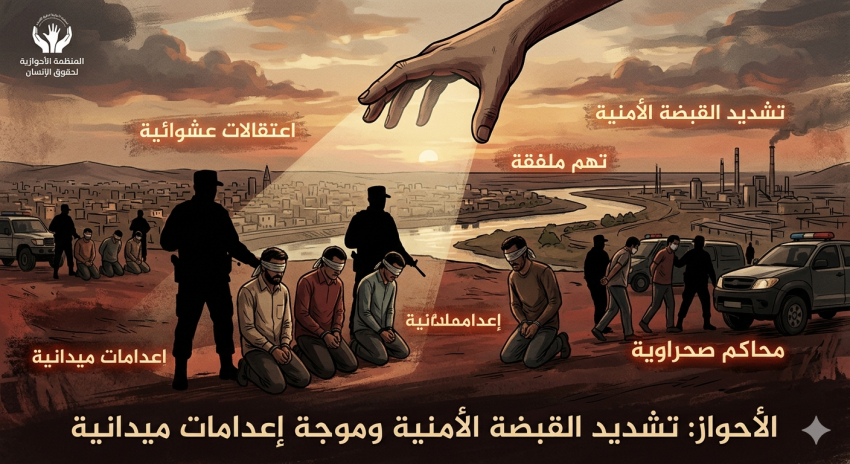



Death and Mass Imprisonment: The Revolutionary Court in Ahwaz Continues Its Repressive Sentences Against the Ahwazis The Alahwazi Organization for Human Rights (A.O.H.R)
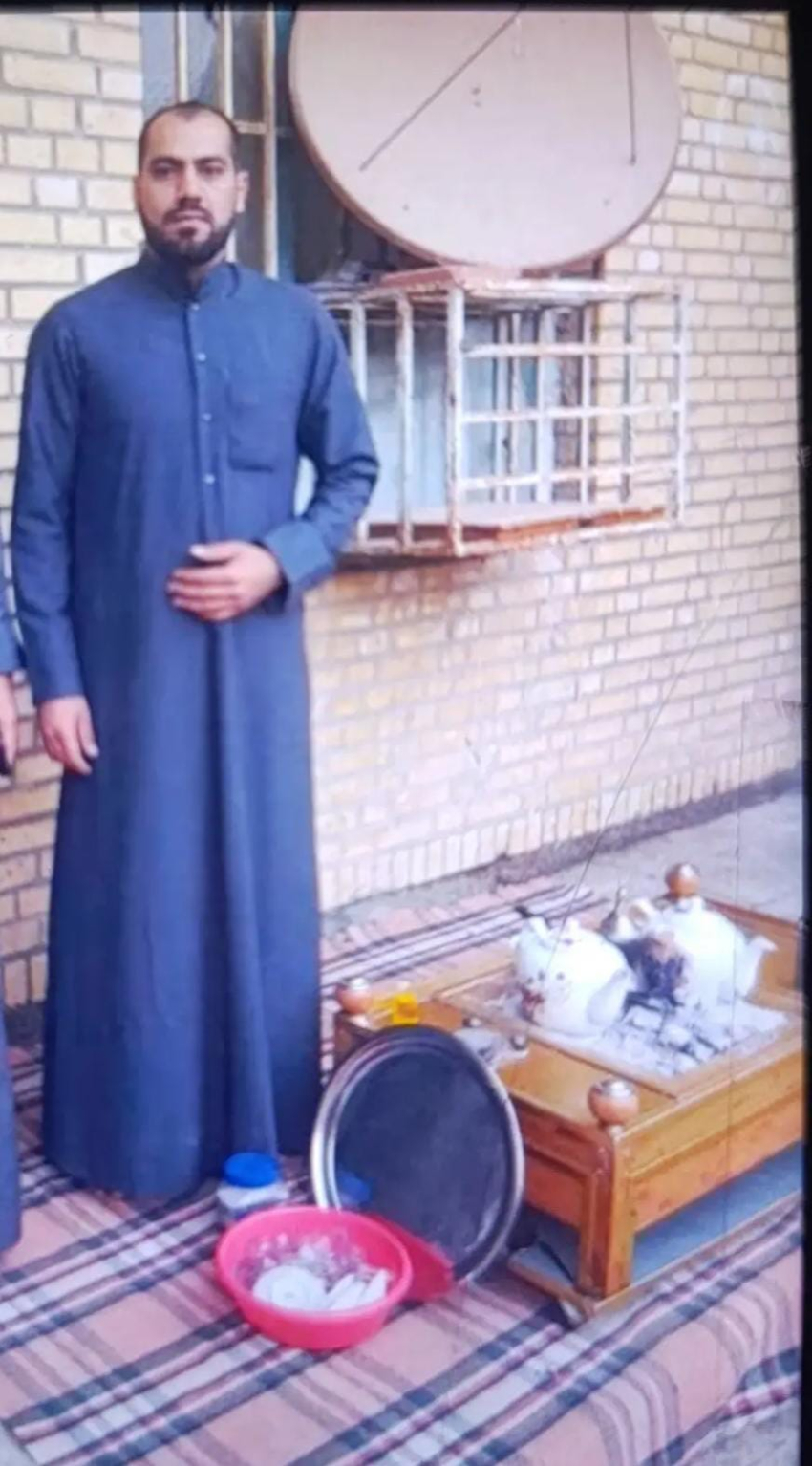
The Alahwazi Organization for Human Rights (A.O.H.R), citing documented Ahwazi sources, reported that the Revolutionary Court in Ahwaz, the capital, issued harsh sentences against a number of Arab Ahwazi political prisoners, headed by political prisoner Seyed Mohammad Mousawi, detained in Section Five of the Central Prison (Sheiban) in Ahwaz.
According to available information, on January 3, 2026, a death sentence was issued against Seyed Mohammad Mousawi, originally from Al-Falahiyah district, on the charge of "directly killing" Colonel Abdulhossein Majdami.
In the same case, alongside the death sentence, the court issued prison sentences against other defendants, where Uday Mniyat was sentenced to 25 years in prison for "participation in the killing," and Amer Majasbeh, from the people of Mohammara and detained in Sheiban Prison, was sentenced to 15 years in prison.
Furthermore, prison sentences of 3 years were issued against more than ten other defendants in the same case.
It is noted that Colonel Abdulhossein Majdami, commander of one of the Basij units in the city of Darkhwin, was killed at dawn on January 22, 2020, following an armed attack carried out by unknown assailants in front of his house. It is worth mentioning that the Basij forces are considered one of the arms of the Iranian Revolutionary Guard, classified as a terrorist organization in a large number of countries worldwide. Local reports also indicate that Majdami was close to Qasem Soleimani and played a prominent role in widespread arrest campaigns targeting women in the region under the pretext of connections abroad, which led to widespread public anger and resentment.
Lack of transparency and violation of legal procedures
Sources indicate that the issued sentences took place in non-public courts, in unknown locations, and through non-transparent procedures, which raises serious legal issues, as the defendants were deprived of public and independent trials. The absence of any fair judicial guarantees renders these courts unfair.
Moreover, the Revolutionary Court is one of the institutions of the Iranian Revolutionary Guard, which makes it politically and judicially non-independent, and therefore, the sentences issued by it lack any legal legitimacy and are considered a tool of political repression against the Ahwazi people.
The Alahwazi Organization for Human Rights (A.O.H.R) strongly condemns the death sentence issued against political prisoner Seyed Mohammad Mousawi, considers it a blatant violation of the right to life, and part of the systematic repression policy practiced by the Iranian authorities against the Arab Ahwazi people.
The organization also affirms that extracting confessions under pressure, the absence of fair trials, and using the judiciary as a political tool render these sentences legally void and inhumane, holding the Iranian authorities fully responsible for their consequences.
The Alahwazi Organization for Human Rights (A.O.H.R)