

Report of the Human Rights Seminar on “Human Rights Violations in Ahwaz and the Responsibility of the International Community”
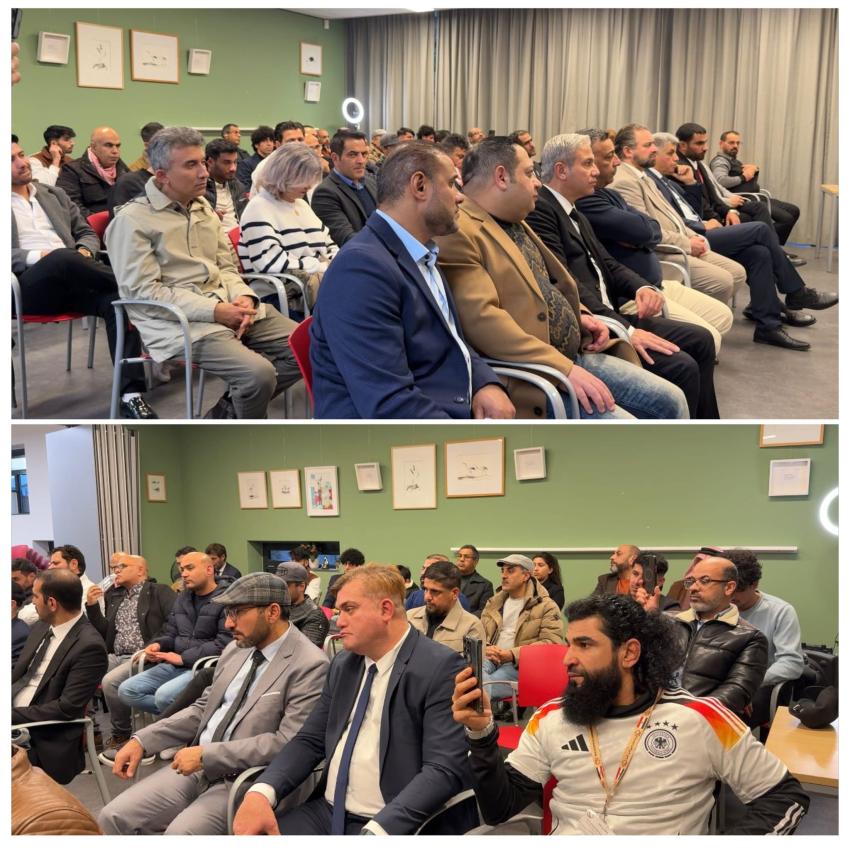
The Alahwazi Organization for Human Rights (A.O.H.R) held yesterday, in the Dutch city of Utrecht, a human rights seminar titled “Human Rights Violations in Ahwaz and the Responsibility of the International Community,” with the participation of several invited human rights and humanitarian institutions, including the Ahwazi Prisoners’ Network, the Ahwazi Center for Human Rights, the Ahwazi Human Rights Network, Human Rights Organization (AHRO), the South Azerbaijan Human Rights Organization, in addition to a number of activists, academics, and representatives of civil and cultural institutions such as the Al-Shorouq Cultural Foundation and the Bilad Cultural Foundation.
The seminar began at 14:30 with a welcoming speech delivered by Mr. Saad Al-Kaabi, a member of the Ahwazi Human Rights Organization, in which he welcomed the attendees and emphasized the importance of documenting and exposing the violations committed against the Ahwazi people and bringing them to international fora. Following this, the Ahwazi Human Rights Organization presented its report on environmental destruction in Ahwaz, addressing river pollution, land degradation, desertification, air pollution, and climate changes resulting from government policies and projects. Mr. Nasser Kazem elaborated on the key points of the report, stressing that these systematic practices amount to acts of genocide under international law, as they target the lives and continuity of the indigenous population in the region.
Dr. Hussein Al-Hazbawi then delivered an extensive scientific presentation on the health impacts of environmental destruction, pointing to the spread of respiratory and cancerous diseases and the deterioration of public health caused by escalating pollution. After his intervention, the South Azerbaijan Human Rights Organization delivered its remarks, during which Mr. Harai Fathipour affirmed that Iranian authorities practice systematic oppression against the people of South Azerbaijan, including the destruction of the economic structure and the deprivation of basic rights. He called on the international community to take a firm stance toward these violations, expressing solidarity with the Arab Ahwazi people who face similar policies.
The Ahwazi Center for Human Rights then presented its statement, stressing the importance of continuing to expose violations and submitting them to international bodies, emphasizing that documenting abuses is a legal and ethical responsibility that must not be abandoned.
In the second part of the seminar, the first presentation came from the Ahwazi Prisoners’ Network, delivered by human rights activist Riham Al-Qasim, who discussed the conditions of Ahwazi detainees and the torture they face, the extraction of confessions under coercion, and the unfair rulings issued by non-independent courts. She stressed the need to protect political prisoners and guarantee their legal rights. She was followed by academic Professor Jawad Al-Heidari, who spoke about the responsibility of international law toward the violations committed in Ahwaz, stressing that the international community has legal tools that must be activated to hold perpetrators accountable.
Following that, the Alahwazi Organization for Human Rights (A.O.H.R) Network delivered a speech focusing on demographic change policies in Ahwaz, including the displacement of indigenous people, land confiscation, and the settlement of newcomers, affirming that these policies aim to erase the Ahwazi national identity. Human Rights Organization (AHRO) then delivered a speech emphasizing the importance of continuing human rights advocacy in international platforms, exposing ongoing violations, and enhancing cooperation among Ahwazi human rights institutions.
At the conclusion of the interventions, Mr. Ali Al-Sari, an official at the Bilad Cultural Foundation, delivered an important statement on the dangers of cultural invasion targeting Ahwazi identity, warning against systematic policies that aim to uproot national consciousness and the cultural and linguistic existence of Ahwazis.
From the beginning of the seminar, the Al-Shorouq Cultural Foundation assumed responsibility for the media coverage of the event, with the foundation’s president, Mr. Ali Al-Tarfi, overseeing the media work and documenting the seminar’s proceedings professionally, contributing to amplifying its message and presence in the media and on social networks.
The seminar concluded by affirming a set of joint recommendations from the participating institutions, most notably the need to continue independent human rights work, develop documentation mechanisms, prepare files for submission to the United Nations and international organizations, and organize periodic events to raise global awareness of the Ahwazi cause. The Ahwazi Human Rights Organization also expressed its gratitude and appreciation to all institutions and activists who attended and contributed to the success and enrichment of the seminar.
Alahwazi Organization for Human Rights (A.O.H.R)