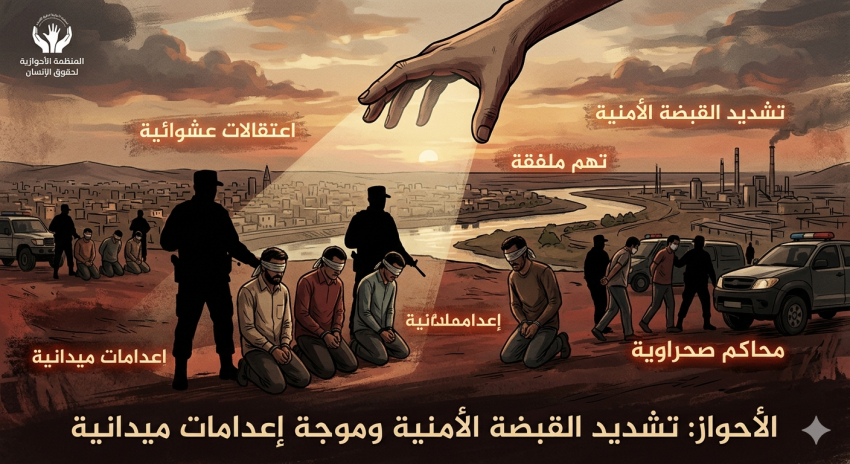



حملة مداهمات عشوائية و اعتقال العشرات قيبل ذكرى التاسعة و الثمانون لذكرى يوم النكبة الأحوازي
نيسان/أبريل 21, 2014شنت قوات الامن و الاستخبارات الايرانية حملة مداهمات واسعة في انحاء مختلفة من المدن الأحوازية و منها مدينة الأحواز العاصمة و كوت عبدالله و مدينة الخفاجية و ... وذلك قبيل ذكرى التساعة و الثمانون لذكرى يوم النكبة الأحوازي .
و شملت هذه المداهمات اعتقال العشرات من المواطنين الأحوازيين و نقلهم الى مكان غير معلوم كما أكدت المصادر الأحوازية المؤثقة.
و جاءت هذه الاعتقالات دون اي توجية قانوني من الجهات القانونية الايرانية و المعنية بهذا الشأن الا ان مصادر أحوازية مؤثقة اعلنت ان هذه الاعتقالات استهدفت عدد من اهل السنة و الجماعة بتمهمة الدعوة للدين الاسلامي و شملت عدد اخر كان يوزع اقراص شعرية ثقافية غلى المواطنين الأحوازيين .
و تقوم السلطاتت الايرانية قبيل شهر نيسان /ابريل بحملة مداهمات و اعتقالات واسعة بهدف زرع الخوف و ارهاب الشارع الأحوازي من القيام بأي وقفة احتجاجية في الذكرى ال 20 من نيسان كل عام .
|
تأريخ الاعتقال |
الجهة التي اعتقلته |
عنوان السكن |
العمر_ المهنة |
الاسم و اللقب العائلي |
الترتيب |
|
09.04.2014 |
قوات الامن و الاستخبارات |
حي الملاشية في الأحواز العاصمة |
26 عامأ ،متزوج و له طفل |
عارف مجيد صرخي |
1 |
|
12.04.2014 |
قوات الامن و الاستخبارات |
حي حزامي كوت عبدالله |
_ |
ايوب احمدي |
2 |
|
12.04.2014 |
قوات الامن و الاستخبارات |
مدينة الأحواز العاصمة |
_ |
سعيد خضري حمادي |
3 |
|
12.04.2014 |
قوات الامن و الاستخبارات |
مدينة الأحواز العاصمة |
_ |
احمد عفراوي |
4 |
|
12.04.2014 |
قوات الامن و الاستخبارات |
مدينة الأحواز العاصمة |
_ |
علي روانبخش |
5 |
|
12.04.2014 |
قوات الامن و الاستخبارات |
حي الشكارة .. كوت عبدالله |
_ |
خلف زبيدي |
6 |
|
12.04.2014 |
قوات الامن و الاستخبارات |
حي اباذر في الأحواز العاصمة |
28 عامأ |
عبدالرضا جلالي |
7 |
|
12.04.2014 |
قوات الامن و الاستخبارات |
حي اباذر في الأحواز العاصمة |
28 عامأ |
ناصر جلالي |
8 |
|
17.04.2014 |
الامن و الاستخبارات بتهمة التسنن |
مدينة الأحواز العاصمة |
36 عامأ |
سيد احمد راضي نزاري |
9 |
|
17.04.2014 |
الامن و الاستخبارات بتهمة التسنن |
مدينة الأحواز العاصمة |
46 عامأ |
سيد جعفر موسوي |
10 |
|
17.04.2014 |
الامن و الاستخبارات بتهمة التسنن |
حي خزامي كوت عبدالله |
40 عامأ |
غازي هندالي |
11 |
|
17.04.2014 |
الامن و الاستخبارات بتهمة التسنن |
الأحواز العاصمة |
65 عامأ |
سيد احمد حميد نزاري |
12 |
|
17.04.2014 |
الامن و الاستخبارات بتهمة التسنن |
حي خزامي كوت عبدالله |
_ |
حميد خنفري |
13 |
|
17.04.2014 |
الامن و الاستخبارات بتهمة التسنن |
حي خزامي كوت عبدالله |
_ |
جمال حزباوي |
14 |
|
19.04.2014 |
الامن و الاستبخارات بتهمة توزيع اقراص شعرية |
مدينة الخفاجية |
_ |
محمد سعيدي |
15 |
|
19.04.2014 |
الامن و الاستبخارات بتهمة توزيع اقراص شعرية |
مدينة الخفاجية |
_ |
كاظم باوي |
16 |
|
19.04.2014 |
الامن و الاستبخارات بتهمة توزيع اقراص شعرية |
مدينة الخفاجية |
_ |
ناصر باوي |
17 |
|
19.04.2014 |
الامن و الاستبخارات بتهمة توزيع اقراص شعرية |
مدينة الخفاجية |
_ |
جواد صياحي |
18 |
|
19.04.2014 |
الامن و الاستبخارات بتهمة توزيع اقراص شعرية |
مدينة الخفاجية |
_ |
ابراهيم باوي |
19 |
|
19.04.2014 |
الامن و الاستبخارات بتهمة توزيع اقراص شعرية |
مدينة الخفاجية |
_ |
موسوى شريفي |
20 |
المنظمة الأحوازية لحقوق الإنسان
مئات المعتقلين الأحوازيين في الربع الاول لعام 2014 و المنظمة توثق 87 منهم
نيسان/أبريل 04, 2014شنت السلطات الامنية الايرانية منذ بداية هذا العام لغاية شهر مارس حملة اعتقالات عشوائية شملت المئات من المواطنين الأحوازيين استطاعت المنظمة ان توثق 87 منهم و ذلك من خلال مصادرها او مصادر أحوازية مؤثقة.
و تشير التقارير ان هذه الاعتقالات تمت من خلال مداهمات قوات الامن و الاستخبارات الايرانية لبيوت المواطنين الأحوازيين دون اي ترخيص قانوني من قبل الجهات القضائية او دون اي اعلان مسبق و هو الامر الذي يخالف نصوص القوانين الدولية و الانسانية بشكل واضح.
و مع اقتراب الذكرى التاسعة و الثمانون للغزو الايراني للأحواز و الذكر التاسعة لانتفاضة نيسان عام 2005، قامت السلطات الايرانية بحملة اعتقالات واسعة و عشوائية ضد المواطنين الأحوازيين بينهم المواطنين القصر الذين لاتتجاوز اعمارهم الثمانية عشر عامأ سيما شملت هذه الاعتقالات بعض من النشطاء الثقافيين و السياسيين و اخرون من اهل الجماعة و السنة.
و تأتي هذه الاعتقالات ضمن خططة ممنهجة تقوم بها السلطات الايرانية لقمع الحريات الدينية و الفكرية و الثقافية ضد المواطنين الأحوازيين بهدف تخويفهم و ارهابهم من القيام بأي عمل سلمي في الذكرى التاسعة و الثمانين ليوم النكبة الأحوازي.
و اعلن المسؤول الاممي عن ملف حقوق الانسان في ايران السيد الدكتور احمد شهيد و الذي وافق مجلس حقوق الانسان الدولي على تمديد مهمته الى عام اخر عن وجود اكثر من 820 سجين سياسي في السجون الايرانية .
و تدين المنظمة الأحوازية لحقوق الإنسان مثل هذه الاعتقالات العشوائية و المحاكمات السرية و الغير علنية و الاحكام الجائرة ضد المواطنين الأحوازيين مطالبة المنظمات الانسانية الحكومية و غير الحكومية بالتحرك العاجل لانقاذ هؤلاء السجناء و المحكومين بالاعدام في ايران.
المنظمة الأحوازية لحقوق الإنسان
قائمة المعتقلين الأحوازيين:2014
|
تأريخ الاعتقال |
الجهة التي اعتقلته |
عنوان السكن |
العمر_ المهنة |
الاسم و اللقب العائلي |
الترتيب |
|
12.01.2014 |
الاستخبارات الايرانية بعد مداهمة البيت |
مدينة معشور |
قارىء قران_بتهمة التحريض على الدولة الفارسية |
سيد نزار الموسوي بن سيد فاضل |
1 |
|
14.01.2014 |
الاستخبارات برفقة الامن_بعد مداهمة البيت |
مدينة الفلاحية |
30 عامأ_بتهمة التسنن |
عبدالله بن محيي بن احمد |
2 |
|
14.01.2014 |
الاستخبارات برفقة الامن_بعد مداهمة البيت |
مدينة الفلاحية |
32 عامأ_بتهمة التسنن |
سيد خليل طاهري الموسوي بن سيد ابراهيم |
3 |
|
14.01.2014 |
الاستخبارات برفقة الامن_بعد مداهمة البيت |
مدينة الفلاحية |
27 عامأ_بتهمة التسنن |
حميد بن هادي |
4 |
|
14.01.2014 |
الاستخبارات برفقة الامن_بعد مداهمة البيت |
مدينة الفلاحية |
26 عامأ_بتهمة التسنن |
علي بن هادي |
5 |
|
14.01.2014 |
الاستخبارات برفقة الامن_بعد مداهمة البيت |
مدينة الفلاحية |
28 عامأ_بتهمة التسنن |
جاسم بن محمد بن عيسى |
6 |
|
14.01.2014 |
الاستخبارات برفقة الامن_بعد مداهمة البيت |
مدينة الفلاحية |
30 عامأ_بتهمة التسنن |
جمال بن عبدالخضر |
7 |
|
14.01.2014 |
الاستخبارات برفقة الامن_بعد مداهمة البيت |
مدينة الفلاحية |
26 عامأ_بتهمة التسنن |
سيد امين بن سيد عبدالله |
8 |
|
19.01.2014 |
الاستخبارات الايرانية برفقة الامن_بعد عودتهم من تشيع جنازة الاديب مله فاضل السكراني |
مدينة الفلاحية |
_ |
رؤوف عساكره |
9 |
|
19.01.2014 |
الاستخبارات الايرانية برفقة الامن_بعد عودتهم من تشيع جنازة الاديب مله فاضل السكراني |
مدينة الفلاحية |
_ |
خليل الكعبي بن ابراهيم |
10 |
|
19.01.2014 |
الاستخبارات الايرانية برفقة الامن_بعد عودتهم من تشيع جنازة الاديب مله فاضل السكراني |
منطقة الجراحي |
_ |
صادق ال ناصر |
11 |
|
19.01.2014 |
الاستخبارات الايرانية برفقة الامن_بعد عودتهم من تشيع جنازة الاديب مله فاضل السكراني |
منطقة الجراحي |
_ |
مجيد ال ناصر |
12 |
|
19.01.2014 |
الاستخبارات الايرانية برفقة الامن_بعد عودتهم من تشيع جنازة الاديب مله فاضل السكراني |
حي الملاشية التابع لمدينة الأحواز العاصمة |
25 عامأ |
محمد باوي |
13 |
|
19.01.2014 |
الاستخبارات الايرانية برفقة الامن_بعد عودتهم من تشيع جنازة الاديب مله فاضل السكراني |
حي الملاشية التابع لمدينة الأحواز العاصمة |
25 عامأ |
حسن ساعدي |
14 |
|
19.01.2014 |
الاستخبارات الايرانية برفقة الامن_بعد عودتهم من تشيع جنازة الاديب مله فاضل السكراني |
حي الملاشية التابع لمدينة الأحواز العاصمة |
27 عامأ |
صادق عفراوي بن حمدان |
15 |
|
19.01.2014 |
الاستخبارات الايرانية برفقة الامن_بعد عودتهم من تشيع جنازة الاديب مله فاضل السكراني |
حي الملاشية التابع لمدينة الأحواز العاصمة |
25 عامأ |
خالد عفراوي بن حمدان |
16 |
|
19.01.2014 |
الاستخبارات الايرانية برفقة الامن_بعد عودتهم من تشيع جنازة الاديب مله فاضل السكراني |
حي الملاشية التابع لمدينة الأحواز العاصمة |
23 عامأ |
محمد عفرلوي بن هبدالزهره |
17 |
|
19.01.2014 |
الاستخبارات الايرانية برفقة الامن_بعد عودتهم من تشيع جنازة الاديب مله فاضل السكراني |
حي الملاشية التابع لمدينة الأحواز العاصمة |
19 عامأ |
احمد عفراوي بن عبدالزهره |
18 |
|
19.01.2014 |
الاستخبارات الايرانية برفقة الامن_بعد عودتهم من تشيع جنازة الاديب مله فاضل السكراني |
حي الملاشية التابع لمدينة الأحواز العاصمة |
23 عامأ |
قادر مسعودي بن ساهي |
19 |
|
19.01.2014 |
الاستخبارات الايرانية برفقة الامن_بعد عودتهم من تشيع جنازة الاديب مله فاضل السكراني |
حي الملاشية التابع لمدينة الأحواز العاصمة |
23 عامأ |
مجيد مسعودي بن ساهي |
20 |
|
19.01.2014 |
الاستخبارات الايرانية برفقة الامن_بعد عودتهم من تشيع جنازة الاديب مله فاضل السكراني |
حي الملاشية التابع لمدينة الأحواز العاصمة |
20 عامأ |
وليد مسعودي بن خلف |
21 |
|
19.01.2014 |
الاستخبارات الايرانية برفقة الامن_بعد عودتهم من تشيع جنازة الاديب مله فاضل السكراني |
حي الملاشية التابع لمدينة الأحواز العاصمة |
23 عامأ |
سالم حيدري |
22 |
|
19.01.2014 |
الاستخبارات الايرانية برفقة الامن_بعد عودتهم من تشيع جنازة الاديب مله فاضل السكراني |
حي الملاشية التابع لمدينة الأحواز العاصمة |
22 عامأ |
جعفر سيلاوي |
23 |
|
19.01.2014 |
الاستخبارات الايرانية برفقة الامن_بعد عودتهم من تشيع جنازة الاديب مله فاضل السكراني |
حي الملاشية التابع لمدينة الأحواز العاصمة |
23 عامأ |
محمد كروشاوي بن عبيد |
24 |
|
19.01.2014 |
الاستخبارات الايرانية برفقة الامن_بعد عودتهم من تشيع جنازة الاديب مله فاضل السكراني |
حي الملاشية التابع لمدينة الأحواز العاصمة |
23 عامأ |
عدنان عياشي بن حكيم |
25 |
|
19.01.2014 |
الاستخبارات الايرانية برفقة الامن_بعد عودتهم من تشيع جنازة الاديب مله فاضل السكراني |
حي الملاشية التابع لمدينة الأحواز العاصمة |
|||
|
19.01.2014 |
الاستخبارات الايرانية برفقة الامن_بعد عودتهم من تشيع جنازة الاديب مله فاضل السكراني |
حي الملاشية التابع لمدينة الأحواز العاصمة |
27 عامأ |
محمد غرباوي بن امين |
26 |
|
19.01.2014 |
الاستخبارات الايرانية برفقة الامن_بعد عودتهم من تشيع جنازة الاديب مله فاضل السكراني |
حي الملاشية التابع لمدينة الأحواز العاصمة |
25 عامأ |
طعمة حمودي |
27 |
|
19.01.2014 |
الاستخبارات الايرانية برفقة الامن_بعد عودتهم من تشيع جنازة الاديب مله فاضل السكراني |
حي الملاشية التابع لمدينة الأحواز العاصمة |
19 عامأ |
حسين حمودي |
28 |
|
19.01.2014 |
الاستخبارات الايرانية برفقة الامن_بعد عودتهم من تشيع جنازة الاديب مله فاضل السكراني |
حي الملاشية التابع لمدينة الأحواز العاصمة |
23 عامأ |
طارق عفراوي بن ناعم |
29 |
|
19.01.2014 |
الاستخبارات الايرانية برفقة الامن_بعد عودتهم من تشيع جنازة الاديب مله فاضل السكراني |
حي الملاشية التابع لمدينة الأحواز العاصمة |
30 عامأ |
علي حيدري بن كركر |
30 |
|
19.01.2014 |
الاستخبارات الايرانية برفقة الامن_بعد عودتهم من تشيع جنازة الاديب مله فاضل السكراني |
حي الملاشية التابع لمدينة الأحواز العاصمة |
27 عامأ |
عظيم عياشي |
31 |
|
19.01.2014 |
الاستخبارات الايرانية برفقة الامن_بعد عودتهم من تشيع جنازة الاديب مله فاضل السكراني |
حي الملاشية التابع لمدينة الأحواز العاصمة |
25 عامأ |
ابراهيم بدوي بن فنجان |
32 |
|
19.01.2014 |
الاستخبارات الايرانية برفقة الامن_بعد عودتهم من تشيع جنازة الاديب مله فاضل السكراني |
حي الملاشية التابع لمدينة الأحواز العاصمة |
21 عامأ |
احمد بدوي بن فنجان |
33 |
|
19.01.2014 |
الاستخبارات الايرانية برفقة الامن_بعد عودتهم من تشيع جنازة الاديب مله فاضل السكراني |
حي الملاشية التابع لمدينة الأحواز العاصمة |
29 عامأ |
علي بدوي بن حاجي |
34 |
|
19.01.2014 |
الاستخبارات الايرانية برفقة الامن_بعد عودتهم من تشيع جنازة الاديب مله فاضل السكراني |
حي الملاشية التابع لمدينة الأحواز العاصمة |
25 عامأ |
رسول براجعة |
35 |
|
19.01.2014 |
الاستخبارات الايرانية برفقة الامن_بعد عودتهم من تشيع جنازة الاديب مله فاضل السكراني |
حي الملاشية التابع لمدينة الأحواز العاصمة |
31 عامأ |
احمد براجعة |
36 |
|
19.01.2014 |
الاستخبارات الايرانية برفقة الامن_بعد عودتهم من تشيع جنازة الاديب مله فاضل السكراني |
حي الملاشية التابع لمدينة الأحواز العاصمة |
19 عامأ |
قاسم حرداني بن لازم |
37 |
|
19.01.2014 |
الاستخبارات الايرانية برفقة الامن_بعد عودتهم من تشيع جنازة الاديب مله فاضل السكراني |
حي الملاشية التابع لمدينة الأحواز العاصمة |
22 عامأ |
توفيق كروشاوي |
38 |
|
19.01.2014 |
الاستخبارات الايرانية برفقة الامن_بعد عودتهم من تشيع جنازة الاديب مله فاضل السكراني |
حي الملاشية التابع لمدينة الأحواز العاصمة |
18 عامأ |
مجتبى مرواني بن حسن |
39 |
|
19.01.2014 |
الاستخبارات الايرانية برفقة الامن_بعد عودتهم من تشيع جنازة الاديب مله فاضل السكراني |
حي الملاشية التابع لمدينة الأحواز العاصمة |
25 عامأ |
عارف سرخي |
40 |
|
19.01.2014 |
الاستخبارات الايرانية برفقة الامن_بعد عودتهم من تشيع جنازة الاديب مله فاضل السكراني |
حي الملاشية التابع لمدينة الأحواز العاصمة |
23 عامأ |
ستار مسعودي بن صدام |
41 |
|
19.01.2014 |
الاستخبارات الايرانية برفقة الامن_بعد عودتهم من تشيع جنازة الاديب مله فاضل السكراني |
حي الملاشية التابع لمدينة الأحواز العاصمة |
21 عامأ |
بندر مسعودي بن راشد |
42 |
|
19.01.2014 |
الاستخبارات الايرانية برفقة الامن_بعد عودتهم من تشيع جنازة الاديب مله فاضل السكراني |
حي الملاشية التابع لمدينة الأحواز العاصمة |
17 عامأ |
ماهر بن زرزور |
43 |
|
19.01.2014 |
الاستخبارات الايرانية برفقة الامن_بعد عودتهم من تشيع جنازة الاديب مله فاضل السكراني |
حي الملاشية التابع لمدينة الأحواز العاصمة |
19 عامأ |
ميلاد عفراوي |
44 |
|
19.01.2014 |
الاستخبارات الايرانية برفقة الامن_بعد عودتهم من تشيع جنازة الاديب مله فاضل السكراني |
حي الملاشية التابع لمدينة الأحواز العاصمة |
21 عامأ |
محمد مسعودي بن لفته |
45 |
|
19.01.2014 |
الاستخبارات الايرانية برفقة الامن_بعد عودتهم من تشيع جنازة الاديب مله فاضل السكراني |
حي الملاشية التابع لمدينة الأحواز العاصمة |
19 عامأ |
علي مسعودي بن لفته |
46 |
|
19.01.2014 |
الاستخبارات الايرانية برفقة الامن_بعد عودتهم من تشيع جنازة الاديب مله فاضل السكراني |
حي الملاشية التابع لمدينة الأحواز العاصمة |
23 عامأ |
ماجد مسعودي |
47 |
|
19.01.2014 |
الاستخبارات الايرانية برفقة الامن_بعد عودتهم من تشيع جنازة الاديب مله فاضل السكراني |
حي الملاشية التابع لمدينة الأحواز العاصمة |
38 عامأ |
نوري كروشاوي |
48 |
|
19.01.2014 |
الاستخبارات الايرانية برفقة الامن_بعد عودتهم من تشيع جنازة الاديب مله فاضل السكراني |
حي الملاشية التابع لمدينة الأحواز العاصمة |
40 عامأ |
مجيد هاشمي بن حميد |
49 |
|
19.01.2014 |
الاستخبارات الايرانية برفقة الامن_بعد عودتهم من تشيع جنازة الاديب مله فاضل السكراني |
حي الملاشية التابع لمدينة الأحواز العاصمة |
27 عامأ |
قاسم حيدري بن لفته |
50 |
|
19.01.2014 |
الاستخبارات الايرانية برفقة الامن_بعد عودتهم من تشيع جنازة الاديب مله فاضل السكراني |
حي الملاشية التابع لمدينة الأحواز العاصمة |
38 عامأ |
سعيد سليماني |
51 |
|
19.01.2014 |
الاستخبارات الايرانية برفقة الامن_بعد عودتهم من تشيع جنازة الاديب مله فاضل السكراني |
حي الملاشية التابع لمدينة الأحواز العاصمة |
17 عامأ |
رضا مرواني |
52 |
|
19.01.2014 |
الاستخبارات الايرانية برفقة الامن_بعد عودتهم من تشيع جنازة الاديب مله فاضل السكراني |
حي الملاشية التابع لمدينة الأحواز العاصمة |
25 عامأ |
حسن طرفي |
53 |
|
19.01.2014 |
الاستخبارات الايرانية برفقة الامن_بعد عودتهم من تشيع جنازة الاديب مله فاضل السكراني |
حي الملاشية التابع لمدينة الأحواز العاصمة |
22 عامأ |
نعيم حيدري بن عباس |
54 |
|
19.01.2014 |
الاستخبارات الايرانية برفقة الامن_بعد عودتهم من تشيع جنازة الاديب مله فاضل السكراني |
حي الملاشية التابع لمدينة الأحواز العاصمة |
25 عامأ |
سجاد بدوي |
55 |
|
19.01.2014 |
الاستخبارات الايرانية برفقة الامن_بعد عودتهم من تشيع جنازة الاديب مله فاضل السكراني |
حي الملاشية التابع لمدينة الأحواز العاصمة |
25 عامأ |
رسول كروشاوي |
56 |
|
19.01.2014 |
الاستخبارات الايرانية برفقة الامن_بعد عودتهم من تشيع جنازة الاديب مله فاضل السكراني |
حي الملاشية التابع لمدينة الأحواز العاصمة |
30 عامأ |
طعمه براجعه بن حنون |
57 |
|
24.01.2014 |
قوات الامن برفقة الاستخبارات.بتهمة المشاركة في وقفة احتجاجية و رفع لافتة تندد بتهديم قصر الشيخ خزعل الكعبي |
مدينة الحميدية |
25 عامأ |
محمود عبيداوي بن جبار |
58 |
|
24.01.2014 |
قوات الامن برفقة الاستخبارات.بتهمة المشاركة في وقفة احتجاجية و رفع لافتة تندد بتهديم قصر الشيخ خزعل الكعبي |
مدينة الحميدية |
22 عامأ |
عمار عبيات بن قطان |
59 |
|
24.01.2014 |
قوات الامن برفقة الاستخبارات.بتهمة المشاركة في وقفة احتجاجية و رفع لافتة تندد بتهديم قصر الشيخ خزعل الكعبي |
مدينة الحميدية |
25 عامأ |
قيس عطشاني |
60 |
|
24.01.2014 |
قوات الامن برفقة الاستخبارات.بتهمة المشاركة في وقفة احتجاجية و رفع لافتة تندد بتهديم قصر الشيخ خزعل الكعبي |
مدينة الحميدية |
طالب جامعي |
قيس عبيداوي |
61 |
|
25.02.2014 |
قوات الامن و الاستخبارات |
قرية الجويبدة التابعة لمدينة عبادان |
35 عامأ و متزوج |
امين ال ناصر بن عزيز |
62 |
|
25.02.2014 |
قوات الامن و الاستخبارات |
حي الثورة |
عباس عبيات |
63 |
|
|
25.02.2014 |
قوات الامن و الاستخبارات |
حي الثورة |
حسن عبيات |
64 |
|
|
25.02.2014 |
قوات الامن و الاستخبارات |
حي الثورة |
احمد عبيات |
65 |
|
|
25.02.2014 |
قوات الامن و الاستخبارات |
حي الثورة |
جاسم تويرات |
66 |
|
|
25.02.2014 |
قوات الامن و الاستخبارات |
حي الثورة |
سيد ناصر موسوي بن سيد واحد |
67 |
|
|
25.02.2014 |
قوات الامن و الاستخبارات |
حي الثورة |
جعفر سواري |
68 |
|
|
25.02.2014 |
قوات الامن و الاستخبارات |
حي الثورة |
سيد موسيى موسوي |
69 |
|
|
25.02.2014 |
قوات الامن و الاستخبارات |
حي الثورة |
سيد عباس موسوي |
70 |
|
|
25.02.2014 |
قوات الامن و الاستخبارات |
حي الثورة |
سيد رضا موسوي بن سيد مالح |
71 |
|
|
25.02.2014 |
قوات الامن و الاستخبارات |
حي الثورة |
22 عامأ و طالب جامعة |
حيدر سواري بن جليل |
72 |
|
25.02.2014 |
قوات الامن و الاستخبارات |
حي الثورة |
سيد مهدي موسوي بن سيد نور |
73 |
|
|
25.02.2014 |
قوات الامن و الاستخبارات |
حي الثورة |
22 عامأ |
باسم سواري بن مهدي |
74 |
|
25.02.2014 |
قوات الامن و الاستخبارات |
حي الثورة |
22 عامأ |
صالح تويرات |
75 |
|
25.02.2014 |
قوات الامن و الاستخبارات |
حي الثورة |
28 عامأ |
فؤاد الساعدي |
76 |
|
25.02.2014 |
قوات الامن و الاستخبارات |
حي الثورة |
45 عامأ |
جاسم كروشاوي |
77 |
|
25.02.2014 |
قوات الامن و الاستخبارات |
مدينة الحميدية |
37 عامأ و متزوج و يعمل في محل لبيع السجاد |
عماد منبوهي بن سبهان |
78 |
|
...02.2014 |
قوات الامن و الاستبخارات |
مدينة شيبان |
34 عامأ |
هادي عنافجة |
79 |
|
08.03.2014 |
قوات الامن و الاستبخارات بعد مداهمة بيته |
حي الثورة |
22عامأ |
ناصر عبيات |
80 |
|
08.03.2014 |
قوات الامن و الاستخبارات الايرانية |
حي الثورة |
28 عامأ |
جمال عبيات |
81 |
|
08.03.2014 |
قوات الامن و الاستخبارات الايرانية |
حي الثورة |
45 عامأ |
هادي بيت شيخ احمد |
82 |
|
02.2014 |
قوات الامن و الاستخبارات الايرانية |
مدينة شيبان |
34 عامأ |
هادي عنافجة |
83 |
|
11.03.2014 |
الاستخبارات الايرانية |
اثناء مباراة لكرة القدم |
احمد حمودي بن جاسم |
84 |
|
|
11.03.2014 |
قوات الامن و الاستخبارات الايرانية |
حي الثورة الأحواز العاصمة |
35 عامأ ورشة تصليح سيارات |
ﺟﻌﻔﺮ ﭼﻠﺪﺍﻭﻱ |
85 |
|
18.03.2014 |
قوات الامن و الاستخبارات |
حي الثورة |
20 عامأ |
قاسم سواري بن سعيد |
86 |
|
19.03.2014 |
قوات امن و الاستخبارات |
مدينة الأحواز العاصمة |
30 عامأ يعمل في بلدية الأحواز العاصمة |
سيد حسين موسوي |
87 |
المنظمة الأحوازية لحقوق الإنسان
AMNESTY INTERNATIONAL:TWO AHWAZI ARAB MEN RISK IMMINENT EXECUTION
آذار/مارس 26, 2014UA: 72/14 Index: 13/014/2014 Iran
Date: 26 March 2014
URGENT ACTION
TWO AHWAZI ARAB MEN RISK IMMINENT EXECUTION
Two Ahwazi Arab men on death row, Ali Chebieshat and Sayed Khaled Mousawi, have
been transferred from Fajr Prison in Dezfoul, Khuzestan province, to an unknown
location, sparking fears their execution may be imminent.
The family members of Ali Chebieshat and Sayed Khaled Mousawi , both members of Iran’s Ahwazi Arab minority, were told on 18 March by prison officials that Ministry of Intelligence officials had transferred the men from the prison to an unknown location.
They may be at imminent risk of execution given that two other Ahwazi Arab men were secretly executed in January 2014 after their transfer to an unknown location.
Ali Chebieshat and Sayed Khaled Mousawi were sentenced to death on 9 September 2013 by Branch Two of the Revolutionary Court in Ahvaz on the charge of “enmity against God”( moharebeh) in relation to the explosion of a natural gas pipeline close to their native village in Khuzestan. The court sentenced a third man, Salman Chayani,to 25 years’ imprisonment to be served in internal exile in Yazd, central Iran.
All three men had been arrested on 10 November 2012 along with a number of others and taken to a Ministry of Intelligence detention centre in Ahvaz. They were reportedly denied access to lawyers and their families for the first several months of their detention and are believed to have been tortured or otherwise ill-treated. They were shown “confessing” to their role in the explosion of the gas pipeline on an Iranian state television channel in June 2013, in violation of international standards for fair trials. They have appealed against their death sentences, which are still under consideration by the Supreme Court.
Please write immediately in Persian, English or your own language:
n
Urging the authorities not to execute Ali Chebieshat and Sayed Khaled Mousawi and to immediately disclose their whereabouts;
n
Urging them to investigate the allegations that the men were tortured or otherwise ill-treated and ensure that
“confessions” obtained under torture are not used as evidence in court;
n
Calling on them to ensure the men are protected from torture and other ill-treatment, are granted any medical attention they may require and are allowed regular contact with their lawyers and families;
n
Reminding them that under international law, the death penalty may only be used for “the most serious crimes”,which international bodies have interpreted as being limited to crimes involving intentional killing.
URGENT ACTION
TWO AHWAZI ARAB MEN RISK IMMINENT EXECUTION
ADDITIONAL INFORMATION
Ali Chebieshat, Sayed Khaled Mousawi and Salman Chayani were arrested on 10 November 2012 in Khuzestan Province, along with a number of other men, in their village, near the city of Shush. The security forces are understood to have surrounded the house of Ali Chebieshat’s mother where a private ceremony was being held. They showed no arrest warrant and did not say why they were arresting the men. All the others arrested were later released on bail.
The security forces held the men in a Ministry of Intelligence detention centre in Ahvaz where they had no access to lawyers or their relatives for several months. They were allegedly tortured and were forced to make videotaped “confessions”. The men were seen on state TV “confessing” and taking responsibility for the explosion in October 2012 of the gas pipeline near their village, first in June 2013 and later in November 2013.
In June or July 2013, Ministry of Intelligence officials told the men’s families that they could meet with the detainees in a mosque in the village of Jarieh. When they arrived at the mosque, the families realized that the room was equipped with cameras. Amnesty International understands that they were told that if they agreed to be filmed while watching their relatives’ recorded “confessions”, the authorities would consider reducing the punishments of the detainees. They were not told that the recorded footage would be aired on national TV.
Ali Chebieshat’s family members, who refused to be filmed, were apparently contacted by Ministry of Intelligence officials a few months later and coerced into being filmed or risk the execution of their relative. In November 2013, two state-sponsored TV channels aired a “documentary” called Lost in Darkness in which they showed the forced “confessions” of Ali Chebieshat, Sayed Khaled Mousawi and Salman Chayani and the footage of the family members.
Two other Ahwazi Arab men, Hadi Rashedi and Hashem Sha’bani Nejad (referred to in previous UAs as Hashem Sha’bani Amouri), were executed in secret at the end of January 2014. Their families were told by an official from the Ministry of Intelligence on 29 January that the two men had been executed and buried a few days earlier. Amnesty International understands that the men’s families were not told the exact date of the executions, either in advance or after they had taken place, and have not received the bodies of their relatives. The official told the families they were not permitted to hold a public memorial for the two men and had only 24 hours in which to hold a private service. Three other Ahwazi Arab men, Mohammad Ali Amouri, Sayed Jaber Alboshoka and Sayed Mokhtar Alboshoka, who had been sentenced to death along with them, remain at risk of execution.
Under Article 38 of the Iranian Constitution and Article 9 of the Law on Respect for Legitimate Freedoms and Safeguarding Citizens’ Rights, all forms of torture for the purpose of obtaining “confessions” are prohibited. Iran’s Penal Code also provides for the punishment of officials who torture citizens in order to obtain “confessions”. However, despite these legal and constitutional guarantees regarding the inadmissibility of testimony, oath or confession taken under duress, forced “confessions” are sometimes broadcast on television even before the trial has begun and are frequently accepted as evidence in Iranian courts.
Such broadcasts violate Iran’s fair trial obligations under Article 14 of the International Covenant on Civil and Political Rights, to which it is a state party, including the presumption of innocence
.
Names: Ali Chebieshat, Sayed Khaled Mousawi, Salman Chayani
Gender m/f: m
UA: 72/14 Index: MDE 13/014/2014 Issue Date: 26 March 2014
http://www.amnesty.org/en/library/asset/MDE13/014/2014/en/ee7a51a4-2751-4ec0-a637-8aa89e04012f/mde130142014en.pdf

حبس صلاح چه بيشاط( كعبى) شهروند احوازى
آذار/مارس 25, 2014حكومت ايران صلاح چه بيشاط شهروند احوازى را پس از اينكه براى دومين بار متوالى به شعبه ١٨ دادگاه انقلاب شهر احواز فراخوانده شده بود ، به زندان انداخت.
اين در حالى است كه هيچگونه اطلاعى از چگونگى محاكمه وى در آن شعبه كه قاضى آن يكى از اعضاى سابق سپاه پاسداران ايران ميباشد، در دسترس نيست.
صلاح چه بيشاط فرزند على چه بيشاط ميباشد كه پيشتر دادگاه انقلاب احواز در سپتامبر ٢٠١٣ پدرش را به اعدام محكوم كرده بود. وى در تاريخ ١١نوامبر ٢٠١٢ دستگير اما بعد از چند ماه با قرار وثيقه هنگفت آزاد گرديده بود.
صلاح چه بيشاط از ساكنان روستاى خلف المسلم تابع شهر سوس، در تاريخ پانزدهم جولاى٢٠١٣ به دادگاه انقلاب فراخوانده شده بود ليكن بعد از ضرب و شتم و شكنجه و غرامت مالى آزاد گرديده بود.
سازمان أحوازي حقوق بشر

سجن المواطن الأحوازي صلاح جه بيشاط (الكعبي)
آذار/مارس 25, 2014قامت السلطات الايرانية بسجن المواطن الأحوازي صلاح جه بيشاط (الكعبي) و البالغ من العمر 22 عامأ بعد ما تم استدعاءه للمرة الثانية من قبل الشعبة الثامن عشر لمحكمة الثورة ايرانية و الواقعة في مدينة الأحواز العاصمة و ذلك منذ بداية شهر مارس للعام الجاري.
و لم يتبين بعد اسباب هذا الحكم و طريقة المحاكمة في تلك الشعبة و التي يترأسها رجل من الحرس الثوري الايراني.
السيد صلاح هو بن السجين علي جه بيشاط و الذي حكمت محكمة الثورة الايرانية على والده بالإعدام في سبتمبر عام 2013؛ قد القي القبض عليه في تأريخ 11.11.2012 و لكن بعد شهور تم الافراج عنه بكفالة مادية باهضة.
في تأريخ 15.07.2013 تم استدعاء المواطن صلاح للمثول امام المحكمة و لكن تم الافراج عنه بعد ضربه و تعذيبه و غرامة مادية.
يذكر ان المواطن صلاح هو من سكان قرية خلف المسلم التابعة لمدينة السوس الأحوازية.
المنظمة الأحوازية لحقوق الإنسان
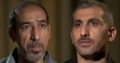
بعد إعدام مواطنين أحوازيين سرأ،السلطات تنقل اثنين اخرين الى سجن كارون
آذار/مارس 25, 2014أكدت مصادر المنظمة الأحوازية لحقوق الإنسان ان السلطان الايرانية قامت منذ يوم الثلاثاء الموافق 18.03.2014 بنقل الاسيرين الأحوازيين و هما :السيد علي جه بيشاط (الكعبي) مواليد عام 1966 و السيد خالد (ياسين) الموسوي و البالغ من العمر 34 عامأ من سجن مدينة القنيطرة الى سجن كارون سيئ الصيت و الواقع في مدينة الأحواز العاصمة.
و يأتي هذا القرار بعد ما حكمت الشعبة الثانية لمحكمة الثورة الايرانية و برئاسة القاضي محمد باقر موسوي في شهر سبتمبر لعام 2013 بالإعدام على السجينين الأحوازيين بتهمة محاربة الله و الافساد في الارض و التأمر على الامن القومي الفارسي و ذلك خلال محاكمة غير علنية و غير عادلة.
و نقلت مصادرنا ان محاكمة السجينين الأحوازيين تمت في زنزانات دائرة الاستخبارات الايرانية دون ان تسمح تلك السلطات للمحكومين بالتحدث او بتعيين محام للدفاع عن انفسهم .
و قد تم نقل ملف الحكم الى المحكمة العلياء الايرانية و التي تأخذ هذه الاخيرة من مدينة طهران الايرانية مقرأ رئيسيأ لها و ذلك بعد ما تم استئناف و رفض القرار من قبل المحكوميين و ذويهم الا ان المنظمة تخشى ان نقل السجينين من سجن مدينة القنيطرة الأحوازية الى سجن كارون يدل على تأييد حكم الإعدام من قبل المحكمة العلياء الايرانية و هو الامر الذي يدل على عزم السلطات الايرانية لتفيذ جريمة الإعدام ضدهم.
يذكر ان اتحاد الاوروبي قام بفرض عقوبات على القاضي محمد باقر موسوي بعد ما حكم هذا الاخير في محاكمة غير علنية و سرية بالإعدام على اربعة مواطنيين أحوازيين( ثلاثة منهم اشقاء من عائلة واحدة ) و تم تنفيذ حكم الإعدام ضدهم في يناير عام 2012.
و قد نفذت السلطات الايرانية جريمة الإعدام ضد الاف من المواطنين الأحوازيين بعد ما تم تأييد حكم إعدامهم في المحكمة العلياء الايرانية و كان اخرها تنفيذ جريمة الإعدام ضد موطنيين أحوازيين و هما: هاشم شعباني و هادي راشدي بالرغم من المناشدات الدولية لوقف تنفيذ هذه الجريمة.
و تدين المنظمة الأحوازية لحقوق الإنسان مثل هذه الجرائم التي ترتكبها السلطات الايرانية ضد المواطنين الأحوازيين و التي تعتبر انتهاأ صارخأ للقوانين الانسانية و الدولية.
المنظمة الأحوازية لحقوق الإنسان
Irans Agenten entführen in den Niederlanden einen arabischen Dichter
آذار/مارس 14, 2014Der ahwazische arabische Dichter Mussa Mussawi wurde Opfer einer Entführung, als er seine Wohnung in der Stadt Baningen im Herzen der Niederlande verließ. Die Entführer schlugen ihn und verhörten ihn bezüglich der Aktivitäten der Iraner im Ausland und setzten ihn schließlich am Straßenrand ab.
Mussa Mussawi
erzählte in einem Telefongespräch heute Montag dem „alarabiya.net": „Ich war auf dem Weg von meiner Wohnung zu einem Lebensmittelgeschäft in der Nähe meines Wohnortes. Plötzlich versperrte mir ein Auto mit zwei Insassen den Weg. Die Personen legten ein Tuch auf meinen Mund, danach wurde ich schwach. Sie führten mich mit Gewalt zum Auto und brachten mich in eine Wohnung an einem mir unbekannten Ort".
Er erzählte weiter: „ Die Entführer hielten mich zwei Stunden lang fest. Sie fragten mich nach den Aktivitäten der Ahwazi im Ausland. Danach schlugen sie mich mit einem scharfen Gegenstand aus Eisen."
Die niederländische Polizei begann mit der Untersuchung dieses Falls. Es ist vorgesehen, dass eine Kommission aus der Hauptstadt ein Gespräch mit dem Dichter führt, um den Fall weiter zu verfolgen.
Mussa Mussawi
beschuldigt den iranischen Geheimdienst, hinter dieser Tat zu stehen. Er ergänzte, dass er aufgrund von Repressalien durch den iranischen Geheimdienst seine Heimat verlassen musste. Er sagte: „Anhand der Art der Fragen der Entführer kann man erkennen, dass sie über meine Aktivität und die Aktivitäten anderer Ahwazi im Exil verärgert sind". Er fügte hinzu: „Die Entführer erinnerten mich an die Telefondrohungen in der Vergangenheit. Sie haben mich vor vier Monaten nach einem Besuch einer Veranstaltung über Folklore an der Universität in Hamburg gewarnt. Ich solle so etwas nicht wiederholen. Ich habe damals diese Warnung nicht ernst genommen."
Mussawi fuhr fort: „Einer der Entführer sprach in einem libanesischen Dialekt und ein anderer im marokkanischen. Die Entführer konzentrierten sich in ihrer Befragung auf den ahwazischen Aktivist Mahmoud Ahmad und seiner Teilnahme an der Kulturveranstaltung von aljanadriyyeh im saudi arabischen Königreich. Sie wollten wissen, ob ihm das Königreich Finanzen zur Verfügung gestellt hatte. Sie fragten nach seinem Aufenthaltsort während seines Besuchs in Maastricht, als ich ihn begleitete."
Mussa Mussawi
ist ein bekannter [politischer] Dichter aus Ahwaz. Damals erlebte er viele Repressalien durch den iranischen Geheimdienst, bevor er in den Niederlanden politisches Asyl erhielt. Seine politische und kulturelle Aktivität war in der Provinz Ahwaz (Khuzistan) vielen Arabern, die die Mehrheit der Bewohner der Provinz ausmachen, bekannt.
Die Behörden des iranischen Regimes haben im Juni letzten Jahres den Dichter Hashem Shaabani und seinen Kamerad Hadi Rashedi hingerichtet. Im vergangenen Jahr ist der mysteriöse Tod eines anderen Dichters namens Abdolrahman Haidari nach dessen Freilassung aus der Haft des iranischen Regimes eine offene Frage.
Quelle
Report of the Secretary-General on the situation of human rights in the Islamic Republic of Iran
آذار/مارس 13, 2014|
A/HRC/25/75 |
|||
|
Advance UneditedVersion |
Distr.: General 11 March 2014 Original: English |
||
Human Rights Council
Twenty-fifth session
Agenda item 4
Human rights situations that require the Council’s attention
Report of the Secretary-General on the situation of human rights in the Islamic Republic of Iran
|
Summary |
|
The present report is submitted in accordance with General Assembly resolution 68/184, in which the General Assembly requested the Secretary-General to submit an interim report to the twenty-fifth session of the Human Rights Council. The report reflects the patterns and trends in the human rights situation in the Islamic Republic of Iran and provides information on the progress made in the implementation of the present resolution, including recommendations to improve its implementation. In its resolution 68/184, the General Assembly called upon the Government of the Islamic Republic of Iran to address the substantive concerns highlighted in the previous report of the Secretary-General and to respect fully its human rights obligations, in law and in practice, in relation to a number of specifically identified concerns. |
|
|
Contents
Paragraphs Page
I. Introduction.........................................................................................................................
II. Overview of the human rights situation in the Islamic Republic of Iran .................
- Civil and political rights ......................................................................................................
- Torture and cruel, inhuman or degrading treatment and punishment...............
- Conditions of detention..............................................................................................
- Restrictions to freedom of expression and opinion...............................................
- Situation of human rights defenders........................................................................
- Women’s political participation................................................................................
- Situation of ethnic and religious minorities.............................................................
- Refugees and migrants................................................................................................
- Economic, social and cultural rights ................................................................................
- Cooperation with the United Nations human rights treaty system.............................
- Cooperation with Special Procedures of the Human Rights Council.........................
- Cooperation with the Office of the United Nations High Commissioner
- Universal Periodic Review..................................................................................................
III. Cooperation with international human rights mechanisms and
the Office of the United Nations High Commissioner for Human Rights.........................
for Human Rights................................................................................................................
IV. Conclusions and recommendations ...............................................................................
I. Introduction
1. The present report is submitted pursuant to General Assembly resolution 68/184, which requested the Secretary-General to report to it at its sixty-ninth session, and to submit an interim report to the Human Rights Council at its twenty-fifth session. The report provides information on progress made in the implementation of resolution 68/184, focusing on the concerns identified in the resolution, while also highlighting issues affecting economic, social and cultural rights.
2. The report draws upon observations made by the United Nations treaty monitoring bodies, the special procedures of the Human Rights Council, various United Nations entities and international non-governmental organizations. It also refers to information from official State media.
3. Since the latest report of the Secretary-General to the General Assembly (A/68/377), the Government has taken some commendable steps in the area of human rights. These include the release of high-profile political prisoners who had been arrested following the 2009 post-elections unrest; the reinstatement of some university students and lecturers who had been banned from higher education for their alleged role in the 2009 post-election unrest; and the drafting of a Citizens’ Rights Charter for public consultation. The Government also made pledges regarding the elimination of discrimination against women and ethnic minorities and promoting freedom of expression.
4. The Islamic Republic of Iran also engaged productively with the United Nations Committee on Economic, Social and Cultural Rights, which reviewed the country’s second periodic report in May 2013. Unfortunately, the Government has not engaged substantively with the Special Procedures of the Human Rights Council. No mandate holder, including the Special Rapporteur on the situation of human rights in the Islamic Republic of Iran, has been admitted to the country since 2005, and the number of replies to the large amount of communications transmitted by the Special Procedures remains very low.
5. The United Nations human rights mechanisms continue to raise concerns about amputations, flogging, increased application of the death penalty, arbitrary detention and unfair trials. Freedom of expression remained curtailed, with a large number of journalists still in prison and social media being blocked. Human rights defenders and women’s rights activists continue to face arrest and persecution. Women are subject to discrimination, entrenched both in law and in practice. Discrimination against minority groups persists, in some cases amounting to persecution. Lack of access to timely and appropriate healthcare in prisons remains an issue.
II. Overview of the human rights situation in the Islamic Republic of Iran
A. Civil and political rights
6. The international community, including the United Nations Secretary-General, greeted the high turnout in the June 2013 elections. The process was, however, marred by the disqualification of a large number of candidates, including all women candidates, the reported intimidation of political activists, journalists, trade unionists and students activists, and restrictions on freedom of expression[1]. The President made promising pledges during the election campaign to address serious human rights concerns, including by introducing a Citizens’ Rights Charter, eliminating discrimination against women and ethnic minorities, promoting freedom of expression and alleviating censorship. Although the draft Citizens’ Rights Charter has been presented for public comments, it falls short of international human rights standards and fails to address concerns persistently raised by the United Nations human rights mechanisms. On 15 June 2013, the Secretary-General expressed his wish to engage with the President-elect and the Iranian authorities on issues of importance to the international community and the welfare of the Iranian people. He also expressed hope that the Government would take steps to fulfil the promises made by President Rouhani during the electoral campaign.
a. Executions
7. The Secretary-General is alarmed at the sharp rise in executions in the Islamic Republic of Iran. The new Government has not changed its approach regarding the application of the death penalty and seems to have followed the practice of previous administrations, which relied heavily on the death penalty to combat crime. On 11 December 2013, the Chief of the judiciary noted that,from a religious point of view, opposition to the death penalty challenges the decrees of Islam[2]. In recent years, senior Iranian officials had acknowledged the ineffectiveness of the death penalty in addressing crime and suggested the need to review relevant laws. The revised Islamic Penal Code provides capital punishment for a wide range of offences that do not qualify as the “most serious crimes” under international law, including for drug related offences, and retains stoning as a punishment[3]. On 2 December 2013, at a press conference, the High Commissioner for Human Rights, expressed alarm at the reported spike in executions of political prisoners, including in public and the use of the death penalty for drug-related offences. She urged the Government to restrict and/or abolish the use of the death penalty in law and practice or to institute a moratorium.
8. An escalation in executions, including of political prisoners and individuals belonging to ethnic minority groups such as Baloch, Ahwazi Arabs and Kurds, was notable in the second half of 2013. At least 500 persons are known to have been executed in 2013, including 57 in public. According to some sources, the figure may be as high as 625. Those executed reportedly included 27 women and two children . The majority of the executions were carried out in relation to drug-related offences. In their comments on this report, the authorities attributed the increased number of executions to drug-trafficking and stressed that the death penalty is only considered for the most serious offences and only criminals that have perpetrated serious crimes are subject to capital punishment. The spike has continued in 2014. Over 40 persons are reported to have been executed during the first half of January. In a report to the Human Rights Council, the Special Rapporteur on Extrajudicial, Summary or Arbitrary Executions expressed serious concerns about the surge in executions, following proceedings that did not meet international human rights standards on fair trial and due process guarantees, provided in article 14 of the International Covenant on Civil and Political Rights. He urged the Government to bring its domestic legislation and practice in conformity with international law[4].
9. On 1 November 2013, the Secretary-General expressed serious concern about the reported hanging of 16 people, on 26 October 2013, in the city of Zahedan, and called on the Government to establish a moratorium on the use of the death penalty. The 16 individuals, belonging to the Baloch community, were reportedly executed in response to the killings of 14 border guards by an armed group at the border with Pakistan. There is no reportedproofthat those executed were involved in the incident, as all 16 individuals had previously been tried, convicted and sentenced to death well before the incident took place. Eight out of the 16 individuals were sentenced to death for drug-related offences. The public prosecution service confirming the execution stated that they were carried out in response to the attack[5]. On the same day, Habibullah Golparipour and Reza Esmaili, both Kurdish prisoners, were allegedly executed after having been sentenced to death for charges including Ifsad fil-arz (“corruption on earth”) and Moharebeh (“enmity against God”), for alleged links to the armed Party for Free Life of Kurdistan, or PJAK.[6] On 4 November, Mr Shirkoo Moarefi, a Kurdish political and civil activist, who was sentenced to death on the charge of Moharebeh , membership in Komalah Party, and acting against national security, was also executed.[7]
b. Torture and cruel, inhuman or degrading treatment and punishment
10. The recurrence of cruel, inhuman or degrading punishment, such as amputation of limbs and flogging remains a cause for concern. The judiciary has frequently applied punishments which are prohibited by the ICCPR, to which Iran is a State party. The revised Islamic Penal Code provides for limb amputations for offences, including Moharebeh and theft and flogging for drinking alcohol, theft and certain sexual offences. On 7 January 2013, the Head of the Supreme Court of Iran defended punishments such as amputation, arguing that the proper implementation of Islamic law could prevent crimes. He stressed that amputation of the hands of a robber or of the limbs of a Mohareb is in the interest of society and effective in crime reduction[8]. On 31 July 2013, the judiciary in Abadan issued amputation and floggings sentences for a group of people accused of theft. According to the chief of the judiciary inAbadan, one person of the group was sentenced to amputation of fingers and 99 lashes for theft and illegitimate sexual relations, whereas others were sentenced to 74 lashes each for illegitimate sexual relations, along with prison sentences for theft[9]. On 29 August 2013, a man accused of drug trafficking was publicly punished with 70 lashes in Saveh. The General and Revolutionary Prosecutor announced that the accused was involved in drug trafficking[10].
c. Conditions of detention
11. The Secretary-General is also concerned about the lack of access to timely and applicable healthcare inside prisons and the conditions in which prisoners are held. The prison authorities reportedly deny healthcare to individuals who are in urgent need of external medical care. VariousSpecial Procedures sent a number of communications to the Government regarding the deteriorating health conditions of prisoners, lack of medical attention and the risk of death faced by several prisoners. On 20 June 2013,Afshin Osanlou, a trade unionist, who was serving a five-year prison term, reportedly died from a heart attack in prison[11]. On 1 November 2013,
Abdolfattah Soltani went on hunger strike, protesting the denial of external medical care for some prisoners. The hunger strike, joined by other prisoners, ended on 10 November. However, the protesters warned that they will resume the hunger strike if the Government’s maintains its denial of specialised healthcare to prisoners, who need medical attention.
d. Restrictions to freedom of expression and opinion
12. The new administration has not made any significant improvement in the promotion and protection of freedom of expression and opinion, despite pledges made by the President during his campaign and after his swearing-in. Both offline and online outlets continue to face restrictions including closure. Individuals seeking to exercise or promote freedom of expression and opinion for dissenting views or beliefs continue to face arrest, prosecution and sanctions by the state. The 1986 Press Law, the 2009 Computer Crimes Law and the 2010 Cybercrime Law contain provisions which seriously limit freedom of expression. In his report to the 68th session of the General Assembly, the Special Rapporteur on the situation of human rights in the Islamic Republic of Iran expressed serious concerns at the restrictions imposed on freedom of expression and opinion including online. He noted that up to 50 million websites were blocked, including Wikipedia sites by topics[12]. With the exception of some Government officials who have access to Facebook and Twitter, the general population is barred from engaging in these online activities. Any individual found engaged in an online activity that is considered inappropriate by the authorities could face the arrest and prosecution.
13. According to the Committee to Protect Journalists, 35 journalists were held in prison across the country as of 18 December 2013[13]. Compared to the same period in 2012, this number has dropped from 45, partially due to the Government’s policy of releasing some journalists on furlough. In December 2013, 16 internet activists were arrested on charges of providing contents and developing websites for foreign elements. Some of those arrested were reportedly the administrators of popular cultural and social pages on Facebook. They had occasionally posted news about the imprisonment of political prisoners. Seven others were allegedly working for an Iranian website, Narenji.ir, specialised in new technology.[14] These individuals had their houses searched and personal items confiscated before being taken to an unknown location.
14. On 23 November, judicial authorities in Rafsanjan confirmed the arrest of seven individuals for allegedly insulting sacred beliefs and Islamic values online and warned that the intelligence apparatus was monitoring the internet closely and would take all possible actions to prevent certain online breaches[15]. Journalists affiliated to minority groups and reformists also continue to face imprisonment. In November 2013,Khosro Kordpour and Masoud Kordpour were sentenced to six and three-and-a-half year sentence respectively, on charges of gathering and colluding against national security and propaganda against the system. Their conviction was allegedly chiefly motivated by their work as journalists, including reporting on the human rights situation in Kordestan Province[16]. On 7 December 2013, Fatemeh Ekhtesari and Mehdi Mousavi, both poets, were arrested and transferred to Evin Prison. They were allegedly incarcerated for their critical writing and dissenting views. They were reportedly released on bail after a month in detention.
e. Situation of human rights defenders
15. Since mid-September 2013, the Government has released over 80 political prisoners including women’s rights activists, political activists and journalists. Amongst those released were Nasrin Sotoudeh, an internationally recognised human rights activist and recipient of the 2012 Sakharov Prize for Freedom of Thought; Mahboubeh Karami, human rights activist and member of the One Million Signatures Campaign; and Jila Karamzadeh-Makvandi, supporter of the Mourning Mothers of Laleh Park. The Secretary-General, the United Nations High Commissioner for Human Rights and the Special Rapporteur on the situation of human rights in the Islamic Republic of Iran welcomed the release of political prisoners and urged the Government to take further steps to ensure the release of all other political prisoners.
16. Hamid Ghassemi-Shall, an Iranian-Canadian citizen, who was arrested in May 2008 and sentenced to death on charges of Moharebeh and espionage, was released on 23 September 2013, after a retrial in August 2013, when the court commuted his death penalty to five years of imprisonment[17]. The Government also overturned the death sentence imposed on Saeed Malekpour, a blogger, who had been sentenced to death in 2010 on charges of “management of pornographic websites”[18]. The High Commissioner welcomed the commutation ofMalekpour’s sentence and encouraged the Government to release all those held for exercising their legitimate rights to freedom of expression and association.
17. Despite these welcome developments, a large number of political prisoners, including high profile lawyers, human rights activists, women rights activists and journalists, continue to serve sentences for charges that are believed to be linked to the exercise of their freedoms of expression, association and peaceful assembly. The Special Rapporteur on the rights to freedom of peaceful assembly and of association, in his latest report to the Human Rights Council[19] noted that the Government, similar to several other countries, repressed peaceful assemblies because the messages conveyed did not please them, and where organizers and participants were often charged with sedition and rioting. This was the case for the two former presidential candidates, Mehdi Karoubi and Mir Hossein Mousavi, who remained under house arrest for staging a rally in solidarity with protesters in Egypt, in February 2011, for which they had sought permission from the authorities. Since their arrest, neither has been formally charged or brought before a judge to contest the legality of their detention. On 7 January 2014, Mohammad Javad Larijani, Head of the High Council for Human Rights in Iran was quoted saying that, after a prolonged wait, a dossier against the opposition leaders was being processed[20]. On 17 January 2014, Mostafa Pour-Mohammadi, Justice Minister of Iran, stated that the trial was not in the best interest of the Government but that they should remain confined[21]. The Secretary-General and the Special Procedures have repeatedly called for the immediate release of the two opposition leaders, declaring their detention arbitrary and in violation of Iran’s international obligations and national laws[22].
18. The two opposition leaders have been denied regular contacts with their relatives and their access to adequate medical care has been limited, despite having serious health complications including high blood pressure and worsening heart conditions. The authorities reportedly only allow preapproved visits from immediate family members and, in some instances, the security forces allegedly physically assaulted visitors. For example, on 24 October 2013, the daughters of Mousavi complained of physical assault at the hand of security agents during a visit to their parents[23]. The Secretary-General urges the President to consider the immediate release of the two opposition leaders, and to facilitate their urgent and adequate access to medical care.
19. Prominent human rights activists and lawyers, such as Abdol Fattah Soltani, Mohammad Ali Dadkha and Mohammad Seifzadeh, are serving prison terms for charges that are believed to be linked to their legitimate professional work. Mr Soltani is serving a 13-year-sentence imposed by the Revolutionary Court for establishing and managing an association that endangered national security, propaganda against the system, unlawful association and conspiracy with the intention to disturb public security, and acquisition of wealth through illegitimate means. The court also banned him from practicing law for 20 years. In an Opinion issued on 7 August 2013, the United Nations Working Group on Arbitrary Detention found the imprisonment of Mr Soltani arbitrary and sought his immediate release[24]. The Working Group concluded that “the detention of Mr Soltani was motivated exclusively by his human rights and/or political activities, activities constituting the peaceful exercise of the right to freedom of expression as guaranteed by article 19 of the International Covenant on Civil and Political Rights to which the Islamic Republic of Iran is party.”[25]Furthermore, in November 2013, the Appeal Court upheld a one-year prison sentence for Ms Massumeh Dehghan, the wife of Mr Soltani last year. She was charged with “propaganda against the system” for travelling abroad and receiving the Nuremberg human rights prize given to her husband.
20. In September 2013, the Appeal Court upheld a six-year sentence against Mohammad Seifzadeh, a prominent human rights lawyer and member of the Defenders of Human Rights Centre (DHRC), founded by Nobel Laureate Shirin Ebadi. The sentence was initially imposed on Seifzadeh on charges of “collusion to take action against national security and spreading propaganda against the system”. Since 2011, Mohammad Ali Dadkhah, another prominent lawyer and co-founder of the DHRC is serving a nine-year prison sentence coupled with a 10-year occupation ban on charges including membership in DHRC and propaganda against the system. Stressing the important role human rights defenders and lawyers could make in the improvement of human rights protection and promotion in Iran, the Secretary-General urges the Government to release human rights lawyers and human rights defenders and to allow them to exercise their activities without risk to their physical and psychological integrity or any other form of restriction, harassment and intimidation.
f. Women’s political participation
21. The Secretary-General welcomes the Government’s efforts to appoint women to senior level government positions, including as Deputy President, Head of the Environmental Protections Agency, Deputy President for Legal Affairs, Head of National Standards Organisation, and spokeswoman to the Foreign Ministry. The Secretary-General also welcomes Government’s pledges to increase the number of women serving as ambassadors[26]. However, no woman has been named to the Cabinet, thereby continuing women’s underrepresentation at the highest decision making levels. The World Economic Forum, in its Global Gender Gap Report 2013, ranked Iran at 130 out of 136 countries, three placed below last year[27]. According to the report, Iran has the lowest female representation in the labour forces and the lowest estimated female income in the region. The Secretary-General encourages the Government to adopt laws and policies that promote the participation of women in public, political, economic and professional life.
22. Laws that permit gender discrimination and promote violence against women continue to be introduced in Iran. The revised Islamic Penal Code, which came into force in June 2013, retains provisions that are discriminatory towards women. For instance, it values women’s testimony in a court of law as half that of a man’s, and a woman’s life half that of a man’s. The Civil Code of the Islamic Republic of Iran provides for the marriage of girls at age 13.[28]However, with the permission of a competent court, girls can be married at the age of nine[29]. The 2013 Family Protection Law reportedly allows for full or temporary marriage and legalizes polygamy[30]. The Unsupervised or Ill-Supervised Children and Youth Protection Bill, which was adopted by Parliament in September 2013 and came into force on 23 October 2013, allows a marriage between a child and legal guardian[31], when a child has reached maturity, and marriage with the guardian is in his/her best interest. This would mean that a girl as young as ninecan be married to her guardian, which is a threat to her physical and mental integrity and runs counter to fundamental human rights guarantees stipulated in the Convention on the Rights of the Child, to which Iran is a State party. This may also contribute to forced and early marriages, a phenomenon that the Islamic Republic of Iran is currently seeking to eradicate. The United Nations Committee on Economic, Social and Cultural Rights in May 2013 urged the Government to take measures to prevent forced, early and temporary marriage of girls, to ensure women’s right to employment and to remove all restrictions on women’s equal access to all aspects of university education.
g. Situation of ethnic and religious minorities
23. There have been no improvements in the situation of religious and ethnic minorities, who continue to suffer severe restrictions in the enjoyment of their civil, political, economic, social and cultural rights. Religious minorities such as Baha’is and Christians face violations entrenched in law and in practice. Harassment, home raids and incitement to hatred are reportedly commonly applied by the authorities to suppress the Baha’i community. The authorities claim that ethnic minorities enjoy equal rights before the law and that no discrimination is practiced against religious minorities. The authorities further informed that the new Government pays significant attention to the affairs of religious minorities. In this respect, the Secretary-General notes as positive information that the President has appointed a special assistant to address the situation of ethnic and religious minorities. The United Nations human rights mechanisms have repeatedly expressed concerns about the discriminatory laws and policies that restrict religious minorities, including Baha’is, from forming religious institutions and accessing universities and public sector employment. The Special Rapporteur on the situation of human rights in the Islamic Republic of Iran[32] noted that members of the Baha’i community are increasingly subjected to arbitrary detention, torture and ill-treatment, restrictions on religious practice, denial of higher education, obstacles to State employment and abuses within schools. He also reported that 109 members of the Baha’i community were held in prisons as of May 2013[33]. That number reached 136 by December 2013, indicating an increase in their arrest and persecution. In its concluding observations, the Committee on Economic, Social and Cultural Rights expressed concerns about widespread and entrenched discrimination against Baha’i community, including denial of access to employment in the public sector and institutions of higher education, as well as to benefits of the pension system and recommended a series of safeguards against legal and practical discrimination, including in their access to social programmes and education[34]. The Secretary-General renews his call on the Government to release the seven Baha’i community leaders, who are serving 20-year sentences for managing the religious and administrative affairs of their community, after trials which did not meet the guarantees for fair trial established by international law. The Secretary-General also encourages the Government to remove limitations imposed on the Baha’is ability to worship and allow them to practice their beliefs without hindrance and fear.
h. Refugees and migrants
24. The situation of Afghan refugeesas highlighted by the Special Rapporteur on the situation of human rights in the Islamic Republic of Iran in his report to the 68th session of the General Assembly is of concern[35]. The Special Rapporteur noted that, as the Government does not recognize marriages between illegal migrants and Iranians, many children born out of such marriages do not possess a birth certificate and are deprived of educational opportunities and health care. Women married to illegal migrants also cannot transfer nationality or citizenship to their husbands or children. Afghan refugees are also subjected to movement restrictions and are banned from residing in various provinces. On 22 December 2013, the Head of the Bureau for Aliens and Foreign Immigrants’ Affairs was quoted as saying that Afghan children, who are not in possession of legal documents, will not be registered in schools. Concerns also remain about the manner in which Afghan refugees are subjected to deportation. According to Human Rights Watch, thousands of Afghan refugees are arbitrarily deported, with no opportunities to legally challenge their deportation. Newcomers are denied the opportunity to seek refugee status, even if they are at risk of persecution and serious harm in Afghanistan. Some Afghan refugees also reportedly experienced physical mistreatment and confiscation of property during deportation. Families are reportedly often separated, leaving children more vulnerable to physical and mental abuse[36].
B. Economic, social and cultural rights
25. The Islamic Republic of Iran has made notable progress in human development. Having one of the youngest populations in the world (54.8 per cent of its people are under 30), it enjoys a demographic window of opportunity with important development implications. The country is also on track to achieve most of the Millennium Development Goals — notably under Goal 1 (eradicating extreme poverty), Goal 2 (achieving universal education), Goal 4 (reducing child mortality) and Goal 5 (reducing maternal mortality). The Government is committed to reducing both income and capability poverty and the country has witnessed a decline in extreme income poverty (US$1 a day) to around 1 per cent, which was noted as positive by the Committee on Economic, Social and Cultural Rights during its May 2013 review.
26. The Committee also noted as positive Iran’s “significant improvement in narrowing the development gap”. Iran’s human development indicators have substantially improved, and the human development index value of 0.742 for 2013 places it in the high human development category. This represents an average annual increase of about 1.4 per cent since 1985 (although the human development index growth rate for the period 2000-2011 has been just under 1 per cent)[37]. Life expectancy at birth has risen for both men and women; more people have access to safe drinking water; maternal mortality has fallen from 150 per 100,000 live births in 1990 to 21 in 2013[38]; under-fivemortality fell from 54 per 1,000 live births in 1990 to 22.5 in 2010; a total of 96.4 per cent[39] of all births are attended by skilled birth attendants; and primary health-care coverage in rural areas stands at more than 98 per cent.
27. The Islamic Republic of Iran has also made noticeable progress in women’s education and health. The literacy rate among women aged 15 to 24, as compared to men of the same age, increased from 96.1 per cent in 2000 to 99.2 per cent in 2012[40]. The ratio of girls to boys in primary, secondary and tertiary education increased from 79.2 per cent in 1990 to 98 per cent in 2012[41]. Access of poor communities to basic services has also substantially increased: during 1991-2009 access to electricity in the poorest rural areas increased from 66.6 per cent to 93.2 per cent and to piped water from 55.1 per cent to 83.6 per cent[42].
28. Although the main components of human development have improved significantly in economic terms, the country still faces challenges of unemployment, low labour productivity growth rates and sustained income inequality[43]. The Gender Inequality Index, as reported in the Human Development Report 2013, was 0.496 (ranking the Islamic Republic of Iran 107th). The Committee on Economic, Social and Cultural Rights in May 2013 raised serious concerns about the high unemployment of women and young people, lack of universal health insurance coverage, high levels of poverty in certain underdeveloped regions, and legislation and policies on cultural freedom.
29. Much of the income and non-income poverty is in areas such as informal urban settlements, the informal sector of the economy,; remote rural areas, among refugees, and encompassing groups such as people with disabilities, and female-headed households. The overall distribution of income constrains overall access to improved quality resources and services. The Gini coefficient of income inequality, for instance, has stood above 0.4 for many years, with significant disparities between provinces, districts, urban centres and rural areas recorded[44]. The Government now is seeking to reduce inequality to a Gini coefficient level of 0.3 by 2014, marking the end of the period covered by the fifth Five-Year National Development Plan,.
30. Disparities among provinces and between rural and urban areas persist. The percentage of poor underweight children under 5 is higher in rural areas (13.7 per cent) than in urban areas (9.6 per cent). Furthermore, security issues exacerbate regional disparities in social development. Areas bordering Iraq and Afghanistan are affected by drug and arms trafficking and illegal migration. Some of those areas suffer from poor communications and a shortage of staff in the health and welfare sectors[45].
31. Women’s economic participation and employment have decreased. Only 14.5 per cent of the female population is economically active, of which 16.8 per cent are either unemployed or seeking jobs. During its review of the Islamic Republic of Iran, the Committee on Economic, Social and Cultural Rights expressed serious concerns about restrictions on access to university education, including bans on female and male enrolment, limited quotas for women in certain fields, as well as gender segregation in classrooms and facilities. The Committee also noted with concern the low participation of women in the labour force, which has been further declining, and the possibility for a husband to prevent his wife from entering employment upon receipt of a court order under the Family Protection Law. The International Labour Organization Committee of Experts on the Application of Conventions and Recommendations in a recent observation noted with regret the Government’s inaction on repealing section 1117 of the Civil Code, which provides that a husband can prevent his wife from taking up a job or profession[46].
32. The Islamic Republic of Iran is experiencing rapid socioeconomic and demographic changes; and in 2013 its population surpassed 75 million. According to the 2011 census, the annual population growth rate is 1.3 per cent, the overall sex ratio is 102. Among other factors, the expansion of health facilities, the increased literacy rate, and improved living standards contributed to a rise in life expectancy for both women and men, to 73.2 and 70.5, respectively[47]. A need to absorb the younger generation into the labour market has placed pressure on the economy and resulted in an estimated overall unemployment rate of 12.4 per cent (19.6 per cent for women) in 2013. Official unemployment rates are much higher for young people (22.3 per cent for young men, 42.7 per cent for young women early in 2013). The search for better job opportunities underlies the increasing challenge of migration and rapid urbanization among the population[48].
33. The birth rate has decreased within a short time, dropping from 6.6 births per woman in 1977 to 2 births per woman in 2000 and to 1.8 births per woman in 2011 — that is, to under replacement level. Alarmed about this decrease in fertility, which is leading to an ageing population, the Supreme Leader, encouraged families to have more children. He also urged for mechanisms which will encourage procreation in the country. In a reaction to the leader’s speech, the Ministry of Health announced that contraceptives, which used to be given out free of charge, will no longer be procured.
34. The Secretary-General has provided a detailed account on the impact of sanctions on the general population in his report to the 68th session of the General Assembly. Developments regarding the recent lifting of some economic sanctions imposed on the Islamic Republic of Iran are being followed closely, with the hope that these steps will ease the impact of sanctions that chiefly affected the general population, particularly the distribution of medical and pharmaceutical supplies. The Secretary-General will assess recent developments further and will report on this in detail in his report to the 69th session of the General Assembly.
III. Cooperation with international human rights mechanisms and the Office of the United Nations High Commissioner for Human Rights
A. Cooperation with the United Nations human rights treaty system
35. As a State Party to five core international human rights treaties[49] and a signatory to the Optional Protocol to the Convention on the Rights of the Child on the involvement of children in armed conflict, the Islamic Republic of Iran has improved its cooperation with treaty bodies in recent years. Iran was examined by the Committee on the Elimination of All forms of Racial Discrimination (CERD) (August 2010), the Human Rights Committee (HRC) (October 2011) and the Committee on Economic, Social and Cultural Rights (CESCR) (May 2013)[50]. During the latest review, CESCR raised some of the same issues it had in Iran’s first review, which took place 18 years before, noting that this prevented it from maintaining a regular dialogue with Iran.
36. The Secretary-General notes with regret the Islamic Republic of Iran’s lack of cooperation with the Human Rights Committee, which has repeatedly sought further information on the implementation of its recommendations identified in paragraphs, 9, 12, 13 and 22 of the concluding observations.[51] The Secretary-General encourages the Government to promptly provide information requested by the Human Rights Committee and to engage in constructive dialogue with the treaty bodies as a critical mechanism to review and improve human rights in the country.
B. Cooperation with the Special Procedures of the Human Rights Council
37. At a press conference on 2 December 2013, the High Commissioner for Human Rights reiterated the importance of Iran inviting the Special Rapporteur on the situation of Human Rights in the Islamic Republic of Iran for a country visit. The Secretary- General has echoed this call on several occasions. Since his appointment in 2011, the Special Rapporteur has made several official requests to the Iranian authorities for a country visit but has not received an affirmative response to date. In a letter to President Rohani, in July 2013, the Special Rapporteur expressed hopes for a positive engagement of this Government, including by allowing him to visit the country. The Special Rapporteur was met with the Permanent Missions of the Islamic Republic of Iran in Geneva and in New York to discuss future prospects for engagement.
38. The Secretary-General regrets that since 2005, no thematic mandate holders, despite a standing invitation issued to all thematic mandate holders in 2002, and a pledge to invite two such experts in 2012, have been invited to visit Iran. He expresses the hope that the Government will consider scheduling visits for the Working Group on Enforced or Involuntary Disappearances, the Special Rapporteur on extrajudicial, summary or arbitrary executions and the Special Rapporteur on freedom of religion or belief, to which it has agreed to in principle. Despite having agreed to a visit by the Working Group on Enforced or Involuntary Disappearances in 2004, which was delayed at the request of the Government, the Government has ignored five annual reminder letters requesting the scheduling of the visit: in 2009, 2010, 2011, 2012 and 2013. As of early 2014, the Government had yet to set a date for the visit.
39. The Secretary-General is also concerned about the low rate of replies to the large number of communications sent to the Government by numerous mandate holders. Out of 25 communications sent in 2013, the authorities responded to four. The majority of the communications addressed concerns about torture, executions, arbitrary arrest and detention of journalists and human rights activists, harassment of family members of activists, prosecution of religious minorities, unfair trials and ill-treatment of prisoners, and denial of medical treatment.
C. Cooperation with the Office of the United Nations High Commissioner for Human Rights
40. The High Commissioner for Human Rights continued to raise human rights concerns with Iranian officials, including in meetings with the Minister of Foreign Affairs. She also intervened with the authorities on a number of individual human rights cases, through private meetings, letters and public statements. These mainly related to the rights of women, the death penalty, and the rights to freedom of opinion and expression, and peaceful assembly.
D. Universal Periodic Review
41. The Government of Iran undertook its first UPR review on 15 February 2010. Out of 189 recommendations, it accepted 123 recommendations. While little information is available regarding progress on implementing these recommendations, the Secretary-General notes as positive information that the Government has embarked on drafting its national report on implementation of the first UPR recommendations. As the Islamic Republic of Iran is scheduled to appear before the Human Rights Council in October-November 2014, for its second cycle of UPR, the Secretary-General calls on the Government to more actively involve civil society actors and other relevant organizations in the preparation for the review, and to seek assistance from the United Nations in the implementation of UPR recommendations.
IV. Conclusions and recommendations
42. The Secretary-General welcomes the positive steps taken by the Government of the Islamic Republic of Iran, notably the release of high profile political prisoners, and the reinstatement of some students and lecturers in universities. The Secretary-General encourages the Government to build on these positive developments by creating space for human rights defenders, lawyers and journalists, and to release political prisoners, including human rights defenders and lawyers Abdol Fattah Soltani, Mohammad Ali Dadkhah and Mohammad Seifzadeh, detained solely for exercising their rights to freedoms of expression, association and assembly.
43. The Secretary-General remains deeply troubled by reports of increasing numbers of executions, including of political prisoners, and continuing amputations and flogging. The Secretary-General reiterates his call for the Government to institute a moratorium on the use of death penalty, and to prohibit executions in public.
44. The Secretary-General urges the Government to address the concerns highlighted in this report, and the specific calls for action requested in previous resolutions of the General Assembly, as well as recommendations of various human rights mechanisms, including the Universal Periodic Review process
45. Noting the positive achievements Iran has made against several economic and social indicators, the Secretary-General encourages the Government to continue addressing regional disparities in the enjoyment of economic, social and cultural rights, as well as discrimination against women and members of certain minorities. . The Secretary-General calls on the Government to work in close cooperation with civil society organizations in follow-up and implementation of the May 2014 recommendations of the Committee on Economic, Social and Cultural Rights. He strongly encourages the Government to reach out to the Office of the High Commissioner for Human Rights for the necessary technical assistance and cooperation in this regard.
46. To improve human rights protection and promotion in Iran and with a view to strengthen a national human rights culture, the Secretary-General urges the Government of Iran to establish an independent national human rights institution, as also recommended by the Committee on Economic, Social and Cultural Rights.
47. The Secretary-General regrets that, despite repeated requests for a country visit, the Special Rapporteur on the situation of human rights in the Islamic Republic of Iran has not yet been admitted to the country. The Secretary-General renews his call on the Government to fully cooperate in the fulfilment of the Special Rapporteur’s mandate by inviting him to the country in the near future, as well as other thematic mandates in line with Iran’s standing invitation.
48. The Secretary-General welcomes the engagement of the Islamic Republic of Iran with United Nations human rights treaty bodies, and urges Iran to follow-up the concluding observations of all treaty bodies, and to ratify the Convention on the Elimination of All Forms of Discrimination against Women and the Convention against Torture and Other Cruel, Inhuman or Degrading Treatment or Punishment.
[1] A group of special procedures mandate holders expressed serious concerns about the large-scale disqualification of candidates, including all women by the Guardian Council, which vets presidential candidates. Of the 686 individuals registered, only 8 were approved.
[2] Semi-official news, Ghatreh, 11 December 2013, available from http://www.ghatreh.com/news/nn16968628
[3] The IPC provides death penalty for adultery, incest, rape, sodomy, a non-Muslim party in same-sex relations, insulting the Prophet Mohammad and other great Prophets, possessing or selling illicit drugs, theft for the fourth time, Moharebeh (enmity against God), fisad-fil-arz (corruption on earth), espionage and crimes against national security. See A/68/377, para 14
[5] Official-news Farsnews, 26 October 2013, available from http://www.farsnews.com/newstext.php?nn=13920804000374
[6] In their comments, the authorities noted that Mr Habibollah Golparipour had participated in an attack on police station, which resulted in the killings of its personnel, as well as keeping and handling different fire arms and military ammunition.
[7] The authorities allege that Mr Moarefi had participated in military operations and was a member of Koumele terrorist group.
[8] Semi- official news Tansin, 7 January 2014, available from http://www.tasnimnews.com/Home/Single/242758
[9] Semi-official news Mehr, 31 July 2013, available from http://www.mehrnews.com/detail/news/2107061
[10] Radiozamaneh news, 30 August 2013, available from www.radiozamaneh.com/94830#.UiL9Xj-NDAM, and www.iribnews.ir/NewsText.aspx?ID=2060544
[11] Amnesty International, Death of Afshin Osanloo in the Iranian Prison, 24 January 2013, available from
http://www.amnesty.org.uk/blogs/focus-iran/death-afshin-osanloo-iranian-prison and International Campaign for Human Rights, Osanloo’s Family Calls for Investigation Into His Prison Death, 26 January 2013, available from http://www.iranhumanrights.org/2013/06/osanloo_death/
[13] Committee to Protect Journalists, “Second worst year on record for jailed journalists”, 18 December 2013, available at http://www.cpj.org/reports/2013/12/second-worst-year-on-record-for-jailed-journalists.php
[14] The Guardian, 5 December 2013, available from http://www.theguardian.com/world/2013/dec/05/iran- revolutionary-guards-arrest-internet-activists,
[15] Semi-official news, Khanehkhishi, 23 November 2013, available from http://www.khanehkheshti.com/دستگیری-8-نفر-از-توهین-کنندگان-به-مقدسات/
[16] Amnesty International, “Jailed journalists brothers sentenced”, 13 December 2013, available at http://www.amnesty.org/en/library/info/MDE13/056/2013/en
[17] Official-news, Farsnews, 24 September 2013, available from http://farsnews.com/newstext.php?nn=13920702000380
[18] Official-news, ISNA, 26 August 2013, available from www.isna.ir/fa/news/92060402518/
[20] Official-news, ISNA, 8 January 2014, available from http://www.isna.ir/fa/news/92101809956/
[21] Ibid, 17 January 2014, available from http://isna.ir/fa/news/92102615523/
[22] On 29 August 2012, the Working on Arbitrary Detention adopted an Opinion on this case, finding the detention to be arbitrary, as none of these people have been charged with a crime since their arrest, or have been brought before a judge to contest the legality of their detention.
[23] Human Rights Watch, “1,000 days under house arrest”, 12 November 2013. Available at www.hrw.org/news/2013/11/11/iran-1000-days-under-house-arrest
[24] A/HRC/WGAD/2012/54, Opinion No 54/2012, 7 August 2013, available at http://www.nuernberg.de/imperia/md/menschenrechte/dokumente/preisverleihungen/hrc_wg_on_arbitray_detention_soltani_2013.pdf
[25] In their comments to this report, the authorities claimed that Mr Soltani enjoyed access to legal services and had frequent visits to medical doctors for treatment. They accused Mr Soltani of having contributed in the establishment of the Society of the Defenders of the Human Rights without obtaining legal permit, suspicious interaction with certain foreign embassies in Tehran, receiving money from foreign intelligence agencies and having ties with the Mujahiddin Khalq Organisation (MKO).
[26] Report submitted by a Tehran based NGO, Organisation for Defending Victims of Violence (ODVV). And official news, PressTV, 29 August 2013, available from http://www.presstv.com/detail/2013/08/29/321129/iran-names-first-fm-spokeswoman/, http://archive.radiozamaneh.com/english/content/rohani-names-woman-head-standards-agency
[27] World Economic Forum, `` Global Gender Gap Report`` 2013, available at http://www3.weforum.org/docs/WEF_GenderGap_Report_2013.pdf
[29] Civil Code, Article 1210 sets the age of puberty at 9 lunar years (8 years and 9 months) for girl and 15 lunar years (14 years and 7 months) for a boy.
[30] Family Protection law of the Islamic Republic of Iran 2013, Article 4.4, 21
[31] Official news, ISNA, 16 October 2013, available from http://www.isna.ir/fa/news/92072415178/لایحه-حمایت-از-کودکان-بی-سرپرست-و-بدسرپرست
[33] The seven Baha’i community leaders, who have been in prison since March 2008, received 20 year prison sentences in August 2010 on charges of espionage, propaganda against the system, collusion and collaboration for the purpose of endangering the national security, and spreading corruption on earth. Their sentences were reportedly reduced to 10 years the following month. However, in March 2011, the court reinstated the original prison sentence of 20 year.
[36] Human Rights Watch, ‘’Afghan refugees and migrants face abuse``, 20 November 2013, available at http://www.hrw.org/news/2013/11/20/iran-afghan-refugees-and-migrants-face-abuse
[37] Human Development Report 2011
[38] World Health Statistics 2013 (Geneva, World Health Organisation (WHO), 2013)
[39] Islamic Republic of Iran, Multiple Indicator Demographic and Health Survey 2010; available from http://iran.unfpa.org/IrMIDHS%202010%20selected%20Results.asp
[40] State of the world population 2012 (United Nations publication, sales No E.12.III.H.1)
[42] Statistical Centre of Iran, Statistical Research and Training Centre, report on available facilities and assets to households from 1991 to 2009 (2011).
[43] Statistical Centre of Iran, Statistical Research and Training Centre, report on available facilities and assets to households from 1991 to 2009 (2011).
[44] Various household income and expenditure surveys show the extensive differences
[45] Country Cooperation Strategy for WHO and the Islamic Republic of Iran 2010-2014 (WHO, 2011)
[46] International labour Organisation, Committee of Experts on the Application of Conventions and Recommendations, Observations adopted in 2012, concerning the Islamic Republic of Iran and the Discrimination (Employment and Occupation) Convention, 1958 (No 111)
[47] Statistical Centre of Iran, 2011 Population and Housing Census
[48] Statistical Centre of Iran, Statistical Yearbook of Iran, 2009 ; and Summary report of the labour force survey, 2009
[49] International Covenant on Civil and Political Rights, International Covenant on Economic, Social and Cultural Rights, Convention on the Rights of the Child, International Convention on the Elimination of All Firms of Racial Discrimination and Convention on the Rights of Persons with Disabilities.
[50] While considering the second periodic report of the Islamic Republic of Iran, the CESCR noted with regret the delay in submission of the report, following its previous consideration in 1993 and requested Iran to timely submit its third periodic report by 31 May 2018. The CESCR also regretted that the State party did not provide adequate responses to some of its questions posed.
[51] In its concluding observations, the Human Rights Committee requested the Islamic Republic of Iran to provide within one year further information on the specific areas of concern including inequality of women with regard to marriage, family and inheritance; the death penalty including executions of minors; and the independence of judges. Since then, the Committee in May and December 2013 sent reminders to the Government but without receiving any positive response. See http://tbinternet.ohchr.org/Treaties/CCPR/Shared%20Documents/IRN/INT_CCPR_FUL_IRN_15884_E.pdf
بان کیمون: روحانی آزادیها در ایران را افزایش نداده است
آذار/مارس 12, 2014دبیر کل سازمان ملل دولت حسن روحانی را در اجرای وعدههای خود برای افزایش آزادیها در ایران ناکارآمد خواند. بان کیمون همچنین از افزایش قابلتوجه شمار اعدامها در ایران پس از روی کار آمدن دولت روحانی به شدت انتقاد کرد.
بان کیمون، دبیرکل سازمان ملل متحد، در گزارشی که سهشنبه (۱۱ مارس/ ۲۰ اسفند) به شورای حقوق بشر سازمان ملل ارائه کرد، از ناكارآمد بودن دولت حسن روحانی در گسترش آزادیها در ایران انتقاد کرد.
او خاطر نشان کرد که دولت جدید ایران، علیرغم وعدههای حسن روحانی در کارزار انتخابات ریاستجمهوری و نیز پس از پیروزی در انتخابات، برای گسترش آزادیها در ایران "هیچ بهبود قابل توجهی در ارتقا و حفاظت از حق آزادی بیان و عقیده انجام نداده است."
دبیرکل سازمان ملل تصریح کرد: «رسانههای ایران اعم از چاپی و اینترنتی همچنان با محدودیت و در مواردی با توقیف مواجه هستند.» او اضافه کرد که در ایران هنوز افراد به دلیل ابراز نظر یا بیان عقیدهای مخالف حکومت، بازداشت و محاکمه میشوند.
درخواست برای آزادی فوری موسوی و کروبی
بانکیمون در جلسه شورای حقوق بشر سازمان ملل از آزادی حدود ۸۰ زندانی سیاسی، از جمله نسرین ستوده، وکیل دادگستری و فعال حقوق زنان و همچنین بازگشت تعدادی از دانشجویان (ستارهدار) و استادان دانشگاه به تحصیل و کار پس از روی کار آمدن دولت حسن روحانی استقبال کرد.
دبیرکل سازمان ملل میگوید حسن روحانی به وعدههای انتخاباتی خود عمل نکرده است
او اما همزمان تأکید کرد که در ایران همچنان "شمار زیادی زندانی سیاسی وجود دارد."
دبیرکل سازمان ملل به ویژه با نام بردن از مهدی کروبی و میرحسین موسوی خاطر نشان کرد که این دو نفر بدون اعلام جرم یا محاکمه در حصر قرار گرفتهاند.
او از رییسجمهور ایران خواست که شرایط "آزادی فوری این دو نفر و امکان دسترسی مناسب آنها به خدمات پزشکی" را فراهم کند.
بان کیمون همچنین از عبدالفتاح سلطانی، محمد سیفزاده و محمدعلی دادخواه به عنوان سه وکیل زندانی نام برد و تأکید کرد که این سه نفر "صرفا به خاطر استفاده از حق خود در آزادی بیان، آزادی تجمع و تشکل (صنفی)" بازداشت شدهاند و بایستی آزاد شوند.
به گفته دبیرکل سازمان ملل از دسامبر سال ۲۰۱۳ (آذرماه) تا کنون ۳۵ روزنامهنگار و ۱۶ فعال اینترنتی به اتهامهای مختلف، از جمله مدیریت صفحههای فرهنگی و اجتماعی محبوب در فیسبوک بازداشت شدهاند.
ابراز نگرانی شدید از افزایش قابل توجه شمار اعدامها
بان کیمون همچنین با اشاره به آمار بالای اعدامها در ماههای نخست سال جاری میلادی و همینطور گزارش ناوی پیلای، کمیسر حقوق بشر سازمان ملل متحد در این مورد، افزود: «سال گذشته در ایران ۵۰۰ تا ۶۲۵ نفر اعدام شدهاند که ۵۷ مورد از این اعدامها در ملاءعام صورت گرفته است.»
دبیرکل سازمان ملل خاطر نشان کرد که تنها در نیمه نخست ماه ژانویه سال ۲۰۱۴ میلادی (۱۱ تا ۲۵ دی ماه) بیش از ۴۰ نفر در ایران اعدام شدهاند.
وی با ابراز نگرانی شدید از افزایش قابل توجه اعدامها تاکید کرد که بیشتر اعدامها مربوط به جرایم مواد مخدر بوده اما در میان اعدام شدگان٬ زندانیان سیاسی و اقلیتهای قومی نیز بودهاند.
بان کیمون از افزایش شمار اعدامها در ایران به شدت انتقاد کرده است
بان کی مون در ادامه تصریح کرد: «دولت جدید نگرش خود نسبت به اجرای مجازات اعدام را تغییر نداده و به نظر میرسد دنبالهروی عملکرد دولتهای قبلی است٬ که به شدت بر مجازات اعدام به عنوان راهکاری برای مبارزه با جرایم تأکید داشتند.»
دبیرکل سازمان ملل همچنین از مخالفت ایران با سفر گزارشگران حقوق بشر سازمان ملل به این کشور از سال ۲۰۰۵ تا کنون انتقاد کرد.
احمد شهید٬ گزارشگر ويژه سازمان ملل در امور ایران که به دلیل مخالفت مقامات جمهوری اسلامی اجازه ندارد به ایران سفر کند، قرار است در چند روز آینده گزارش جدیدی در مورد وضعیت حقوق بشر در ایران ارائه کند.
دويتشة فيلة

آلمان: با آمدن روحانی وضعیت حقوق بشر در ایران بهتر نشده است
آذار/مارس 12, 2014مسئول امور حقوق بشر دولت آلمان میگوید با روی کارآمدن روحانی وضعیت حقوق بشر در ایران بهبود نیافت. کارشناس عفو بینالملل تأکید دارد که اکنون زمان گفتوگوی غرب با ایران درباره وضعیت حقوق بشر فرا رسیده است.
اثری از میرحسین موسوی در نمایشگاه نقاشیهای او در برلین
کریستوف اشترسر (Christoph Strässer) مسئول امور حقوق بشر دولت آلمان در گفتوگوی اختصاصی با بخش فارسی دویچهوله میگوید که با وجود وعدههایی که حسن روحانی برای بهبود وضعیت حقوق بشر و شهروندی داده در این حوزه عملا تغییری حاصل نشده است. وی تاکید میکند فشار بر دولت ایران برای رعایت حقوق بشر باید بیشتر شود.
مسئول امور حقوق بشر دولت آلمان به این پرسش دویچه وله که آیا موضوع حقوق بشر قربانی مذاکرات هستهای غرب با ایران شده است، چنین پاسخ میدهد: «من طور دیگری به این قضیه نگاه میکنم. این درست است که در افکار عمومی بیشتر مسئله مذاکرات هستهای مطرح بوده ولی ما در هفتهها و ماههای اخیر چندین بار به دولت ایران نامه نوشتیم و از گزارشهای عفو بینالملل پشتیبانی کردیم. ما درخواست کردیم مخالفینی که ناعادلانه دادگاهی شدند و به زندان افتادند، آزاد شوند. برای ما این موضوع اهمیت دارد. شاید افکار عمومی ما نیاز بیشتری به روشنگری دارد، چون مذاکرات هستهای به لحاظ سیاسی بر همه چیز سایه انداخته و به نظرمن این درست نیست.»
مسئول امور حقوق بشر دولت آلمان در ادامه همچنین تاکید میکند: «به نطر من گفتوگو و مذاکره با ایران راه درستی است، زیرا آلترناتیو و راههای دیگر پرخطر است. درعین حال ما به شرکتهای آلمانی که قصد دارند بدون در نظرگرفتن وضعیت حقوق بشر در ایران قرارداد ببندند و فعالیت کنند، نیز هشدار میدهیم.»
امکان بحث پارلمان آلمان درباره حقوق بشر در ایران
اشترسر به دویچهوله گفت که او قرار است در اوایل ماه آوریل در "کمیسیون حقوق بشر و کمکهای بشردوستانه" پارلمان درباره وضعیت حقوق بشر گزارش دهد و اگر کمسیون مزبور بپذیرد، موضوع وضعیت حقوق بشر در ایران به پارلمان آلمان کشیده خواهد شد.
کریستف اشترسر، مسئول امور حقوق بشر دولت آلمان
به گفته مسئول امور حقوق بشر دولت آلمان فشار بر اقلیتهای دینی و سرنوشت برخی از پروندههای زندانیان از محورهای گفتوگوی مقامات آلمانی با طرف ایرانی خواهد بود.
او در این رابطه اشاره میکند که کشور متبوعش از مقامات ایرانی درباره پرونده امید کوکبی، دانشجوی فوق دکترای فیزیک اتمی در دانشگاه تگزاس، توضیح خواسته است.
اشترسر تاکید میکند سرنوشت این دانشمند جوان ما را نگران کرده و در افکار عمومی غرب، آلمان و اروپا آنچه بر او گذشته غیرقابل تصور است. وی میافزاید که آلمان در مذاکرات بعدی خود با دولت ایران خواستار آزادی امید کوکبی خواهد شد.
گفتنی است که امید کوکبی در سال ۱۳۸۹ خلال تحصیل در آمریکا وقتی برای دیدار با خانواده خود به ایران بازگشته بود، هنگام خروج از ایران در فرودگاه امام خمینی به اتهام "ارتباط با دولت متخاصم و کسب درآمد نامشروع" دستگیر و به مدت ۱۰ سال حبس محکوم شد.
دهها تن از استادان خارجی و دانشمندان از جمله ۸ تن از برندگان جایزه نوبل با ارسال نامه به مقامات دولتی و آیتالله سید علی خامنهای خواستار آزادی وی شدند. مقامات قضائی و دولت ایران تابهحال به اعتراضات بینالمللی پاسخی ندادهاند.
عفو بینالملل: فرصت ایران برای بهبود حقوق بشر
بهاره دویس کارشناس مربوط به ایران در سازمان "عفو بینالملل" به دویچهوله میگوید با وجود "برخی نکات مثبت در کارنامه دولت ایران" وضعیت حقوق بشر در این کشور تغییر چشمگیر و بنیادین نکرده است.
در اردیبهشت ماه امسال "اصلاحات قانون مجازات اسلامی" به امضای رئیس جمهور رسید و مقامهای ایرانی فرصت برای منطبق کردن قوانین خود با تعهدات بینالمللی را از دست دادند.
این قانون همچنان علیه زنان و اقلیتها تبعیضآمیز است. عفو بینالملل انتقاد میکند که مجازاتهای غیرانسانی همچون اعدام، سنگسار، شلاق، قطع عضو هنوز به قوت خود باقی مانده و پس از روی کار آمدن حسن روحانی هم از تعداد اعدامها کاسته نشده است.
درارزیابی وضعیت حقوق بشر در ایران نهادهای بینالمللی دنیا از جمله عفو بینالملل انتقاد میکنند که مذاکرات هستهای ایران با غرب سبب شده که موضوع حقوق بشر کمتر در گفتگوها مطرح شود.
بهاره دویس ، نماینده عفو بینالملل در مصاحبه با دویچه وله ضمن تائید این موضوع تاکید میکند: اکنون زمان اولویت دادن به مسئله حقوق بشر در مذاکرات غرب با ایران فرا رسیده است.
خانم دویس اضافه میکند: «در چند سال گذشته و نه فقط الآن مسئله حقوق بشر زیر سایه بحثها در مورد برنامه هستهای ایران بوده است. من فکر میکنم که الآن به هر حال یک توافقاتی حاصل شده و زمان آن فرا رسیده که این سایه برداشته شود و مسئله حقوق بشر چه در ایران و چه در خارج از ایران به عنوان اولویت این مذاکرات مطرح شود.»

نهادهای بینالمللی حقوق بشر از افزایش تعداد اعدامها در ایران انتقاد میکنند
مذاکرات ایران با غرب و افزایش اعدامها در داخل
کارشناس "عفو بینالملل" همچنین یادآور میشود که همزمان با برگزاری مذاکرات هستهای ایران با غرب اعدامها در داخل افزایش داشته است. او درباره دلایل این امر چنین توضیح میدهد: «این که بخواهیم دقیقا بگوییم دلیلش چی هست کمی سخت است، زیرا ایران آمار دقیقی از اعدامها و حکمی که هر سال صادر میکند، ارائه نمیدهد و در نبود این آمار حدس زدن دلیل این اعدامها هم مشکل است. اما بیشتر اعدامها در رابطه با مواد مخدر بوده است. برخی از صاحبنظران بر این باورند که به دنبال اعمال تحریمها و بدتر شدن وضعیت اقتصادی، فقر در کشور بیشتر شده و همین تعداد بیشتری از افراد کمدرآمد جامعه را به طرف مواد مخدر سوق داده است. در نتیجه شمار بیشتری دستگیر شده و تعداد بیشتری هم حکم صادر شده است، اما این نیز در حد یک فرضیه باقی میماند.»
عفو بینالملل همچنین تائید میکند اعدامهای سیاسی از میان اقلیتهای قومی و دینی افزایش داشته و در رابطه با "اعدام بلوچها، پیروان اهل سنت و اقلیت عرب اهوازی" تعداد زیادی بیانیه منتشر شده که همه از دولت ایران تقاضا دارند که به این اعدامها پایان دهد.
امید و ناامیدی در مسئله حقوق بشر در ایران
نماینده عفو بینالملل در گفتوگو با دویچه وله اظهار امیدواری میکند و تاکید دارد: «ما همیشه امیدواریم در وضعیت حقوق بشر در ایران بهبودی ایجاد شود و در راستای این امید به کارزارهای حقوق بشری خود ادامه میدهیم.»
اما کریستوف اشترسر مسئول امور حقوق بشر دولت آلمان میگوید: «انتظارات ما برای بهبود وضعیت حقوق بشر با روی کار آمدن آقای روحانی برآورده نشد و در عمل به هیچ وجه تغییری نکرده است. درباره منشور حقوق شهروندی هم صحبتهای زیادی به میان آمده اما درعمل هیچ نتیجهای نداشته است. بنابراین ما روحانی را نه بر اساس حرفها و وعدههای او، بلکه باید بر اساس عملکرد او بسنجیم و آنچه ما تا کنون شاهدش بودیم نومیدکننده بوده است. ما فعلا امیدی نداریم اما انتظاراتی داریم که از طریق دیپلماسی باید به آنها رسید.»
مسئول امور حقوق بشر دولت آلمان درباره این انتظارات خود چنین میگوید: «انتظار ما این است که سیاستمداری که به ریاست جمهوری انتخاب شده باید به وعدههای خود عمل کند. وضعیت اپوزسیون و اقلیتهای دینی را بهبود بخشد. به نظر من زمانی این وضع تغییر خواهد کرد که فشارها نیز افزایش یابد. سودمند این است که ما از تلاشمخالفان یعنی نیروهای قانونمدار دست کم با موضعگیری روشن و صریح حمایت کنیم. به نظر من در این زمینه کمبود و کمکاری وجود دارد و من در این زمینه تلاش خواهم کرد.»
دويتشه فيلة