


Report: The Iranian Occupation Authorities Pursue a Policy of “Environmental Destruction” in Ahwaz
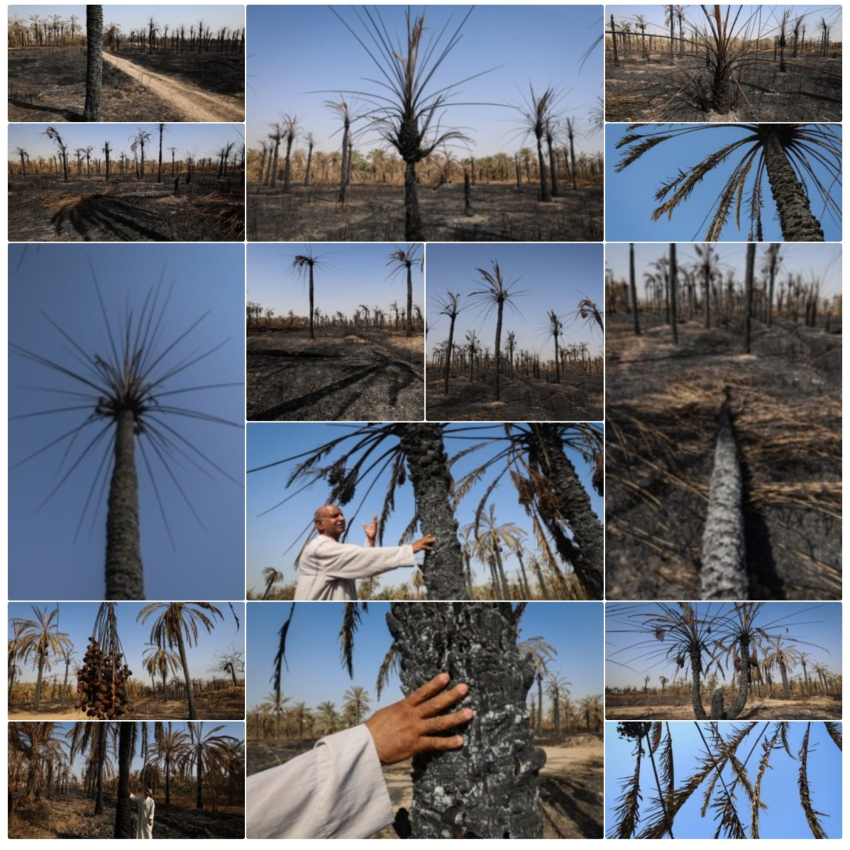
The Ahwazi Organization for Human Rights (A.O.H.R) has revealed that the Iranian authorities are pursuing a systematic and far reaching policy aimed at destroying the environment in the Arab region of Ahwaz. This policy is not merely a series of coincidental environmental measures, but rather part of a broader project intended to exert pressure on the indigenous population and force them into displacement by destroying their economic and social foundations.
According to the report, this policy manifests itself in several practices, including:
Construction of massive dams:
Iran has built dozens of dams on the rivers of Ahwaz, leading to a drastic decline in both surface and groundwater reserves in the region.
Diversion and drying of rivers:
The diversion of the Karun River and its tributaries into Persian provinces has intensified desertification and reduced agricultural production. In addition, marshes such as “Hoor al-Azim” have been drained, causing environmental disasters and the displacement of thousands of Ahwazi families.
Pollution from the oil and petrochemical industry:
Oil and gas extraction without adherence to ecological safety standards has led to widespread soil, water, and air pollution. Gas flaring has increased cancer and respiratory diseases, making Ahwaz the region with the highest cancer rate in Iran.
Sand and dust storms:
Due to the drying of wetlands and destruction of vegetation, sandstorms suffocate daily life and devastate agriculture.
“Scorched earth” policy in agriculture:
Cultivated areas of wheat, rice, and dates have been reduced. Moreover, the Revolutionary Guard has forcibly confiscated Ahwazi agricultural lands and converted vast areas into settlements as part of a demographic change plan.
Drying and burning of marshes:
Such as in the cases of Hoor al-Huweizeh and Hoor al-Fallahiyah, where massive fires spread smoke up to 150 km away. This has led to increased suffocation cases and traffic accidents.
The report added that this policy has directly impacted the lives of the Arab Ahwazis: they have lost their traditional livelihoods such as farming, fishing, and livestock breeding. Dangerous diseases have spread, leading to indirect forced displacement and rising mortality.
Violations in Light of International and Humanitarian Law
The documented practices constitute blatant violations of several international agreements, including:
• Geneva Conventions (1949) and Additional Protocols: prohibit “collective punishments” and “attacks on the means of survival of civilians” which applies to the scorched earth policy and the drying of rivers and marshes.
• Convention on the Prevention of Genocide (1948): considers the systematic destruction of the environment and resources with the aim of displacing a population group as a form of “slow genocide.”
• International Covenant on Economic, Social and Cultural Rights (1966): guarantees the right to water, food, and a healthy environment rights that are clearly violated in the case of Ahwaz.
• UN Convention to Combat Desertification (1994): prohibits measures that intentionally lead to desertification and the loss of agricultural land.
• Ramsar Convention (1971) on Wetland Protection: ratified by Iran, obliges it to preserve wetlands instead, the authorities are draining and burning them.
• Rome Statute of the International Criminal Court (1998): defines “the causing of widespread, long-term, and severe destruction of the natural environment” as a war crime, particularly when it is part of a policy directed against a specific population group.
The organization (A.O.H.R) emphasized that what is happening in Ahwaz represents a dual violation targeting both people and the environment. It reveals a systematic policy aimed at demographic, economic, and cultural transformation at the expense of the indigenous population.
Ahwazi Organization for Human Rights (A.O.H.R)
Hussain Hazbavi