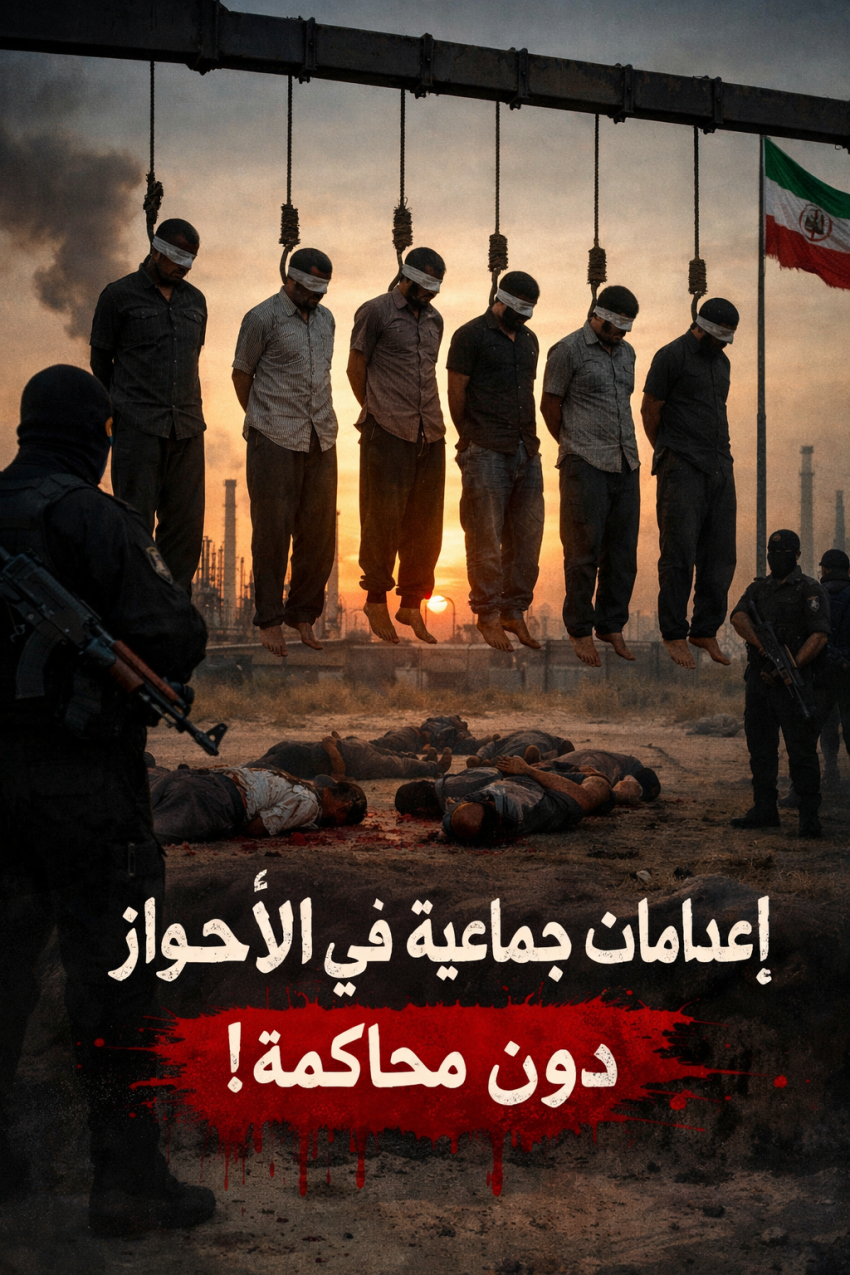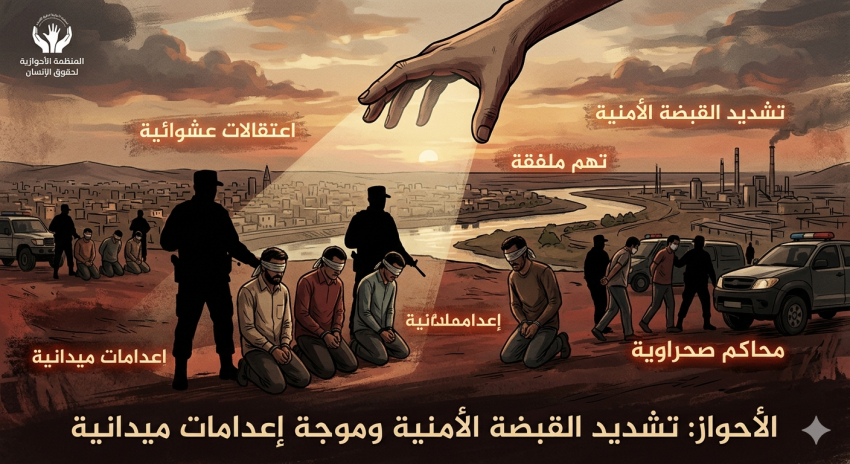



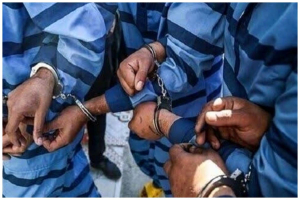
بیش از ۲۰۰ بازداشتی در احواز؛ و در سراسر ایران بیش از ۷۰۵ نفر بازداشت شدند
تموز/يوليو 19, 2025سازمان احوازي حقوق بشر (A.O.H.R) نسبت به موج بازداشتهای خودسرانهای که توسط مقامات ایرانی در احواز صورت گرفته و بیش از ۲۰۰ شهروند را دربر گرفته، عمیقاً ابراز نگرانی میکند.
این موج بازداشتها همزمان با جنگ اسرائیل و ایران و با اعمال وضعیت شدید امنیتی در شهرهای احواز انجام شده، با هدف ترساندن مردم احواز و ایجاد فضای رعب و وحشت برای جلوگیری از هرگونه حرکت مسالمتآمیز مردمی علیه سیاستهای تهاجمی جمهوری اسلامی ایران در منطقه احواز.
زمانبندی این بازداشتها که شهرهای مختلف احواز (از جمله احواز پایتخت، فلاحیه، تستر، سوس، محمره، عبادان، معشور و صالحیه) را در بر میگیرد، نشان میدهد که مقامات ایرانی حمله اسرائیل به ایران را بهانهای برای وارد کردن اتهامات جاسوسی، همکاری با دشمن و نشر اکاذیب به فعالان مدنی و سیاسی قرار دادهاند؛ هدف این اقدامات ترساندن جامعه احواز و جلوگیری از اعتراضات مسالمتآمیز علیه سیاستهای سرکوبگرانه حکومت است.
دادستان کل “امیر خلفیان” اذعان کرده که در شمال احواز (خوزستان) دستکم ۱۲۰ شهروند احوازی بازداشت شدهاند و در استانهای بوشهر، هرمزگان (بندرعباس) و ایلام نیز بیش از ۸۰ نفر بازداشت شدهاند.
او افزود که همه بازداشتشدگان به جاسوسی برای اسرائیل و نشر اخبار مخل امنیت ملی ایران اعتراف کردهاند و دادگاه انقلاب بدون توضیح درباره جزئیات، برای ۲۳ نفر از آنان احکام سنگینی صادر کرده است.
سازمان احوازي حقوق بشر (A.O.H.R) تأکید میکند که اتهامات مطرحشده توسط دادستان و نهادهای اطلاعاتی ایران، ساختگی و بیاساس هستند و “اعترافات” از طریق شکنجههای جسمی و روانی اخذ شدهاند، که این امر نقض آشکار قوانین بینالمللی و انسانی است که به شدت شکنجه و اخذ اعتراف تحت فشار را محکوم میکنند.
از زمان حمله اسرائیل به ایران، نهاد اطلاعاتی وابسته به سپاه پاسداران به بازداشت بیش از ۷۰۵ شهروند در سراسر ایران اعتراف کرده است. احتمال میرود که تعداد واقعی بازداشتشدگان بسیار بیشتر از این باشد، بهویژه با توجه به گزارشهایی که حاکی از تداوم روزانه این بازداشتهاست.
در همین راستا، قوه قضائیه ایران (که یکی از نهادهای وابسته به سپاه پاسداران است)، به نقل از سخنگوی خود “اصغر جهانگیر”، اعلام کرده که دستگاه قضایی با کسانی که آنان را “جاسوس و مزدور” خوانده، با قاطعیت برخورد خواهد کرد؛ این امر نشاندهنده نبود استقلال و شفافیت در نظام قضایی ایران است.
سازمان احوازي حقوق بشر (A.O.H.R) بازداشتهای خودسرانه صدها شهروند و صدور احکام علیه آنان بدون محاکمه عادلانه، شفاف، مستقل و علنی را به شدت محکوم میکند.
این سازمان از نهادهای مستقل بینالمللی حقوق بشری، چه دولتی و چه غیردولتی، به ویژه شورای حقوق بشر سازمان ملل، عفو بینالملل و سازمان دیدهبان حقوق بشر (Human Rights Watch) میخواهد که برای نجات جان زندانیان و افشای محل نگهداری آنان، اقدام فوری انجام دهند.
سازمان احوازي حقوق بشر (A.O.H.R)
حريق يلتهم بساتين النخيل في قرية المنيوحي وسط إهمال متعمد
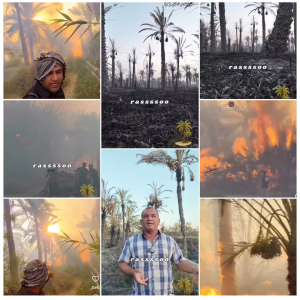
تموز/يوليو 19, 2025التهمت النيران أعدادًا كبيرة من بساتين النخيل في بلدة المنيوحي التابعة لقضاء عبادان جنوب غرب مدينة الأحواز العاصمة، وسط إهمال حكومي إيراني متعمد، كانت نتيجته إتلاف آلاف النخيل وآلاف الأطنان من محصول التمور.
وشهدت واحات النخيل يوم أمس الجمعة في هذه القرية التي يقطنها ما يقارب العشرين ألفًا من المواطنين الأحوازيين حريقًا هائلًا أدى إلى احتراق آلاف النخيل وبعض البيوت، لكن دون وقوع خسائر بشرية.
وبالرغم من تواصل الأهالي مع فرق الإطفاء في مدينتي عبادان والمحمرة لتجنّب المزيد من الخسائر، إلا أنّ هذه الفرق لم تصل إلى مكان الحريق إلا في وقت متأخر، ما ساهم في التهام آلاف النخيل في هذه الحرائق. يُضاف إلى ذلك عدم توفر الإمكانيات اللازمة للوصول إلى موقع الحريق وإخماده.
حتى اللحظة، لم تُعرف أسباب هذا الحريق، إلا أن بعض المؤشرات تشير إلى أنه بفعل فاعل، خاصة وأن الجهات الحكومية الإيرانية لم تُعر اهتمامًا لكشف ملابسات هذه الجريمة. وذكرت بعض المصادر أن سبب الحريق يعود إلى عمل استخباراتي يهدف إلى الضغط على المواطنين العرب بغية تهجيرهم والاستيلاء على أراضيهم.
وتُعدّ زراعة النخيل ومحاصيلها الدخل الوحيد الذي تعتمد عليه هذه العائلات العربية خلال العام، دون أي دعم حكومي. وحرق هذه البساتين يعني حرمان هذه العائلات وأطفالهم من حقوقهم المعيشية ومصدر إنفاقهم السنوي.
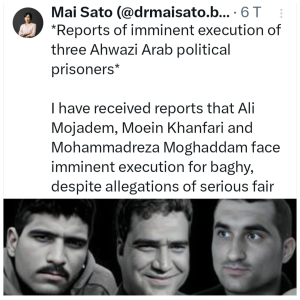
The Transfer of Three Ahwazi Prisoners to Solitary Confinement Raises Alarm over Imminent Execution
تموز/يوليو 17, 2025The transfer of three Ahwazi prisoners sentenced to death has raised concerns among human rights organizations about the imminent execution of the men. The three prisoners are:
• Ali Mojaddam bin Saleh, born in 1983, a resident of Sayyed Saleh neighborhood in Ahwaz.
• Mo’in Khenfari bin Israel, born in 1993, also from Sayyed Saleh neighborhood in Ahwaz.
• Mohammad Reza Moghadam bin Mohammad Ali, born in 1992, a resident of the city of Falahiyeh (Shadegan).
They were transferred to solitary confinement in Ahwaz Central Prison (Sepidar Prison) on June 26, 2025, a move widely seen as a prelude to carrying out the death sentences issued against them.
The Iranian Revolutionary Court, affiliated with the Islamic Revolutionary Guard Corps (IRGC), sentenced the three to death on Monday, March 6, 2023, on charges of “conspiring against national security” and “contacting Ahwazi political organizations in exile” opposed to the Iranian regime.
These activists were arrested along with three others: Adnan Ghabishawi (Mousavi), Habib Drees, and Salem Mousavi, on the same charges. Most were arrested by Iran’s Intelligence and Security Directorate in Ahwaz during the second half of February 2019, while some were detained in early 2022, following the killing of two IRGC members and two Iranian security personnel. Iranian state media aired the prisoners’ confessions on Persian-language channels.
The Revolutionary Court in Ahwaz, which is under the control of the IRGC and lacks any judicial independence, issued the sentences after an unfair, closed, and non-transparent trial. The European Union has sanctioned several judges from this court for human rights violations and issuing unjust death sentences against political activists.
In response, Ms. Mai Sato, the United Nations Special Rapporteur on Human Rights in Iran, expressed her concern about the death sentences handed down to the Ahwazi prisoners in a post published on the social media platform X (formerly Twitter).
The Staged Confessions Extracted Under Torture by Iranian Intelligence
Iranian state television—also affiliated with the IRGC—broadcasted fabricated confessions from the three prisoners, in which they admitted to the charges brought against them.
The Ahwazi Organization for Human Rights has confirmed that these statements were false and coerced, obtained through severe physical and psychological torture, in clear violation of both international and humanitarian laws, including the Convention against Torture and the International Covenant on Civil and Political Rights (ICCPR).
According to Article 1 of the Convention against Torture:
“For the purposes of this Convention, ‘torture’ means any act by which severe pain or suffering, whether physical or mental, is intentionally inflicted on a person for such purposes as obtaining from them or a third person information or a confession…”
Additionally, paragraph (g) of clause 3 in Article 14 of the ICCPR states:
“In the determination of any criminal charge against him, everyone shall be entitled to the following minimum guarantees, in full equality… (g) Not to be compelled to testify against himself or to confess guilt.”
These developments have triggered renewed calls for international pressure on the Iranian regime to halt executions and respect its obligations under international human rights law.
Hussain Hazbavi
Death Sentences Issued Against Two Ahwazi Citizens Over Political Activism
تموز/يوليو 17, 2025The Ahwazi Organization for Human Rights strongly condemns the unjust death sentences issued against two Ahwazi citizens for their political activities. The sentences were handed down by the Revolutionary Court in Ahwaz, which operates under the control of the Islamic Revolutionary Guard Corps (IRGC).
On Saturday, July 12, 2025, the First Branch of the Iranian Revolutionary Court in Ahwaz, presided over by Judge Adibi Mehr, sentenced the following individuals to two death penalties each:
• Masoud Jamea’i (Bawi), 37 years old, married with three daughters, a resident of Ahwaz (previously arrested in 2023).
• Alireza Mardasi (Humaidawi) bin Saddam, 45 years old, married with one child.
The Iranian authorities charged them with “spreading corruption on earth,” “conspiring against national security,” and “collaborating with political organizations in exile.”
These harsh sentences were the result of unfair and non-transparent trials held behind closed doors, lacking any semblance of due process or judicial integrity.
The Ahwazi Organization for Human Rights calls on international governmental and independent organizations to take urgent action to stop these unjust rulings, which constitute blatant violations of international and humanitarian law.
Hussain Hazbavi
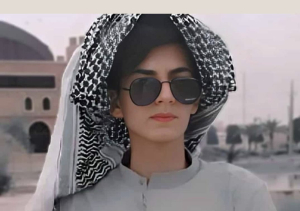
Iranian Intelligence Forces Minor Poet Mohammad Asjrawi to Deny His Arrest in Video Recording
تموز/يوليو 17, 2025Under pressure from Iranian intelligence, Ahwazi minor and poet Mohammad Asjrawi, who is only 16 years old, appeared in a video recording denying news of his arrest, which had been circulated by Ahwazi activists on social media platforms.
This new tactic by the IRGC Intelligence Agency is seen as an attempt to deflect growing criticism over its continued violations of intellectual and political freedoms.
Mohammad Asjrawi was in fact arrested in the city of Abadan on June 25, 2025, by the Revolutionary Guard’s Intelligence Unit and then transferred to an unknown location.
The Ahwazi Organization for Human Rights confirms that the arbitrary arrests carried out by Iranian authorities in Ahwaz—especially since the start of the Iran–Israel war—have affected hundreds of Ahwazis. These arrests are aimed at intimidating the public and suppressing any peaceful movement, and they represent a blatant violation of international and humanitarian law, including the International Covenant on Civil and Political Rights (ICCPR), which explicitly guarantees freedom of expression, thought, and belief.
Article 9 of the ICCPR states:
1. Everyone has the right to liberty and security of person. No one shall be subjected to arbitrary arrest or detention. No one shall be deprived of liberty except on such grounds and in accordance with such procedure as are established by law.
Hussain Hazbavi
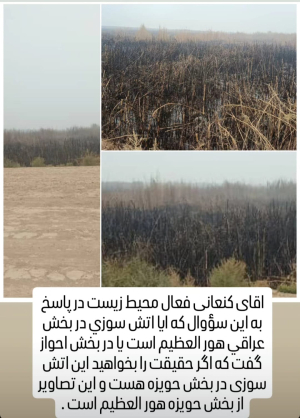
Residents of Hawizeh and Khafajiyeh Suffer from Breathing Difficulties Due to Fires in the Hawizeh Wetland
تموز/يوليو 17, 2025Residents of Hawizeh and Khafajiyeh and their surrounding villages are suffering from severe breathing difficulties due to the thick smoke resulting from ongoing fires in the Hawizeh Wetland (Hoor al-Azim), which has engulfed the entire region for over a week.
In the absence of basic health services, continuous power outages, and temperatures soaring above 50°C (122°F), the Revolutionary Guard’s intelligence and security forces, in collaboration with oil exploration companies operating in the wetland, have reportedly deliberately set fire to hundreds of hectares for security, political, and economic reasons.
Sources confirm that these fires, particularly during the peak of summer (al-Qayz), are part of a systematic plan aimed at forcibly displacing residents under the pretext of executing economic projects.
Iranian authorities claim that the smoke is a result of fires on the Iraqi side of the Hawizeh Wetland. However, an investigation by the Ahwazi Organization for Human Rights revealed that the fires are located on the Ahwazi side, which is under Iranian control, and that the Iranian government’s claims are entirely false.
This information was corroborated by Ahwazi environmental activist Mr. Kanaan, who, in an interview with a news agency, confirmed that the fires are concentrated in the city of Hawizeh, specifically near the Sohrab oil field. He added that he witnessed large areas of fire and destruction near this field, which lies 115 kilometers from Ahwaz and 30 kilometers from Khafajiyeh.
This is not the first time Iranian authorities have attempted to distort facts and blame neighboring countries. For over two decades, they have routinely justified dust storms and environmental degradation in Ahwaz with various fabricated claims. All of this forms part of a broader political agenda involving the construction of dams, the withholding of water, and the diversion of rivers through massive projects to central Iran—an effort to divert attention from Iran’s environmentally destructive policies in Ahwazi territories.
Hussain Hazbavi
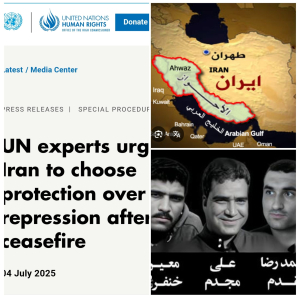
UN:Iran reported that the six Ahwazi Arab men were sentenced to execution. According to this report,
تموز/يوليو 16, 2025In this connection, we would like to bring to the attention of your Excellency’s
Government information we have received concerning
Mr. Ali Mojadam, Mr. Moein Khanfari, Mr. Mohammad Reza Moghadam, Mr. Salem Mousavi, Mr. Adnan
Ghobeishavi and Mr. Habib Deris – from the Ahwazi Arab ethnic minority have
been recently accused and charged of terrorism offenses (Baghi), however, there is a
serious doubt regarding the legal basis of those accusations and the legal proceedings
in place during the detentions and trial of the victims.... PDF
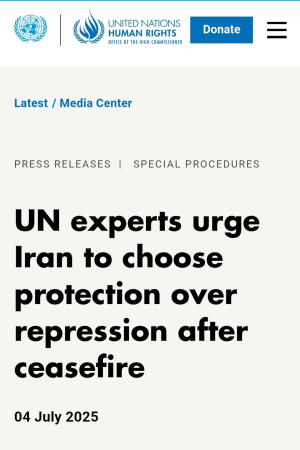
GENEVA – UN experts* today expressed alarm over the crackdown in the Islamic Republic of Iran since hostilities began on 13 June 2025 and the subsequent ceasefire
تموز/يوليو 16, 2025GENEVA – UN experts* today expressed alarm over the crackdown in the Islamic Republic of Iran since hostilities began on 13 June 2025 and the subsequent ceasefire.
“Post-conflict situations must not be used as an opportunity to suppress dissent and increase repression,” the experts said. Acknowledging the impact of unlawful military attacks by Israel and the United States of America, the experts nevertheless expressed concern over reports of executions, enforced disappearaces, and mass arrests.
Since 13 June 2025, at least six individuals have reportedly been executed on charges of “espionage for Israel”, including three Kurdish men. Hundreds of individuals, including social media users, journalists, human rights defenders, foreign nationals—particularly Afghans—and members of ethnic and religious minorities such as Baha'is, Kurds, Balouchis and Ahwazi Arabs, have been detained on accusations of “collaboration” or “espionage”. Those detained include human rights defender Hossein Ronaghi and his brother. Meanwhile, Swedish-Iranian researcher Ahmadreza Djalali faces imminent execution with his whereabouts unknown. The conflict has also substantially exacerbated Afghan deportations from Iran, with 256,000 returned in June alone amid serious refoulement concerns.
The experts expressed alarm at official statements announcing expedited trials on accusations of espionage, putting individuals at heightened risk of summary execution or punishment without adequate due process.
They also found equally concerning reports of incitement to discrimination, hostility and violence in the media, which have labelled entire minority communities as traitors and used dehumanising language such as “filthy rats.” This rhetoric in state-linked Persian and Arabic media outlets has reportedly included calls for surveillance, and killing of Baha’is, echoing the 1988 atrocities.
The experts warned that Iran’s Parliament is concurrently advancing legislation that would classify intelligence or espionage activities carried out for “hostile Governments” as “corruption on earth”—an offence punishable by death.
“Criminalising the sharing of information in broad language violates the rights to freedom of expression and information,” the experts said. “This legislation also represents a worrying expansion of the death penalty that violates international human rights law.”
The experts urged the international community to prioritise sustained support to Iranian civil society actors, including technical and financial assistance to independent media outlets and human rights groups. “The survival of civic space depends on the ability to document human rights violations, preserve collective memory, and coordinate action, which is essential during this critical period,” they said.
They also condemned the deteriorating conditions faced by prisoners transferred from Evin Prison after Israeli attacks on its facilities. Prisoners were reportedly moved to the Great Tehran Penitentiary and to Qarchak Prison and held in abysmal conditions. The fate and whereabouts of some prisoners remain unknown, placing them outside the protection of the law—a situation that amounts to enforced disappearances.
“Following the ceasefire, the world is watching closely to see how Iranian authorities treat their own people. This will be a defining measure of the country’s commitment to human rights and the rule of law,” the experts said.
“Iran must not allow history to repeat itself by resorting to the same dark patterns of repression that have devastated its people in previous post-conflict periods.”
The experts have been in contact with Iranian authorities on this issue.
*The experts:
Mai Sato, Special Rapporteur on the situation of human rights in the Islamic republic of Iran,
Nazila Ghanea, Special Rapporteur on freedom of religion or belief,
Morris Tidball-Binz, Special Rapporteur on extra-judicial summary or arbitrary executions,
Nicolas Levrat, Special Rapporteur on minority issues,
Richard Bennett, Special Rapporteur on the situation of human rights in Afghanistan,
Irene Khan, Special Rapporteur on the promotion and protection of the right to freedom of opinion and expression,
Mary Lawlor, Special Rapporteur on the situation of human rights defenders,
Gabriella Citroni, (Chair-Rapporteur), Grażyna Baranowska (Vice-Chair), Aua Baldé, Ana Lorena Delgadillo Pérez, Working Group on Enforced or Involuntary Disappearances,
Margaret Satterthwaite, Special Rapporteur on the independence of judges and lawyers,
Laura Nyirinkindi (Chair), Claudia Flores (Vice-Chair), Dorothy Estrada Tanck, Ivana Krstić, and Haina Lu, Working group on discrimination against women and girls.
Special Procedures of the Human Rights Council. Special Procedures experts work on a voluntary basis; they are not UN staff and do not receive a salary for their work. While the UN Human Rights office acts as the secretariat for Special Procedures, the experts serve in their individual capacity and are independent from any government or organization, including OHCHR and the UN. Any views or opinions presented are solely those of the author and do not necessarily represent those of the UN or OHCHR.
Country-specific observations and recommendations by the UN human rights mechanisms, including the special procedures, the treaty bodies and the Universal Periodic Review, can be found on the Universal Human Rights Index https://uhri.ohchr.org/en/.
For inquiries and media requests, please contact: عنوان البريد الإلكتروني هذا محمي من روبوتات السبام. يجب عليك تفعيل الجافاسكربت لرؤيته.
For media inquiries related to other UN independent experts please contact Maya Derouaz (عنوان البريد الإلكتروني هذا محمي من روبوتات السبام. يجب عليك تفعيل الجافاسكربت لرؤيته.) or Dharisha Indraguptha (عنوان البريد الإلكتروني هذا محمي من روبوتات السبام. يجب عليك تفعيل الجافاسكربت لرؤيته.).
Follow news related to the UN’s independent human rights experts on X: @UN_SPExperts.
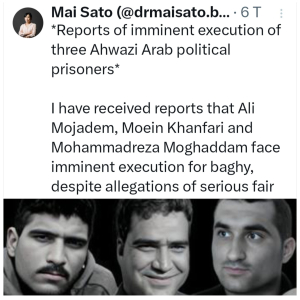
Mai Sato (Drmaisato.bsky-social):Reports of imminent execution of three Ahwazi Arab political prisoners
تموز/يوليو 16, 2025Reports of imminent execution of three Ahwazi Arab political prisoners*
I have received reports that Ali Mojadem, Moein Khanfari and Mohammadreza Moghaddam face imminent execution for baghy, despite allegations of serious fair trial violations and torture-induced confessions.
I urge the Iranian authorities to halt these executions. The death penalty must not be used for broadly defined security offences under the ICCPR to which Iran is a party.
I acknowledge the challenging circumstances the country currently faces amid the ongoing regional conflict and its broader human rights implications. As noted in the press release signed by ten mandate holders, I reiterate that the world is watching closely to see how Iranian authorities treat their own people, including political prisoners.
This will be a defining measure of the country’s commitment to human rights and the rule of law.
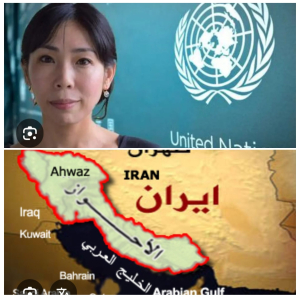
نگراني گزارشگر ویژه سازمان ملل خانم مای ساتو ازوضعيت اسفناك حقوق بشر در ايران و بازداشتهاى گسترده در ايران
تموز/يوليو 16, 2025دولتها نباید از شرایط پس از درگیری به عنوان فرصتی برای افزایش سرکوب اقلیتهای اتنیکی و مذهبی و همینطور مخالفان استفاده کنند. حتی با در نظر گرفتن تاثیر حملات نظامی غیرقانونی اسرائیل و ایالات متحدهی آمریکا،، گزارشهایی که در مورد اعدامها و بازداشتهای گسترده، مخصوصا در میان اقلیتها، دریافت کردهام بسیار هشدار دهندهاند
طبق قوانین بینالمللی دولتها موظفند تا از حقوق بنیادین بشر حتی در شرایط درگیری نظامی و پس از آن نیز محافظت کنند
«از سیزدهم ژوئن ۲۰۲۵ یعنی زمان شروع درگیریها، حداقل شش نفر به جرم «جاسوسی برای اسرائیل اعدام شدهاند. از جمله سه مرد کرد. صدها نفر، شامل کاربران شبکههای اجتماعی، روزنامهنگاران، مدافعان حقوقبشر و شهروندان خارجی، از جمله افغانستانی، و افراد متعلق به اقلیتهای اتنیکی و مذهبی، بهاییها، کردها، بلوچها و عربها و…به بهانهی همکاری یا جاسوسی برای اسرائیل دستگیر شدهاند
افراد بازداشتشده شامل حسین رونقی، وبلاگنویس و مدافع حقوق بشر، و برادر او نیز میشوند. در همین حال، پژوهشگر ایرانی-سوئدی، احمدرضا جلالی، در آستانه اعدام قرار دارد و گزارش شده که به مکانی نامشخص منتقل شده است.
بنا به گزارشهای رسیده اخراج شهروندان افغانستانی ساکن ایران نیز افزایش چشمگیری پیدا کرده است و ۲۵۶ هزار شهروند افغانستانی تنها در ماه گذشته (ژوئن) بازگرداننده شدهاند، امری که نگرانیهای جدی در مورد بازگرداندن اجباری پناهندگان، که نقض استانداردهای حقوق بشر است، را برانگیخته است
من از اظهارات رسمی مبنی بر برگزاری محاکمههای سریع در مورد اتهامات جاسوسی نگران هستم چرا که میتواند خطر اعدامهای شتابزده و یا مجازات بدون روند دادرسی عادلانه را افزایش دهد
در عینحال اقدام مجلس ایران برای پیشبرد تصویب قانونی که فعالیتهای اطلاعاتی و جاسوسی را تحت عنوان افساد فیالارض طبقهبندی میکند، که میتواند حکم اعدام به دنبال داشته باشد را بسیار هشدار دهنده ارزیابی میکنم
کماکان در حال دریافت گزارشهایی هستم مبنی بر وخامت اوضاع زندانیانی که پس از حملهی اسرائیل زندان اوین، به ندامتگاه تهران بزرگ و زندان قرچک منتقل شدهاند. محل نگهداری برخی از زندانیان اوین همچنان نامشخص است که باعث ایجاد نگرانی در مورد احتمال وقوع ناپدیدسازیهای قهری میشود
از جامعهی بینالمللی میخواهم که حمایت پایدار از کنشگران جامعهی مدنی ایران را در الویت قرار دهد: از جمله کمکهای مالی و فنی به رسانههای مستقل و گروههای مدافع حقوق بشر. بقای مقاومت مدنی به توانایی آنها در مستندسازی نقض حقوق بشر، حفظ حافظهی جمعی و هماهنگی اقداماتشان در این دوران بحرانی بستگی دارد
در پی آتشبس، جهان با دقت رفتار مقامات ایرانی با مردم خود را زیر نظر دارد، این رفتار معیاری خواهد بود که میزان تعهد این کشور به حقوق بشر و حاکمیت قانون، که به معنی رعایت استاندارهای بینالمللی حقوق بشر است، را نشان خواهد داد
ایران نباید با بازگشت به الگوهای تاریک سرکوب گسترده، که در گذشته در دوران پس از درگیری باعث آسیب شدیدی به مردم این کشور شده است ، اجازه دهد تاریخ دوباره خود را تکرار کند.