


اعتقل اكثر من 25 أحوازيأ مساء يوم امس الاثنين الموافق ل 20.05.2019 على يد قوات الاستخبارات التابعة لقوات التعبئة اثناء تأديتهم صلاة التراويح في بيت المواطن علي الساري (سواري) الواقع في الشارع الثاني لحي الزهيرية (كلدشت) التابع لمدينة الأحواز العاصمة و نقلوا الى مكان غير معلوم.
و داهمت الاستخبارات بيت المواطن علي الساري اثناء تواجدضيوفه و تأديتهم صلاة التراويح دون اي ترخيص رسمي و قامت بضرب و اهانةالمصلين و اعتقالهم دون استثناء.
و بالرغم من عدم وجود اية مادة دستورية او قانونية في ايران لمواجهة من يعتنق مذهب اهل التسنن الا ان هذه القوانين و المادات القانونية و فقراتها باءت كالعديد من القوانين الايرانية الاخرى حبر على ورق.
و تواجه السلطات الايرانية المد السني بالأحواز بشدة و تتهم من يعتنق هذا المذهب بالوهابية حتى تحكم على من تعتقله بأحكام قاسية و غير عادلة و هو الامر الذي يعتبر انتهاكا صارخا للقواينن الدولية و الانسانية و التي تكفل الانسان حقه في التعبير عن رأيه و دينه و عقيدته دون تمييز.
و تنص المادة ال 18 من قانون العهد الدولي الخاص بالحقوق المدنية و الانسانية على :
1. لكل إنسان حق في حرية الفكر والوجدان والدين. ويشمل ذلك حريته في أن يدين بدين ما، وحريته في اعتناق أي دين أو معتقد يختاره، وحريته في إظهار دينه أو معتقده بالتعبد وإقامة الشعائر والممارسة والتعليم، بمفرده أو مع جماعة، وأمام الملأ أو على حدة.
2. لا يجوز تعريض أحد لإكراه من شأنه أن يخل بحريته في أن يدين بدين ما، أو بحريته في اعتناق أي دين أو معتقد يختاره.
3. لا يجوز إخضاع حرية الإنسان في إظهار دينه أو معتقده، إلا للقيود التي يفرضها القانون والتي تكون ضرورية لحماية السلامة العامة أو النظام العام أو الصحة العامة أو الآداب العامة أو حقوق الآخرين وحرياتهم الأساسية.
4. تتعهد الدول الأطراف في هذا العهد باحترام حرية الآباء، أو الأوصياء عند وجودهم، في تأمين تربية أولادهم دينيا وخلقيا وفقا لقناعاتهم الخاصة.
و لكن السلطات الايرانية و التي تتبنى سياسيأ رئادت المذهب الشيعي لتحقيق مصالحها القومية البحتة تعتبر اتساع ظاهرة التسنن خطرأ على امنها القومي و تواجه اهل التسنن بالأحواز باشد العقوبات.
المنظمة الأحوازية لحقوق الإنسان
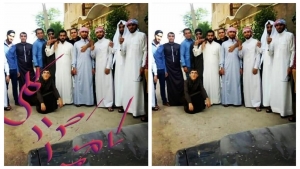
إعتقال ثلاثة اشقاء في حي السرحانية التابع لمدينة المحمرة
أيار 20, 2019اعتقلت قوات الامن و الاستخبارات الايرانية ثلاثة اشقاء في حي السرحانية التابع لمدينة المحمرة قبل يومين و نقلتهم الى مكان غير معلوم.
و أكدت مصادرنا ان قوات الامن و الاستخبارات قامت بمداهمة بيتهم في الحي و اعتقالهم دون اي ابلاغ مسبق او ترخيص قانوني من الجهات المعنية.
الاشقاء الثلاثة هم :
1ـ علي مزرعة ، الحالة الاجتماعية : متزوج
2ـ محمود مزرعة و هو ايضأ متزوج
3ـ جواد مزرعة ، اعزب
وتترواح اعمار المعتقلين مابين ال 25 الى 35 عامأ.
و تدين المنظمة الأحوازية لحقوق الإنسان حملة الاعتقالات العشوائية التي تشنها السلطات الايرانية ضد الأحوازيين دون اي تهمة او سبب قانوني.
و تنص المادة التاسعة من العهد الدولي الخاص بالحقوق المدنية و السياسية على :
1. لكل فرد حق في الحرية وفى الأمان على شخصه. ولا يجوز توقيف أحد أو اعتقاله تعسفا. ولا يجوز حرمان أحد من حريته إلا لأسباب ينص عليها القانون وطبقا للإجراء المقرر فيه.
2. يتوجب إبلاغ أي شخص يتم توقيفه بأسباب هذا التوقيف لدى وقوعه كما يتوجب إبلاغه سريعا بأية تهمة توجه إليه.
3. يقدم الموقوف أو المعتقل بتهمة جزائية، سريعا، إلى أحد القضاة أو أحد الموظفين المخولين قانونا مباشرة وظائف قضائية، ويكون من حقه أن يحاكم خلال مهلة معقولة أو أن يفرج عنه. ولا يجوز أن يكون احتجاز الأشخاص الذين ينتظرون المحاكمة هو القاعدة العامة، ولكن من الجائز تعليق الإفراج عنهم على ضمانات لكفالة حضورهم المحاكمة في أية مرحلة أخرى من مراحل الإجراءات القضائية، ولكفالة تنفيذ الحكم عند الاقتضاء.
4. لكل شخص حرم من حريته بالتوقيف أو الاعتقال حق الرجوع إلى محكمة لكي تفصل هذه المحكمة دون إبطاء في قانونية اعتقاله، وتأمر بالإفراج عنه إذا كان الاعتقال غير قانوني.
5. لكل شخص كان ضحية توقيف أو اعتقال غير قانوني حق في الحصول على تعويض.
و تطالب المنظمة الأحوازية لحقوق الإنسان المنظمات الانسانية المستقلة و الحكومية بالتحرك العاجل لانقاذ الالاف من الأحوازيين الذين يقبعون في السجون الايرانية بسبب نشاطهم الثقافي و الفني او رأيهم السياسي و الفكري و هو الحق الذي كفلته كافة القوانين و المواثيق الدولية و الانسانية للمجتمعات البشرية دون استثناء.
المنظمة الأحوازية لحقوق الإنسان
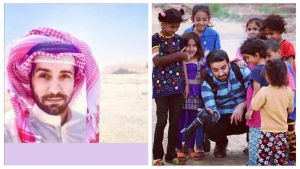
اعتقلت قوات الامن و الاستخبارات الايرانية يوم امس الأربعاء الموافق ل 15.05.2019 الناشط الثقافي و المصور ميلاد البحري في مدينة الفلاحية و نقلته الى مكان غير معلوم.
المواطن ميلاد البحري هو من سكان مدينة الفلاحية ناشط في المجال الثقافي ،مهنته :مراسل و مصور منذ سنين، شارك بشكل مستمر في نقل معاناة شعبنا اثر ازمة الفيضانات المفتعلة التي شهدتها المدن و القرى الأحوازية منذ اسابيع.
و تشير التقارير ان الاستخبارات الايرانيةلم تبلغ المعتقل مسبقأ عن اسباب الاعتقال او التهم التي موجهة اليه بل نقلته الى سجونها السرية لوضعه تحت التعذيب الجسدي و المعنوي أو النفسي و إرغامه على الاعتراف باعمال لم يرتكبها على الاطلاق او الاقرار على شخص ثالث و هذا ما تحرمه الاتفاقية العالمية لمناهضة التعذيب والتي تمنع منعأ باتأ وضع السجناء و المعتقلين تحت وطأة التعذيب لسحب الاعترافات على شخص ثالث او الاقرار باعمال لم يرتكبوها.
و منذ بدء ازمة الفيضانات المفتعلة التي شهدتها الأحواز مؤخرأ والتي تزامت مع ذكرى الرابع و التسعون (94) على الاحتلال الايراني للأحواز قامت قوات الامن و الاستخبارات الايرانية التابعة للحرس الثوري الايراني في مختلف انحاء الأحواز بحملة اعتقالات عشوائية طالت المئات من النشطاء الأحوازيين في المجال الثقافي و اعضاء اللجان الشعبية الذين قاموا بإيصال المساعدات الانسانية ـ الطبية و الغذائيةـ الى منكوبي الفيضانات و نقلتهم الى سجونها السرية.
و لم تكتفي السلطات الايرانية بالقاء القبض على النشطاء الأحوازيين في تلك المجالين بل قامت ايضأ باعتقال عدد اخر من الفنانين و اعضاء المؤسسات الفنية.
و افادت مصادر المنظمة الأحوازية لحقوق الإنسان ان السلطات الايرانية قامت بتهديد العشرات من الفنانين بالاعتقال بعد استدعائهم لمراكز الاستخبارات في المدن الأحوازية.
وتطالب المنظمة الأحوازية لحقوق الأنسان ،المنظمات الانسانية المستقلة و الحكومية بالتحرك العاجل لانقاذ ارواح الالاف من المعتقلين الأحوازيين في السجون الايرانية.
المنظمة الأحوازية لحقوق الإنسان.
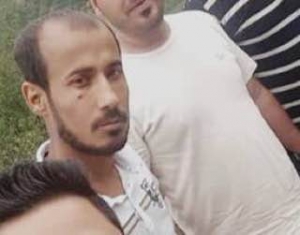
تدهور صحي للسجين الأحوازي كريم الساعدي
أيار 11, 2019يعاني السجين الأحوازي كريم الساعدي من تدهور صحي منذ ايام في داخل سجنه في الأحواز العاصمة.
و نقل السجين و على نفقة ذويه لمستشفى الكرمي للعلاج بعد متابعة ذويه ملفه الصحي و عدم وجود الامكانيات الكافية للعلاج في مستشفى الخميني الواقع في قلب الأحواز العاصمة.
و اعتقل المواطن كريم الساعدي بن عبدالرضا في 03.11.2018 في مدينة الحميدية.
المنظمة الأحوازية لحقوق الإنسان
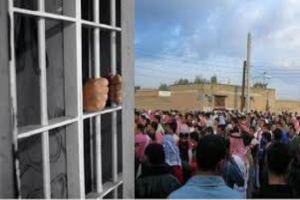
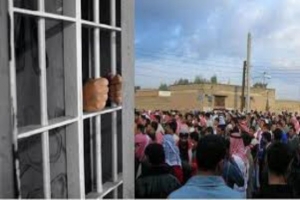
30 معتقلأ أحوازيا من اهل السنة و الجماعة يواجهون حكم الإعدام على خلفية حادث المنصة بالأحواز العاصمة
أيار 11, 2019يواجه 30 معتقلأ أحوازيأ من اهل السنة و الجماعة حكم الإعدام على خلفية حادث المنصة الذي استهدف في يوم السبت الموافق ل 22من سبتمبر من العام الجاري العرض العسكري الايراني بالأحواز العاصمة و الذي اقيم بمناسبة الحرب الايرانيةـ العراقية.
و حكمت محكمة الثورة و التي تشرف عليها مؤسسة الحرس الثوري الايرانية في محاكمات غير علنية و غير شفافه على 30 سجينأ أحوازيأ بتهمة التجاوز و التعدي على الامن القومي الايراني الفساد في الارض و هذا مايسمح للقانون الجنائي الايراني باصدار حكم الاعدام على من يقوم باي عمل مسلح ضد الحكومة الايرانية.
و جاء هذا الحكم بعد ما وضع السجناء المتهمين تحت تعذيب جسدي و نفسي لاخذ الاعترافات و اكراههم على التوقيع على اتهامات و اعمال لم و لن يرتكبوها و هذا مايخالف بالتأكيد القوانين الدولية و الانسانية بمافيها اتفاقية مناهضة التعذيب و التي تحث السلطات بالدول على عدم وضع السجناء تحت التعذيب لسحب الاعترافات و الاقرار على اشخاص اخرين.
و تشير التقارير الرسمية ان عدد كبير من السجناء الذين تم الحكم عليهم تم اعتقالهم و سجنهم قبل اشهر من حادث المنصة الا ان السلطات الايرانية و بالرغم من عدم صلتهم بالحادث اتهمتهم بالضلوع وراء الحادث.
و تطلب المنظمة الأحوازية لخقوق الإنسان مجلس حقوق الإنسان التابع للامم المتحدة و المنظمات الانسانية المستقلة و الحكومية بالتحرك العاجل لانقاذ ارواح السجناءالأحوازيين من عقوبة الاعدام التي يواجهونها لاسيما بالضغط على السلطات الايرانية باجراء محاكمات عادلة و شفافة و علنية و السماح للسجناء بتعيين محام للدفاع عن انفسهم.
KHAkzadegan
المنظمة الأحوازية لحقوق الإنسان
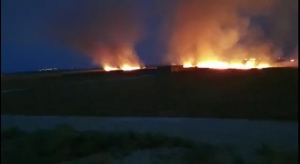
قامت شركات قصب السكر في مدينة ملا ثاني التابعة لمدينة الأحواز العاصمة بحرق مزارع قصب السكر و صب النفايات في نهر كارون و هذا ما يؤدي الى تدمير بيئي بالأحواز دون اي معاقبة او متابعة قانونية.
و يأتي مشروع قصب السكر بالأحواز و الذي خططت له منذ إبان الحكم البهلوي لاغتصاب الاراضي الزراعية الأحوازية من ممتلكيها العرب و بناء مستوطنات للوافدين الفرس و غيرهم ضمن الخطط الممنهجة لتغيير التركيبة السكانية العربية بالأحواز (التغيير الدموغرفي ).
و استطات السطات الايرانية بمساعدة العسكر و قوات الامن و الاستخبارات ان تغتصب مالايقل عن مليون هكتار من الاراضي الزراعية و تهجير مئات الالاف من العوائل الأحوازية العربية و بناء العشرات من المستوطنات للوافدين من المدن الفارسية على تلك الاراضي.هذا في الوقت الذي تحرم القوانين الدولية تهجير السكان الاصليين من اراضيهم و نهب ثرواتهم و مصادرة ممتلكاتهم.
المنظمة الأحوازية لحقوق الإنسان
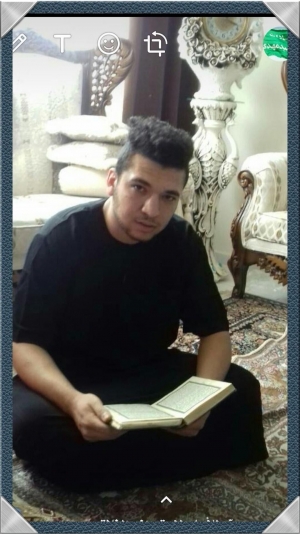
اعتقال المواطن سيد علي ال مهدي و منع ذويه من زيارته
أيار 11, 2019في اطار حملة الاعتقالات التي تقوم بها اجهزة الاستخبارات الايرانية التابعة للحرس الثوري منذ اسابيع و التي طالت المئات من الأحوازيين،اعتقلت الاستخبارات الايرانية قبل اسبوع المواطن الأحوازي سيد علي ال مهدي و نقلته الى مكان غير معلوم.
و منعت الاستخبارات الايرانية ذوي المعتقل من زيارته او الادلاء عن مكان اعتقاله.
و في خبر مؤثق حصلت عليه المنظمة الأحوازية لحقوق الإنسان ان رجال من الاستخبارلات الايرانية قاديمن من طهران الى الأحواز اعتقلوا المواطن الأحوازي سيد علي دون اي ابلاغ مسبق و دون ان تبلغه عن اسباب الاعتقال.
و تخشى المنظمة الأحوازية الإسان من ممارسة التعذيب الجسدي و النفسي على السجناء لسحب الاعترافات و التوقيع على اعمال لم يرتكبوها بعد.
و تمنع القوانين و الاتفاقيات الدولية بما فيها اتفاقية مناهضة التعذيب وضع السجناء تحت التعذيب الجسدي و النفسي لسحب الاعترافات او الاقرار على شخص ثالث.
المنظمة الأحوازية لحقوق الإنسان
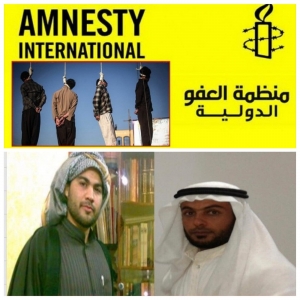
IRAN: AHWAZI ARAB MEN AT RISK OF EXECUTION: ABDULLAH KARMOLLAH CHAB AND GHASSEM ABDULLAH
أيار 08, 2019First UA: 61/19 Index: MDE 13/0321/2019 Iran Date: 8 May 2019
URGENT ACTION
AHWAZI ARAB MEN AT RISK OF EXECUTION
Abdullah Karmollah Chab and Ghassem Abdullah, from Iran’s Ahwazi Arab minority, are facing the death penalty following a grossly unfair trial. “Confessions” they have said were obtained under torture and other ill-treatment, including electric shocks and mock executions, were used to convict them. Their cases are before the Supreme Court.
TAKE ACTION: WRITE AN APPEAL IN YOUR OWN WORDS OR USE THIS MODEL LETTER
Dear Mr Raisi,
Head of the Judiciary Ebrahim Raisi C/o Permanent Mission of Iran to the UN Chemin du Petit-Saconnex 28
1209 Geneva, Switzerland
Abdullah Karmollah Chab and Ghassem Abdullah, Sunni Muslims from Iran’s Ahwazi Arab minority, are on death row following a grossly unfair trial which relied on “confessions” they say were obtained under torture and other ill- treatment. They have been convicted of “enmity against God” (moharebeh) in connection with an armed attack on a Shi’a religious ceremony in Safiabad, Khuzestan province, on 16 October 2015, which left two people dead. They have denied any involvement in the attack. Their lawyers have said there is no evidence linking them to the attack and have identified inconsistencies between the “confessions” that led to their convictions and the accounts of eyewitnesses present at the scene of the crime. On 19 October 2015, both men were arrested by the ministry of intelligence and held in solitary confinement in an unknown location for six months. They have since been moved to several different detention centres. They have been given extremely limited access to their families through irregular telephone calls and only one visit. On 9 April 2019, they were transferred to a ministry of intelligence detention centre in Hamedan, Hamedan province, where they have been denied access to their families.
Both men have said they were subjected to months of torture in detention including by being beaten and given electric shocks. Abdullah Karmollah Chab has said his interrogators hung him upside down for 11 days and subjected him to mock executions, saying they would execute and bury him in an unmarked grave. For three mornings in a row, according to him, they woke him, put a sack over his head and a noose around his neck, and told him that if he “confessed” he would not be executed. He refused, saying he was innocent. On the third day, he said he heard one of the interrogators say: “Just let him go. If he had anything to confess he would have done so by now.” Both men were denied access to a lawyer until the day of their trial, when they were represented by a state-appointed lawyer. During their trial before the Revolutionary Court in Ahvaz on 22 June 2016, they reportedly removed some of their clothes to show torture marks on their bodies to the court. However, no investigation was ordered. Iran’s Supreme Court later quashed the conviction and sentence due to lack of evidence and flawed investigations and ordered a retrial. On 6 July 2017, they were sentenced to death again. The case is now again before the Supreme Court for appeal.
I urge you to quash Abdullah Karmollah Chab and Ghassem Abdullah’s convictions and death sentences; and release them unless there is sufficient evidence, not obtained through torture or other ill-treatment, to charge them with a recognizable criminal offence. In addition, I urge you to grant them a fair trial, without recourse to the death penalty. I urge you to provide them with ongoing access to their families and lawyers. I also urge you to ensure that they are protected from torture and other ill-treatment, and to order an independent and impartial investigation into their torture allegations, bringing to justice anyone responsible.
Yours sincerely,
ADDITIONAL INFORMATION
Abdullah Karmollah Chab and Ghassem Abdullah were among 15 Ahwazi Arabs who were arrested following the armed attack on a religious ceremony in Safiabad on 16 October 2015. Within weeks of the attack and before their trial had taken place, the authorities made a series of announcements that undermined their presumption of innocence. On 1 November 2015, the public prosecutor of Dezful, Khuzestan province, announced: “After arresting all of the perpetrators on this incident, and [obtaining] their confessions, it is clear that this was a terrorist incident.” He went on to accuse the detainees of belonging to a group that called itself Jandolfareq, which he said had 15 members and aimed to commit sabotage operations and other acts in the province. He said: “Thankfully, they were identified and arrested after their first operation and had their weapons and other devices discovered and seized. According to the law, their crime is certainly that of moharebeh and they have been charged as such.” On 17 November 2015, the Islamic Republic News Agency also reported that the head of the justice department in Dezful told its reporters: “I anticipate that these ‘terrorists’ will be convicted of moharebeh and handed down a punishment that will make them pay for their deplorable actions and serve as a lesson to others.”
In court, Abdullah Karmollah Chab and Ghassem Abdullah were tried alongside six other Ahwazi Arabs. The prosecution authorities accused them of involvement in an armed group called Jandolfareq, which they described as following a “Salafi Takfiri” ideology, but failed to provide any evidence to show how the defendants were connected to the group. Amnesty International has received information from a reliable source that also show evidence of the flawed investigations that took place. These include inconsistencies between “confessions” the men say they made under torture and the evidence presented to the court. The men are said to have “confessed” that the car they used during the attack was a white Peugeot Persia while eyewitnesses have stated that a silver Peugeot 405, which is an older model, was used by the assailants. In addition, Ghassem Abdullah, who is a farmer, told his interrogators that he owns a rifle and indicated where they could find it. However, according to statements made by the arms specialist assigned to this case and a report by the security authorities, three shells found at the scene of the crime do not match the bullets found in the cartridge of the rifle that was retrieved from Ghassem Abdullah’s home. Despite these and other inconsistencies, the judge presiding over their trial refused to order an investigation into their torture allegations and accepted their “confessions” as evidence to sentence them to death. The six other defendants on trial with them were also convicted of “enmity against God” but were spared the death penalty and were instead sentenced to between three and 25 years in prison.
Abdullah Karmollah Chab is a 38-year-old with three children, and Ghassem Abdullah is a 32-year-old farmer with two children. Both men, from Shush county in Khuzestan province, are Sunni Muslims who have converted from Shi’a Islam.
Under international human rights standards, individuals charged with crimes punishable by death are entitled to the strictest observance of all fair trial guarantees. The arbitrary deprivation of life, as well as torture and other ill-treatment are absolutely prohibited at all times and in all circumstances.
You can also write in your own language.
PLEASE TAKE ACTION AS SOON AS POSSIBLE UNTIL: 19 June 2019
Please check with the Amnesty office in your country if you wish to send appeals after the deadline.
NAME AND PREFERRED PRONOUN: Abdullah Karmollah Chab (he; his); Ghassem Abdullah (he; his)
PREFERRED LANGUAGE TO ADDRESS TARGET: Persian, English
https://www.amnesty.org/download/Documents/MDE1303212019ENGLISH.pdf
Amnesty International:Iran: Stop imminent execution of three prisoners arrested as teenagers
أيار 07, 2019Iran: Stop imminent execution of three prisoners arrested as teenagers
The Iranian authorities must immediately halt plans to execute three young men who are on death row for crimes that took place while they were under the age of 18, said Amnesty International.
The organization has learned that Mohammad Kalhori, Barzan Nasrollahzadeh and Shayan Saeedpour, who were all convicted for separate crimes that took place while they were minors, are at risk of imminent execution.
“The Iranian authorities must act quickly to save these young men’s lives. Failing to stop their execution would be another abhorrent assault on children’s rights by Iran. International human rights law strictly prohibits the use of the death penalty against people who were under the age of 18 when the crime was committed,” said Saleh Higazi, Deputy Middle East and North Africa Director at Amnesty International.
“The death penalty is a cruel, inhuman and degrading punishment. Its use is horrendous in all circumstances but is even more appalling when it is used as punishment against people who were under 18 when the crimes took place and within a judicial system that is blatantly unfair.”
Failing to stop their execution would be another abhorrent assault on children’s rights by Iran
Iran is one of a handful of countries that continue to execute juvenile offenders in flagrant violation of international law. Over the past three years the Iranian authorities have stepped up such executions.
The organization is aware of more than 90 cases of people in Iran currently on death row for crimes that took place while they were under 18, though the real number is likely to be far higher.
“The Iranian authorities have a horrific track record of putting juvenile offenders to death in flagrant violation of international law and their own human rights obligations,” said Saleh Higazi.
“Instead of sending more juvenile offenders to the gallows the authorities must commute all death sentences and immediately reform Iran’s Penal Code to abolish the use of the death penalty against all those who were under the age of 18 at the time of the crime. This should be a first step towards abolishing the death penalty completely.”
The Iranian authorities have a horrific track record of putting juvenile offenders to death in flagrant violation of international law and their own human rights obligations
As a state party to the Convention on the Rights of the Child Iran is legally obliged to treat everyone under the age of 18 as a child and ensure that they are never subject to the death penalty.
Amnesty International has also noted an alarming pattern of the Iranian authorities scheduling executions of juvenile offenders at short notice to minimize the chances of public or private interventions to save people’s lives.
Mohammad Kalhori was 15 years old when he was arrested in December 2014 over the fatal stabbing of one of his schoolteachers. Branch One of the Provincial Criminal Court of Lorestan Province found him guilty of murder in March 2016. He was initially sentenced to three years in prison and ordered to pay “blood money” (diyah) to the victim’s family. In its verdict, the court relied on a state medical opinion which concluded that he did not have “mental growth and maturity” at the time of the crime.
However, the verdict was overturned on appeal by the Supreme Court and in January 2017, Branch Two of the Provincial Criminal Court of Lorestan Province dismissed any arguments about Mohammad Kalhori’s “mental growth and maturity” and convicted him of murder sentencing him to death. At least two judicial reviews of his case since then have been rejected and his family have now been told by the prosecutor’s office that his death sentence will be implemented soon.
Under Iran’s Islamic Penal Code judges have the discretion to replace the death penalty with an alternative punishment if they determine that the juvenile offender did not understand the nature of the crime or its consequences, or that there were doubts about his or her “mental growth and maturity” at the time of the crime.
Barzan Nasrollahzadeh was arrested by Ministry of Intelligence officials at the age of 17 in Sanandaj, Kurdistan Province in May 2010. He was held for several months in a Ministry of Intelligence detention facility in Sanandaj without access to his family or a lawyer. He has said that during this period he was tortured, including with an electric-shock device, by being suspended upside down, and beaten. After his trial in August 2013, he was sentenced to death after being convicted of “enmity against God.” He is currently held in Raja’i Shahr prison, Karaj. His request for judicial review of his case has been rejected, which means that his sentence may be sent for implementation soon.
Shayan Saeedpour was arrested at 17 after surrendering himself at a police station for the murder of another person during a fight in August 2015. In October 2018 branch One of Kurdistan’s criminal court sentenced him to death for first degree murder and to 80 lashes for drinking alcohol.
Amnesty International is calling on Iran’s parliament to urgently amend Article 91 of the 2013 Islamic Penal Code to abolish the death penalty for crimes committed by people under 18 in line with Iran’s obligations under the International Covenant on Civil and Political Rights (ICCPR) and the Convention on the Rights of the Child (CRC).
The organization is also calling on doctors affiliated with Iran’s Legal Medicine Organization, an organization which provides courts with medical opinions on the “maturity” of persons convicted of crimes committed when they were still children, not to give medical legitimacy to judicial processes that lead to executions of people who were under 18 at the time of the crime.
Amnesty International opposes the death penalty in all cases without exception regardless of the nature of the crime, the characteristics of the offender, or the method used by the state to execute the prisoner. The death penalty is a violation of the right to life.