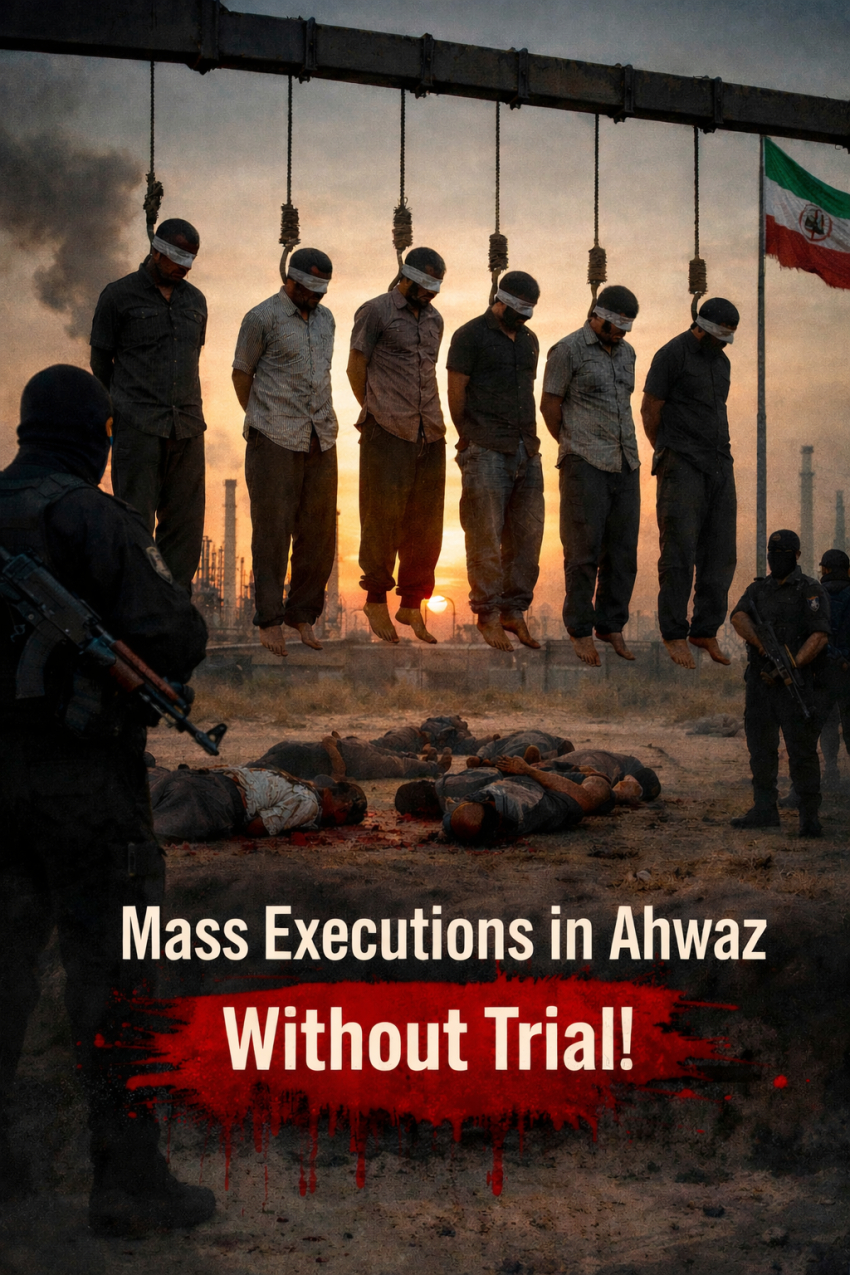



Joint Action: Human Rights Organisations condemn the death penalty against two Ahwazi political activists
Ahwaz Joint Action: Human Rights Organisations condemn the death penalty against two Ahwazi political activists
Joint Action: Human Rights Organisations condemn the death penalty against two Ahwazi political activists
Joint Action: Human Rights Organisations condemn the death penalty against two Ahwazi political activists
5th August 2019
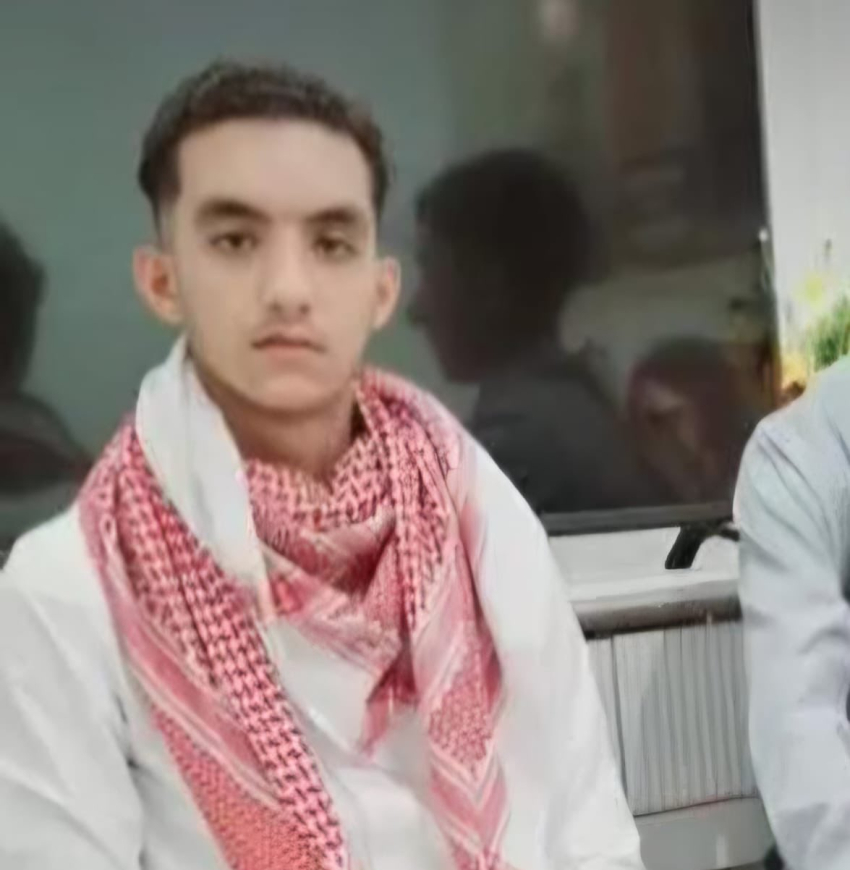
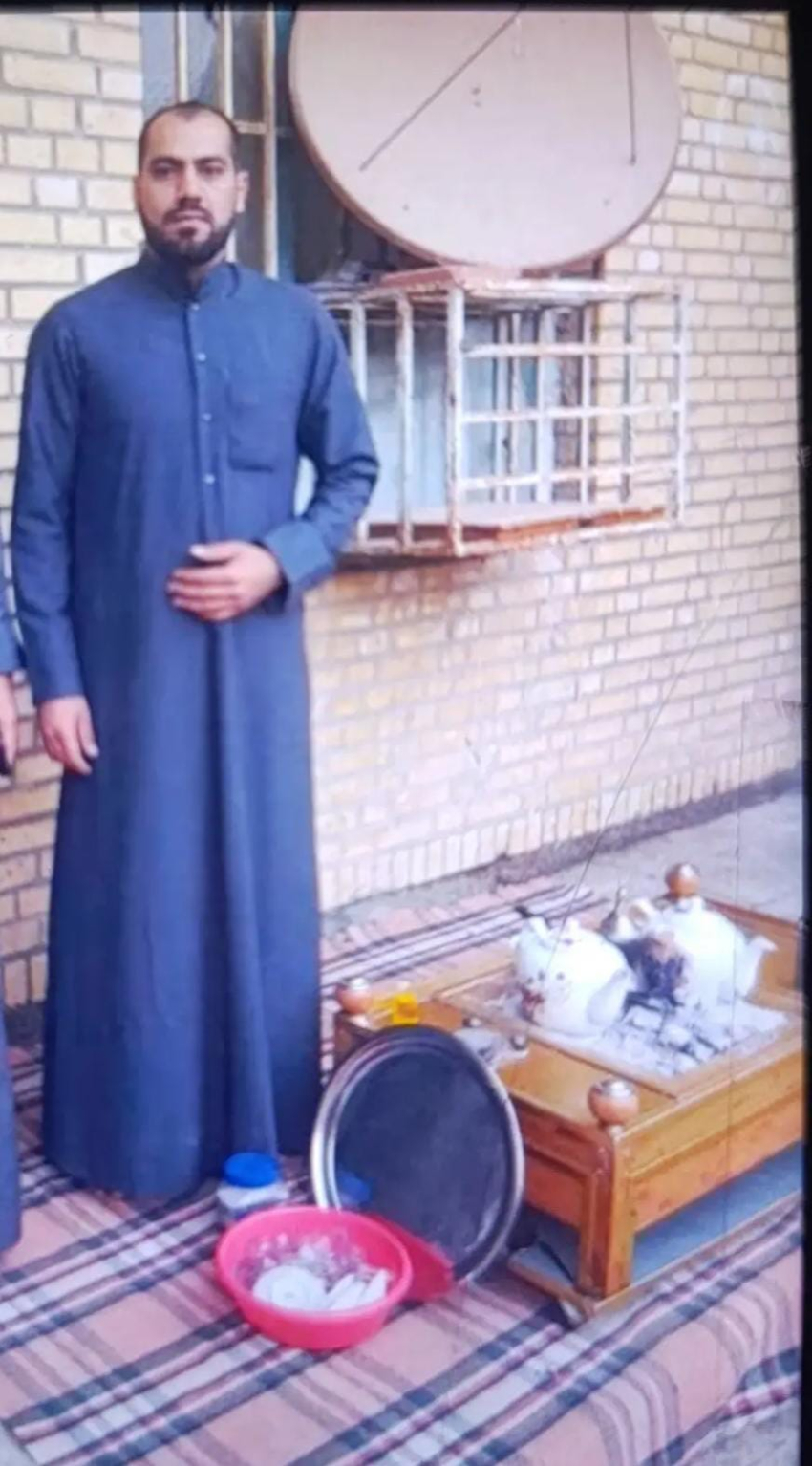
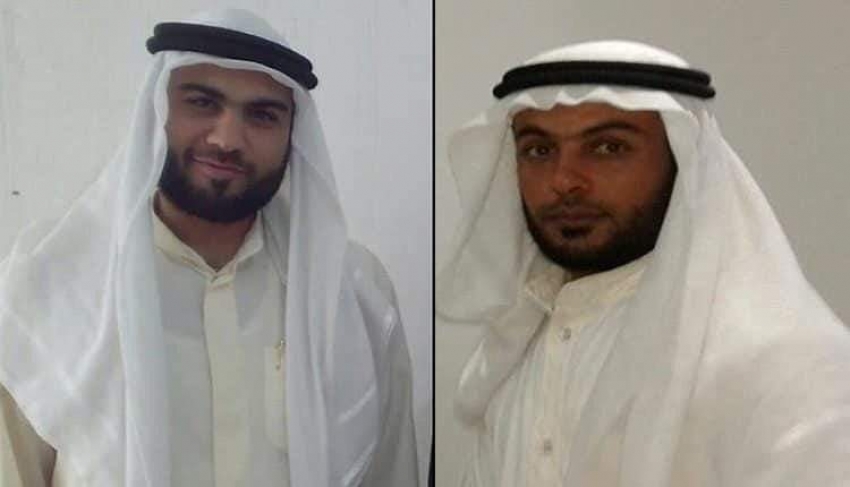
The Iranian authorities announced that two Ahwazi Arab political activists were executed in the Fajr prison in the city of Qunitra (Dezful) in northern Ahwaz around dawn on Sunday, August 4, 2019, following months of torture during which both were forced into making false confessions, according to human rights sources.
Human rights sources announced that the families of the two men, 38-year-old Abdullah Karamullah Ka,ab and 32-year-old Qassim Abdullah, were notified of their executions in brief phone calls shortly after they took place by the authority officials who informed them that they could not obtain their loved ones’ bodies for burial or know where they had been buried. The families were also warned against holding any mourning ceremonies, with Iranian authority police reportedly arresting family members who defied these cruel proscriptions to hold funeral prayers for their deceased fathers and sons.
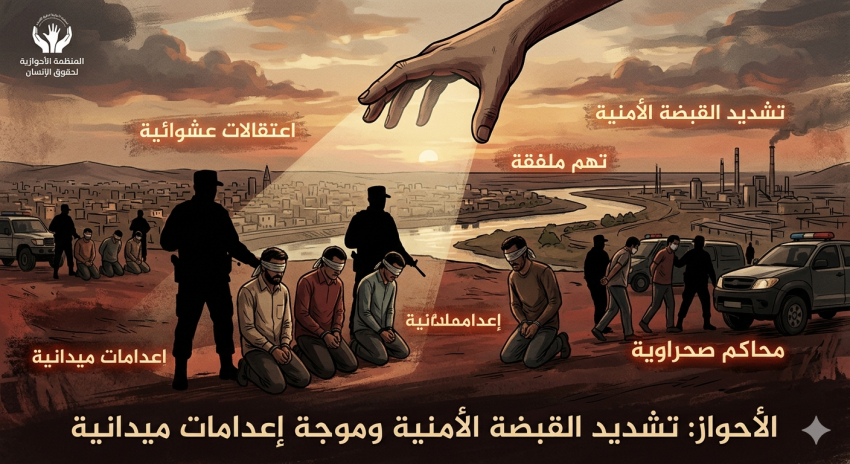
According to human rights sources, the activists such as Abdullah Karamullah Ka’ab and Ghassim Abdullah, along with six others, were arrested on October 19, 2015 in a series of random arrests by the Iranian Ministry of Intelligence in several cities of Ahwaz, including the city of Susa against Ahwazi cultural, human rights and political activists. Therefore, they were held in solitary confinement in a prison belonging to the security services for six months. Human rights sources confirmed that they were both severely tortured.
Ahwazi human rights groups were notified that Abdullah Ka’ab told his family members that the Iranian security forces had subjected him to brutal physical and psychological torture, including hanging him upside down by his legs and beating him, and subjecting him to false executions, telling him that they would bury him in an unmarked grave in a “graveyard which has no signposts.”
In addition, in an unfair court in Ahwaz, they were both sentenced to death penalty in September 2017 in charge of enmity of gad, corruption on earth and dangerous for national security. The decision was appealed to the Supreme Court of the Islamic Republic of Iran in Tehran, but the decision was upheld by the Iranian Supreme Court. Hence, on August 4, the Iranian authorities executed the detainees despite international pressure to halt the death penalty.
Amnesty International in its previous action report condemned the capital punishment for these detainees and urged the Iranian authorities to halt the death sentence and allow detainees to meet lawyers and get a fair trial. The Iranian authorities have accused these detainees of threatening Iranian national security, corruption in the earth, hostility to God, links with the Ahwazi political movements abroad and the formation of a secret movement aimed at sabotaging and destabilising national security. However, the activists were rejected these charges in the revolutionary court.
Amnesty international in its statement condemning the death penalty against the two men issued on May 8, 2019. The organisation noted that the sentences had been followed by a very unfair trial based on "confessions" obtained under torture. Amnesty international accused the Iranian authorities of using electric shocks and mock executions and as well as other forms of torture to force the two men to confess (false confessions) used to convict them.
It is noteworthy that the oth…